
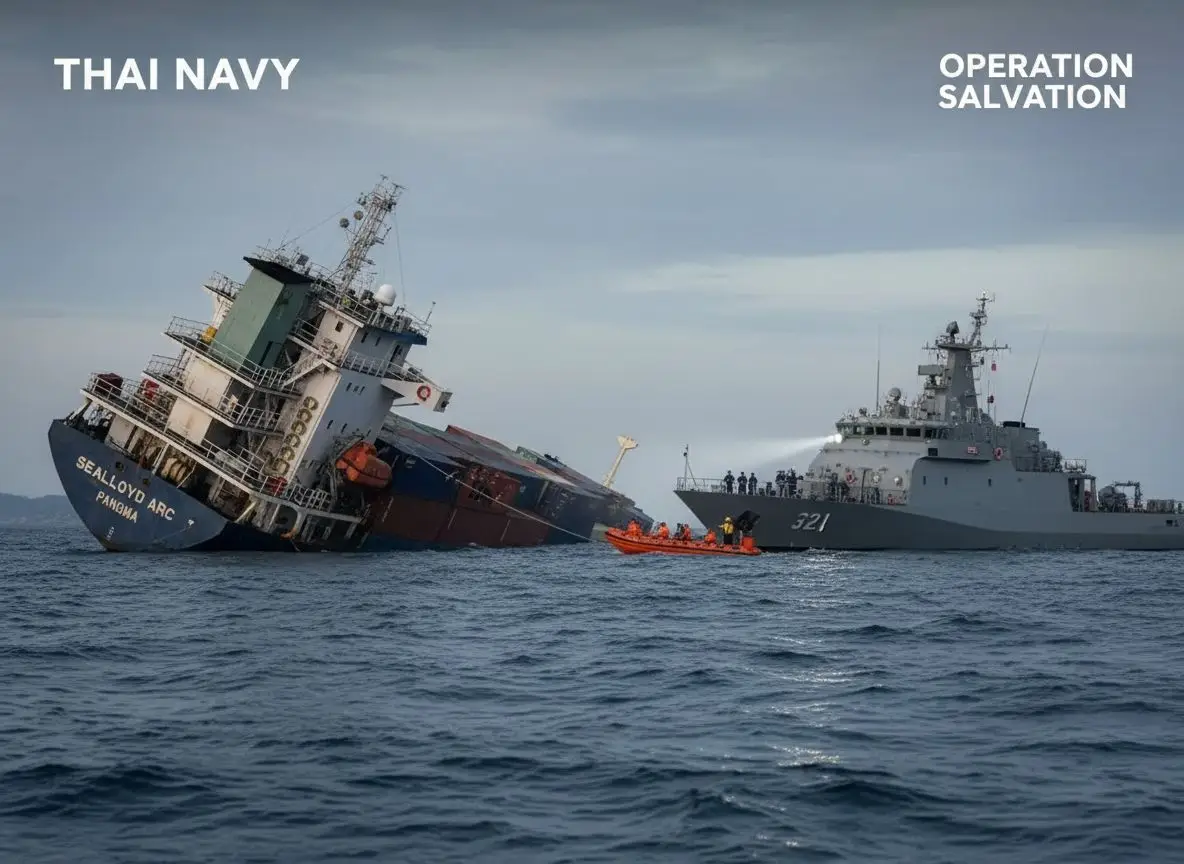
The unpredictable nature of the maritime industry was highlighted once again on February 7, 2026, when a regional feeder vessel met its end in the waters off Southern Thailand. The sinking of the Sealloyd Arc, a 6,500 DWT containership, triggered a high-stakes rescue operation by the Royal Thai Navy and local maritime stakeholders. While the successful evacuation of the crew is a testament to rapid emergency coordination, the incident has left a looming environmental challenge in one of the world’s most pristine marine environments.
The Incident: A Race Against Time
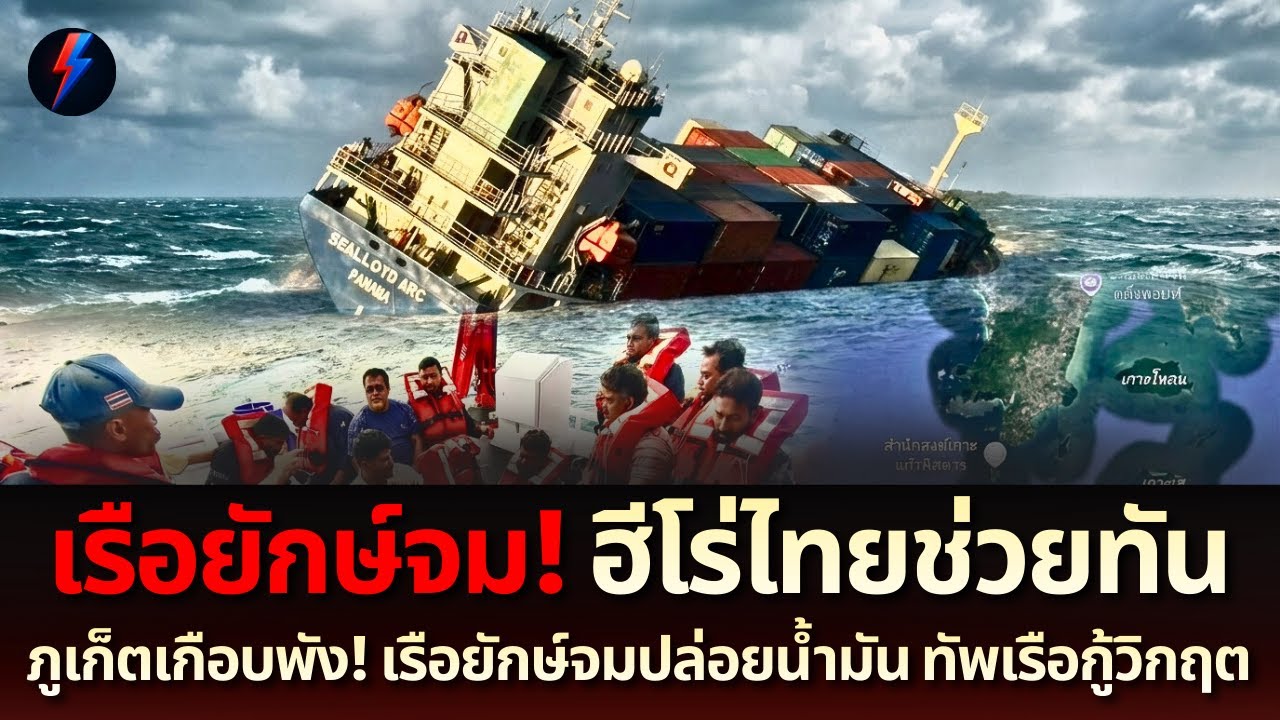
The distress signal was received at approximately 3:20 p.m. local time on Saturday. The Sealloyd Arc, en route from Port Klang, Malaysia, to Chattogram, Bangladesh, reported taking on water and experiencing a severe list. For shipping companies, the nightmare scenario of a shifting load or hull breach in open water necessitates immediate action, and the vessel’s captain promptly decided to prepare for abandonment as the situation deteriorated.
At the time of the incident, the vessel was located roughly three miles offshore from the southern coast of the Phuket region. The proximity to land provided a narrow window for local assets to intervene before the vessel succumbed to the ingress of water.
The Rescue Operation
The rescue was a collaborative effort involving both government and civilian assets:
-
The Royal Thai Navy: Deployed patrol boats and reconnaissance aircraft to coordinate the scene.
-
Local Fishing Vessels: In a display of maritime solidarity, a nearby fishing boat was the first to reach the listing ship, recovering eight of the sixteen crew members.
-
Phuket Provincial Administration: A patrol boat from the local administration recovered the remaining eight crew members, including the ship’s captain.
All sixteen crew members, primarily of Bangladeshi nationality, were brought to shore uninjured. However, while the human element was secured, the mechanical struggle was lost. By 9:00 p.m. that evening, the 115-meter vessel disappeared beneath the waves.
Technical Profile: The Sealloyd Arc
The Sealloyd Arc was a relatively small but essential part of regional trade. Understanding the vessel’s history and specifications is crucial for the Classification Societies now tasked with investigating the structural integrity and maintenance records of the ship.
| Feature | Specification |
| Vessel Name | Sealloyd Arc |
| Tonnage | 6,500 DWT |
| Length | 115 meters (377 feet) |
| Year Built | 2005 |
| Flag State | Panama |
| Owner | Sea Lloyd Shipping Lines (Singapore) |
Originally built in a Chinese shipyard, the vessel was a recent acquisition for the Singapore-based Sea Lloyd Shipping Lines, joining its fleet in September 2025. The transition of ownership and the subsequent failure, occurring just months later, will likely be a focal point for maritime investigators.
Environmental and Logistical Fallout
The sinking of a containership is never a localized event; it carries long-term implications for the marine ecosystem and navigation safety. The Sealloyd Arc was carrying 229 containers at the time of its sinking. Of these, 14 were listed on the manifest as containing hazardous materials.
The Oil Slick and Cargo Recovery
Following the sinking, an oil slick was detected stretching westward, measuring approximately 4.5 miles in length and over a mile in width. The Royal Thai Navy has deployed containment booms and is utilizing reconnaissance aircraft to track the movement of the spill. According to the latest reports, the oil has not yet reached the Phuket coastline, but the risk to local tourism and fishing industries remains high.
Furthermore, several containers have been spotted floating in the busy shipping lanes, posing a significant “strike” risk to other vessels. The Navy is currently working to tag these containers for retrieval, a process that requires precision to prevent further environmental leakage, especially from the units containing hazardous chemicals.
The Path to Recovery: Salvage and Investigation
The focus has now shifted toward a complex salvage operation. Thai authorities and the vessel’s insurers must determine if the hull can be refloated or if it must be dismantled on the seabed. For Shipyards in the region, such incidents often lead to a renewed focus on hull inspections and the “mid-life” maintenance of aging feeder vessels.
This incident also underscores the importance of sustainable practices in green shipping. While decarbonization is a primary goal, “green shipping” also encompasses preventing maritime disasters that lead to hazardous spills and habitat destruction.
Sources
-
The Maritime Executive: Thai Navy Rescues Crew from Sinking Regional Boxship (Feb 2026).
-
Royal Thai Navy Public Relations: Emergency Response Update – Phuket Region.
-
Sea Lloyd Shipping Lines: Corporate Statement on Vessel Loss.
