

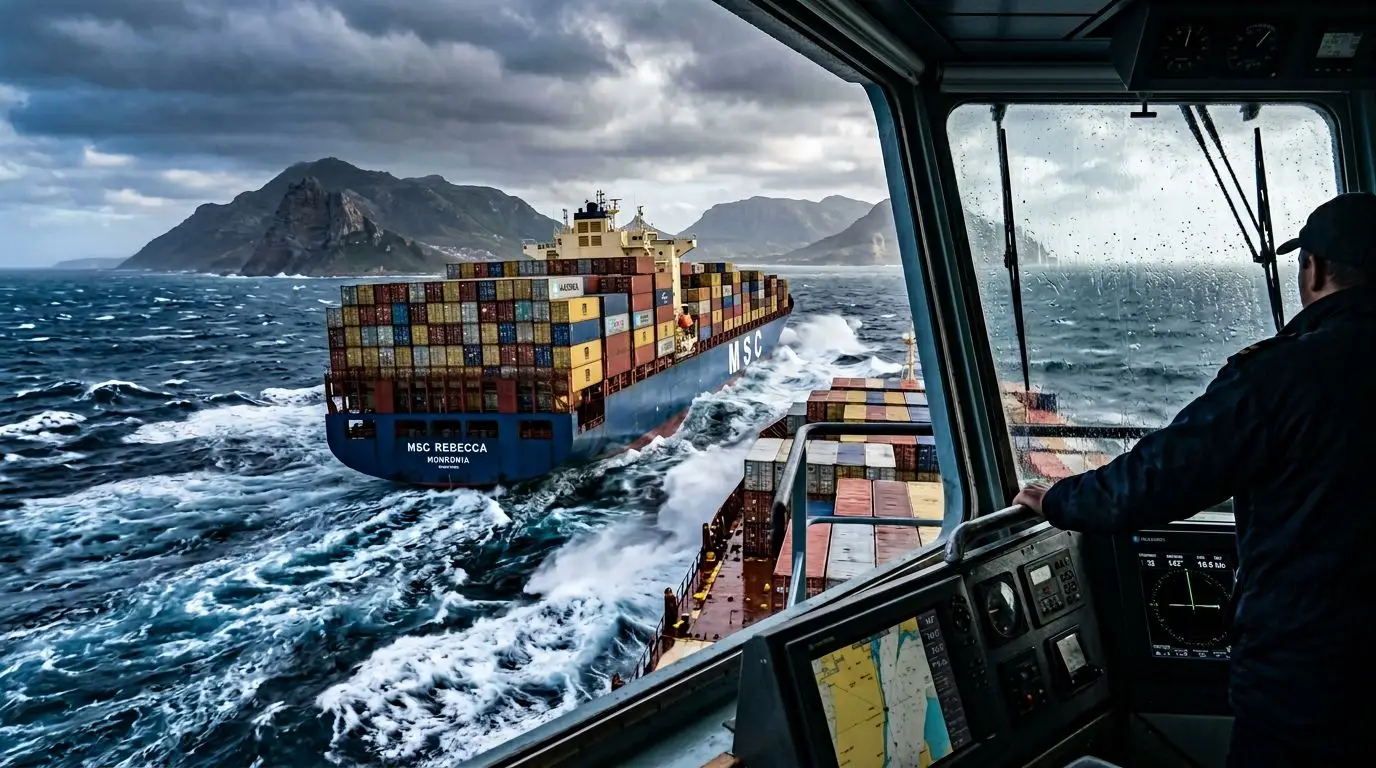
The global maritime landscape is currently undergoing its most significant structural realignment in decades. Since late 2023, escalating security risks in and around the Red Sea have driven a sharp decline in Suez Canal transits—by more than 50% at peak disruption—forcing the majority of major container lines and a substantial share of tanker operators to reroute vessels around Africa. As a result, the Cape of Good Hope shipping route has re‑emerged as a critical alternative artery for East‑West trade. This massive shift is not merely a change in direction; it is a complex logistical undertaking that carries profound implications for vessel operating expenses and the stability of international commerce.
For shipowners, charterers, and logistics managers, the decision to bypass the Suez Canal is driven by a stark assessment of risk versus cost. While the southern tip of Africa offers a safer passage, the move necessitates a complete recalibration of supply chain timelines and financial forecasting.
The Massive Scale of Suez Canal Diversion Costs
The transition from the Red Sea to the southern African coast involves far more than just extra days at sea. The Suez Canal diversion costs are multifaceted, impacting every level of the maritime balance sheet. When a vessel is rerouted, it bypasses one of the world’s most efficient shortcuts, adding approximately 6,000 to 9,000 kilometres to its journey—equivalent to 10 to 15 additional sailing days on Asia–Europe routes at standard operating speeds.
This added distance translates directly into a dramatic increase in maritime fuel consumption. A Very Large Crude Carrier (VLCC) or a 20,000‑plus TEU containership can incur USD 400,000 to 800,000 in additional bunker costs per voyage, depending on fuel prices, vessel size, and speed profile. These costs are often compounded by operational trade‑offs such as “slow steaming” to manage fuel burn or, conversely, short periods of higher speeds to recover schedule slippage—both of which affect engine efficiency and maintenance cycles.
Beyond fuel, the financial burden includes:
- Significantly higher war‑risk insurance premiums for vessels still trading near high‑risk zones.
- Emergency bunker and conflict surcharges are levied by carriers to offset rising overheads.
- The loss of Suez Canal transit fees, which remains the only direct cost saving in this scenario, though it rarely offsets the increase in fuel, time, and insurance costs.
Logistical Impacts of the Cape of Good Hope Shipping Route
Choosing the Cape of Good Hope shipping route introduces a mandatory shipping transit time delay averaging 10 to 15 days for Asia‑to‑Europe lanes. In a global trade environment shaped by just‑in‑time manufacturing, even a two‑week extension places significant strain on inventory planning, production scheduling, and downstream delivery commitments.
This delay creates a pronounced “bullwhip effect” across global shipping networks. As vessels remain at sea longer, the effective capacity of the global fleet is reduced by an estimated 5% to 10%, meaning more ships are required simply to move the same volume of cargo. The consequence is tighter vessel availability, increased charter rates, and ongoing volatility in freight markets. At the operational level, longer voyages also place additional strain on crews, with extended rotations, delayed crew changes, and higher fatigue risk becoming routine challenges on routes through the South Atlantic and Indian Oceans.
Operational Challenges and Global Supply Chain Reliability
The sudden concentration of traffic along southern African routes has highlighted existing infrastructure constraints. Ports such as Cape Town and Durban have experienced sharp increases in demand for bunkering, unscheduled repairs, stores, and crew services, with some operators reporting double‑digit increases in ad‑hoc port service calls compared with pre‑diversion patterns. For vessel operators, managing vessel operating expenses now requires careful coordination with these hubs to avoid further port‑side congestion and delay.
The broader impact on global supply chain reliability is substantial. When transit times become longer and less predictable, cargo owners are forced to move away from efficiency‑driven logistics models and toward resilience‑based strategies. These adjustments typically include:
- Increasing safety stock levels to buffer against delayed arrivals.
- Diversifying supplier and routing options to reduce concentration risk at single chokepoints.
- Expanding the use of advanced, data‑driven voyage and cargo‑tracking tools to maintain real‑time visibility for shippers and end customers.
Industry practitioners note that while global trade can technically function via the Cape of Good Hope, the loss of schedule reliability presents the greatest commercial risk. Time‑sensitive cargoes—such as refrigerated food products, pharmaceuticals, or seasonal consumer electronics—often cannot absorb an unplanned two‑week detour without material financial impact, quality degradation, or missed market windows.
Conclusion
The maritime industry’s return to the Cape of Good Hope demonstrates its operational adaptability, but the transition comes at a high and enduring cost. Increased maritime fuel consumption, elevated vessel operating expenses, reduced effective fleet capacity, and persistent shipping transit time delays have collectively redefined voyage economics in 2026. With war‑risk considerations continuing to deter large‑scale reversion to traditional Red Sea routes, the southern African passage has evolved from an emergency workaround into a structural risk‑management alternative for global shipping.
Navigating this environment successfully requires shipowners and logistics managers to fully understand the trade‑offs involved—and to plan for a global supply chain that prioritises resilience and continuity, even at the expense of higher operating costs.