
By A. Dimitriou
Summary
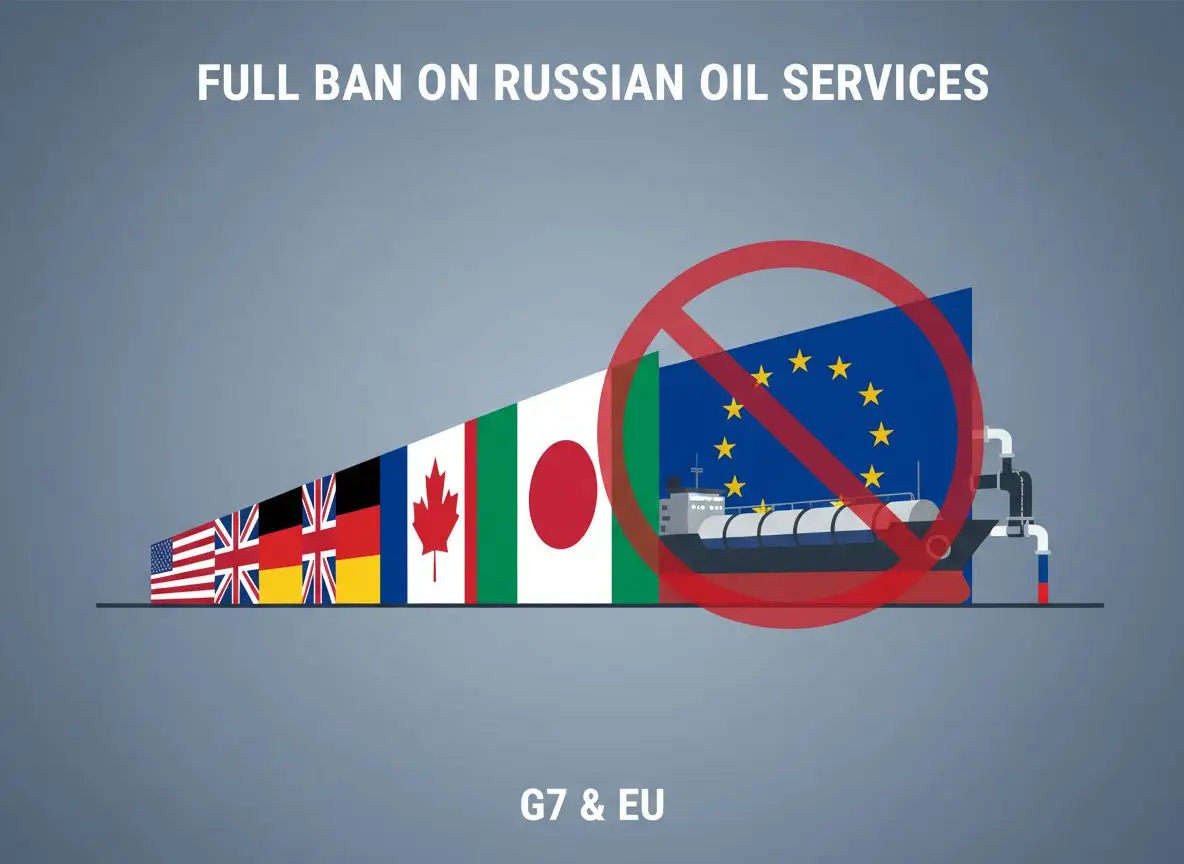
- The Group of Seven (G7) and the European Union (EU) are contemplating a full ban on maritime services for Russian oil.
- This move aims to diminish Russia’s oil revenue, which supports its military activities in Ukraine.
- The proposed ban would disrupt Russia’s current oil export routes, primarily affecting Western tankers.
- An expansion of the shadow fleet may be necessary for Russia to continue its oil exports.
In the wake of the ongoing conflict in Ukraine, the G7 and the EU are intensifying efforts to curb Russia’s financial capabilities by targeting its oil exports. Since 2022, both entities have reduced their imports of Russian oil, implementing a price cap to limit Moscow’s earnings while allowing third countries access to Western shipping services under certain conditions. However, with ongoing geopolitical tensions, discussions are now veering towards a more stringent measure: a comprehensive ban on maritime services for Russian oil.
Key Developments
The proposed maritime services ban would entail significant changes in how Russian oil is transported globally.
Currently, over a third of Russian oil exports rely on Western tankers, primarily reaching markets in India and China. The EU maritime nations, particularly Greece, Cyprus, and Malta, play a central role in this trade. Should the ban be enacted, this route would be significantly disrupted, forcing Russia to rely more heavily on its shadow fleet—a collection of non-compliant tankers operating outside Western oversight.
Scope of the Ban: It targets Western tankers, insurers, and brokers that currently handle about one-third of Russia’s oil exports, mainly to India and China. The remaining two-thirds are shipped via Russia’s “shadow fleet” — older vessels with opaque ownership and no Western insurance.
Global Impact
Globally, the implications of a full maritime services ban are multifaceted. For European ports, particularly those in Greece, Cyprus, and Malta, such a ban could lead to significant economic disruptions, as these nations currently facilitate a substantial portion of Russian oil exports. In contrast, Asian markets, notably India and China, may experience shifts in oil supply chains as Russia seeks alternative transportation methods. Across the Atlantic, the U.S. and Canada, key proponents of the ban, anticipate that the increased logistical costs for Russia could weaken its economic stamina, thereby indirectly supporting Ukraine.
Industry Implications
The maritime industry would need to adapt to these changes swiftly. Shipping companies operating within the EU would potentially face regulatory challenges and need to re-evaluate their compliance strategies. The shadow fleet, already a considerable force in transporting sanctioned oil, may see growth, albeit at the risk of increased scrutiny and potential sanctions. The International Maritime Organization (IMO) guidelines would likely play a pivotal role in managing these shifts.
Looking ahead, the maritime industry’s landscape could see transformative changes. If the ban is implemented, there is a possibility of a fragmented oil supply chain, leading to higher operational costs and potential delays in oil deliveries. However, this could also spur innovations in maritime logistics and compliance technologies, as companies strive to meet new regulatory standards. Market observers note that the next few years will be critical in shaping the future maritime trade routes and regulations.
Takeaways
- Shipping companies should prepare for potential regulatory changes and develop contingency plans.
- Stakeholders in the maritime industry must stay informed about evolving sanctions and compliance requirements.
- Investing in technology and alternative routes could mitigate potential disruptions in oil transportation.
- Continuous engagement with international regulatory bodies like BIMCO and the IMO is crucial for navigating future changes.
This evolving scenario underscores the dynamic nature of global maritime logistics and the importance of strategic foresight to maintain competitive, compliant operations in an increasingly regulated environment.
For more insights on maritime industry trends and updates, subscribe to our newsletter at maritime-hub.com.
