

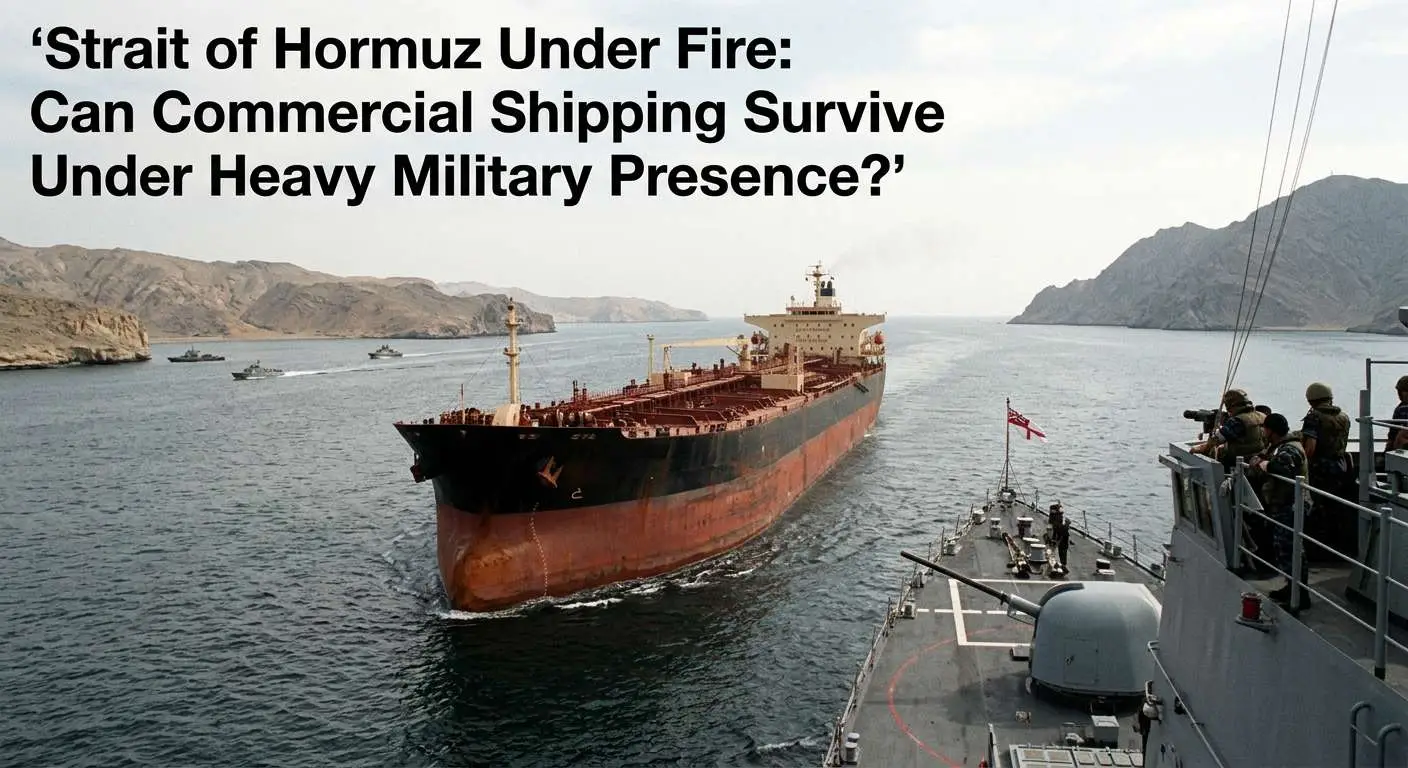
Impacts, Challenges, and the Future of Maritime Transit Amid the U.S.–Iran Conflict
A Critical Maritime Artery Under Threat
The Strait of Hormuz—responsible for transporting about one‑fifth of global oil supply—is now effectively closed following escalating conflict between the United States, Israel, and Iran. Iranian forces declared the strait “closed” on March 4, 2026, threatening and conducting attacks on ships attempting transit.
Commercial traffic has plummeted 90% or more, with hundreds of vessels stranded and only isolated Iranian-flagged or “shadow fleet” tankers transiting.
This has raised urgent questions for shipowners, charterers, insurers, and maritime authorities:
Is it still possible for commercial ships to transit the Strait?
How do naval escorts work under wartime pressure?
How long will the military presence last?
1. Is Transit Through the Strait of Hormuz Still Possible?
The short answer: Technically yes — But practically nearly impossible.
According to multiple sources, since the U.S.–Israel strikes on February 28, 2026, Iranian forces have:
- Attacked at least 20 commercial vessels, shutting down the strait for over 12 days.
- Broadcast direct warnings to ship radios, promising to strike any vessel attempting passage. [cbsnews.com]
- Anchored or trapped over 150–400 ships, depending on the reporting window.
The result:
- Vessel transits dropped from ~60 per day to nearly zero.
- Major carriers like Hapag-Lloyd, Maersk, CMA CGM suspended all Hormuz traffic.
Even ships that attempt transit face extreme danger:
- A Thai cargo ship was struck by a projectile while attempting to cross.
- Multiple vessels were attacked or set ablaze in the strait. [newsweek.com]
Bottom line:
Transit is unsafe and remains highly restricted, except for Iranian-controlled ships.
2. How Would U.S. and Coalition Naval Escorts Work?
Naval escorts can reopen the strait — but not immediately, and not without major risks.
The U.S. Navy has escorted tankers here before.
During Operation Earnest Will (1987–1988), the U.S. reflagged Kuwaiti tankers and escorted them through the Gulf.
Why escorts are not operating yet (2026):
U.S. and coalition navies cite three main challenges:
1. The U.S. is “not ready” militarily
Senior officials admit assets are focused on destroying Iran’s offensive missile/drone capabilities, delaying escort readiness.
2. Escorts require major resources
A “basic” escort group needs:
- 8–10 destroyers
- to protect 5–10 commercial ships per convoy
Given the scale of the crisis (400+ vessels stranded), such an operation would be massive.
3. Iran’s threat environment remains unstable
Iran has launched hundreds of missiles and UAVs, striking ships, ports, and oil infrastructure in the wider Gulf.
4. Mine threats & miscalculation risks
UKMTO warns of increased risk of misidentification near military units.
Even a small unmanned surface vessel (USV) could disrupt an entire convoy.
3. How Long Will the Naval Presence Last?
This depends on three unresolved factors:
Iran’s willingness to continue attacks
Iran has explicitly declared the strait closed and threatened to “set ablaze” any vessel entering.
Daily or near‑daily attacks demonstrate capability and intent.
Meaning:
Even if the war ended tomorrow, the threat of Iranian interdiction could persist indefinitely.
U.S. operational readiness
U.S. officials suggest naval escorts will begin only when “militarily possible”, not before. [cnbc.com]
Separate reports indicate escorts may not start for at least a month. [newsweek.com]
Diplomatic negotiations
A multinational diplomatic effort (France, Japan, India) is proposed but not yet underway.
Iran rejects talks with the U.S.
Conclusion:
A prolonged naval presence — lasting months, not weeks — is the most likely scenario.
Key Challenges for Shipping Under Military Escort
1. War Risk Insurance Explosion
War‑risk premiums have risen 6.7×, now at 1% of hull value, making voyages extremely costly. [hormuzstra…onitor.com]
2. GPS jamming & spoofing
High risk of misnavigation or accidental entry into hostile zones.
3. Mine-laying risk
Physical mining of lanes is difficult but not impossible; perceived threat alone can halt traffic.
4. Port closures & collateral damage
Ports like Dubai’s Jebel Ali have suspended operations due to debris from missiles causing fires.
5. Humanitarian concerns
Over 20,000 crew are stranded aboard immobilized ships. [cbsnews.com]
5. Outlook: What Happens Next?
Short-term (0–2 months):
- Strait remains effectively closed.
- Occasional Iranian tankers permitted
- Waiting for U.S. readiness for escorts
- Risk levels remain “critical”
Medium-term (2–6 months):
- Limited escorted convoys are possible
- High logistics costs, slow vessel throughput
- Insurance and chartering markets remain unstable.
Long-term (6–18 months):
- Maritime patterns may shift permanently.
- Some carriers may redesign global routing.
- Gulf states accelerate land-based energy pipelines.
Conclusion: A Dangerous and Uncertain Maritime Future
Commercial transit through the Strait of Hormuz is barely possible, extremely hazardous, and entirely dependent on evolving military conditions.
Even with U.S. and coalition naval escorts, the challenges are immense:
- Frequent attacks
- Missile and UAV threats
- Mine risks
- Insurance volatility
- Political instability
Until the conflict stabilises — and Iran reduces threats — normal shipping cannot resume.
A prolonged multinational naval presence, potentially lasting months or longer, is now the most likely scenario based on all verified intelligence and official statements.
