

Introduction
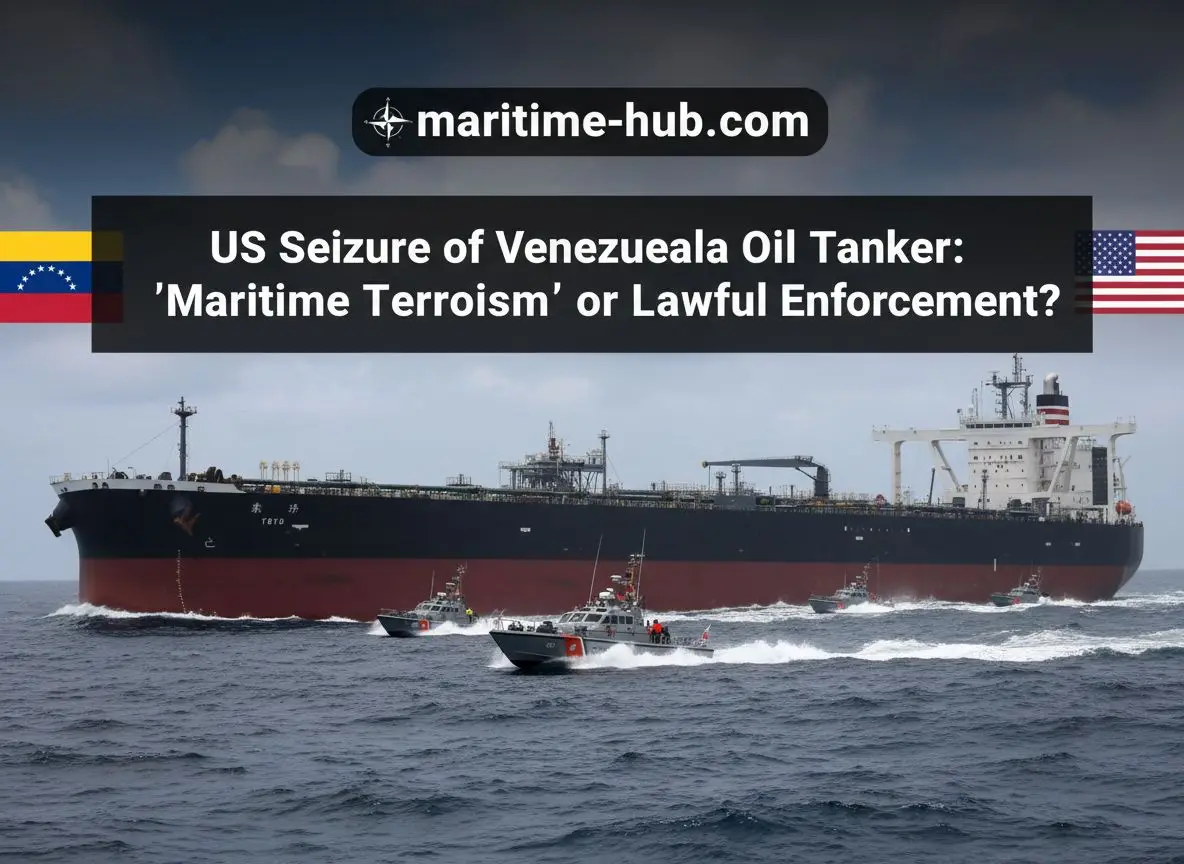
In December 2025, the United States seized a Venezuelan oil tanker, the Skipper, off the coast of Venezuela, sparking international controversy and accusations of “maritime terrorism” from Cuba and Venezuela. This dramatic event has escalated tensions in the Caribbean and raised critical questions about international law, sanctions enforcement, and the shadowy world of sanctioned oil shipping.
The Seizure: What Happened?
On 10 December 2025, US special operations forces, supported by helicopters from the USS Gerald R. Ford aircraft carrier, boarded and seized the Skipper, a very large crude carrier (VLCC) measuring 332 metres (1,090 feet) in length—longer than many skyscrapers are tall. The operation was executed by the US Coast Guard, FBI, Department of Homeland Security, and US Marines, following a seizure warrant issued for the vessel’s alleged role in transporting sanctioned oil from Venezuela and Iran.
Attorney General Pam Bondi released footage of the operation, showing armed personnel descending onto the deck and swiftly taking control. The crew did not resist, and there were no casualties. The US justified the action as a lawful enforcement of sanctions, targeting a vessel involved in illicit oil shipping networks supporting foreign terrorist organisations, including Iran’s Islamic Revolutionary Guard Corps and Hezbollah.
Vessel Particulars: The Skipper
The Skipper is a 20-year-old VLCC, previously known as the M/T Adisa. It was sanctioned by the US Treasury in 2022 for facilitating oil trades for Iran-backed Hezbollah and the Qods Force. The vessel’s particulars are as follows:
- Type: Very Large Crude Carrier (VLCC)
- Length: 332 metres (1,090 feet)
- Flag: Guyana (though Guyanese authorities denied its registration)
- Previous Name: M/T Adisa
- Year Built: Circa 2005
- Cargo: Tens of millions of dollars’ worth of Venezuelan crude oil
- AIS Status: Frequently turned off or spoofed to evade detection
- Ownership: Registered to Triton Navigation, a corporation in the Marshall Islands, identified by the US Treasury as critical to oil smuggling networks supporting Iran’s Hezbollah.

Management Company: Triton Navigation
Triton Navigation, the management company behind the Skipper, is registered in the Marshall Islands. According to the US Treasury’s Specially Designated Nationals list, Triton is one of several shipping companies central to the oil smuggling network supporting Iran’s Hezbollah. These companies often use shell corporations, forged paperwork, and false flags to obscure ownership and evade sanctions.
The Shadow Fleet and Sanctions Evasion
Since the US imposed harsh sanctions on Venezuela’s oil industry in 2017 and 2019, the country has increasingly relied on a “shadow fleet” of tankers. These vessels routinely disable their automated identification systems (AIS), spoof their locations, and transfer cargo at sea to conceal their origins. Many operate without insurance and are barely seaworthy, registered to shell companies in offshore jurisdictions.
The Skipper’s erratic movements near the Guyanese coastline, as observed by maritime analysts, were classic signs of location manipulation. Satellite intelligence later confirmed that the vessel was hundreds of nautical miles from its reported position, heading toward Venezuelan waters.
International Reactions: Accusations of ‘Maritime Terrorism’
The Cuban government condemned the US action as “maritime terrorism” and “piracy,” arguing it was part of a broader campaign of “economic suffocation” against Venezuela and its allies. The Venezuelan government echoed these sentiments, calling the seizure “barefaced robbery” and a violation of international law.
The US administration, led by President Trump, described the operation as a necessary escalation to cut off oil revenues to the Maduro government, which Washington accuses of supporting terrorism and drug trafficking. The White House signalled that more Venezuelan oil shipments could be intercepted in the future.
Legal Debate: International Law and Jurisdiction
Under the UN Convention on the Law of the Sea (UNCLOS), only the flag state has jurisdiction over a vessel on the high seas, except in cases of piracy or stateless vessels. The Skipper was reportedly flying a Guyanese flag, but Guyana denied its registration. The US is not a party to UNCLOS but generally observes its principles. The legal status of the seizure remains contested, with some experts arguing it sets a dangerous precedent for maritime enforcement.
Conclusion
The US seizure of the Skipper marks a significant escalation in the enforcement of sanctions against Venezuela and its shadow fleet. While Washington frames the operation as lawful and necessary, Cuba and Venezuela denounce it as “maritime terrorism.” The incident highlights the complex interplay of international law, sanctions enforcement, and the global oil trade, with far-reaching implications for maritime security and geopolitics.
Sources:
