

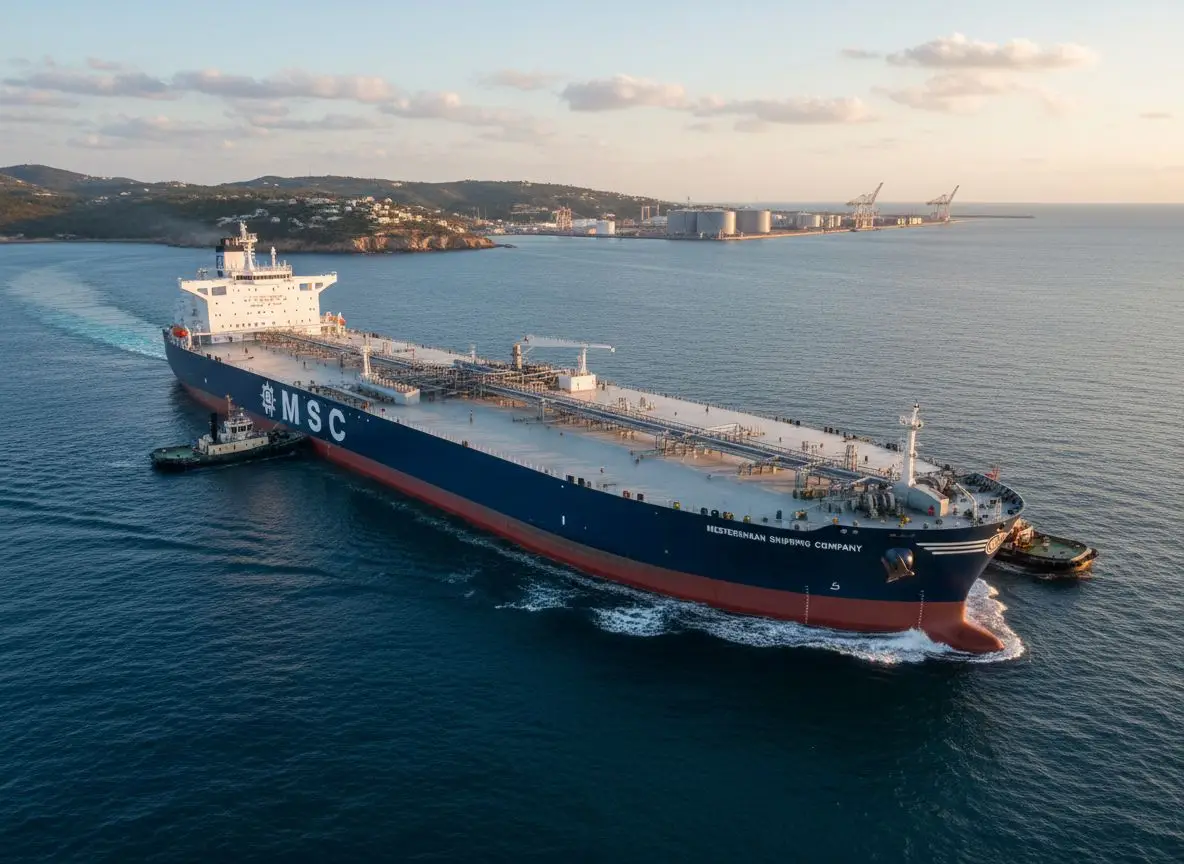
Singapore, 25 February 2026 – The Very Large Crude Carrier (VLCC) market has kicked off 2026 with an unprecedented wave of newbuild orders, raising questions about the sustainability of the current freight rate bonanza. With over 57 VLCCs contracted in just the first two months of the year, many are asking: Will this surge in shipbuilding activity lead to an oversupply that erodes the historically high rates we’re seeing today?
Could the Chinese shipyards deliver all these orders on time? What if geopolitics changes again and we face a general world political instability, which benefits the Very Large Crude Carriers on long voyages with big cargoes? How will the market respond, and what will be the outcome with Chinese shipyards?
One scenario is a prolonged war between the US and Iran, which would cause lasting instability. During this time, shipping rates could become very high, similar to today, possibly reaching up to $300,000 per day for VLCCs, resulting in substantial profit margins for the owners.
Another scenario is the Trump administration not to attempt a long war with Iran, but instead to focus on hitting infrastructure targets, shaking the political leadership in Iran, and pushing them to accept some US conditions. This is actually the most likely scenario, as the first scenario would have a significant impact on the US economy.
If the strike lasts a few days, it will avoid a long war and the huge costs to the US economy, with no guaranteed results or takeovers. Or, at most, a couple of weeks, and then things return to normal, the situation and freight rates should stabilise by June 2026. Afterwards, all these expensive VLCCs will likely face a sustainability challenge as freight rates decline back to USD 30,000-50,000 per day.
The Current Landscape: A Red-Hot Market
Spot rates for VLCCs have been nothing short of spectacular, consistently breaching the $100,000 per day mark and, in some instances, even touching $200,000 per day on key routes. This extraordinary profitability has been fueled by a confluence of factors:
- Geopolitical Realignment: Shifting trade routes, particularly longer hauls from the Atlantic Basin to Asia, have significantly increased tonne-mile demand.
- Fleet Scarcity: Years of under-ordering and increased scrapping of older vessels have tightened available tonnage.
- Port Congestion: Persistent delays at major loading and discharge zones continue to absorb available capacity.
This lucrative environment is precisely what has prompted major players like Eastern Pacific Shipping, Dynacom Tankers, and Asyad Shipping to rush to shipyards in South Korea and China, securing coveted delivery slots.
The Orderbook Swells: A Double-Edged Sword
The influx of new orders has pushed the total VLCC orderbook to approximately 142 vessels, representing around 17% of the active fleet. This is a significant increase from previous years and signals a renewed confidence in the long-term fundamentals of crude oil shipping.
However, historical cycles in shipping have taught us that periods of robust ordering often precede market corrections. While the current orderbook might seem substantial, it’s crucial to analyze when these vessels will hit the water.
“The immediate impact on rates will be minimal,” explains Dr. Eleanor Vance, Lead Shipping Analyst at Maritime Insights Group. “The vast majority of these newly placed orders are for delivery in 2028 and beyond. Shipyard capacity is tight, and construction lead times for such complex vessels are lengthy.”
Impact on H2 2026: Continued Strength, with Caveats
Looking specifically at the second half of 2026, the market is likely to remain robust for several reasons:
- Limited Near-Term Deliveries: Very few of the recently ordered vessels will be delivered within 2026. The pipeline for earlier deliveries is thin, meaning the existing fleet will continue to bear the brunt of demand.
- Scrapping Dynamics: Environmental regulations, particularly the IMO CII, are expected to accelerate the scrapping of older, less fuel-efficient vessels. This acts as a natural offset to new deliveries, maintaining a tighter supply-demand balance.
- Sustained Demand: Global oil demand is projected to remain firm throughout 2026, especially with continued economic recovery in Asia and ongoing geopolitical influences on trade patterns.
- Congestion and Efficiency: Unless there are significant improvements in port infrastructure and turnaround times, operational inefficiencies will continue to absorb vessel capacity, effectively reducing the active fleet size.
However, risks remain. A sudden downturn in global oil demand, a rapid resolution of geopolitical tensions, or a dramatic improvement in canal transit times could quickly swing the balance. The sheer volume of new orders, even if far off, could also lead charterers to exert downward pressure on period rates, anticipating future availability.
The Long-Term Outlook: A Return to Volatility?
While H2 2026 appears stable, the growing orderbook sets the stage for increased supply pressure from 2028 onwards. If the pace of scrapping does not keep up with deliveries, or if oil demand growth moderates, the market could face a period of oversupply, leading to a significant correction in freight rates.
“Owners are betting on continued robust tonne-mile demand and the necessity of fleet renewal,” adds Dr. Vance. “The challenge will be managing the delivery schedule against real-world demand and regulatory-driven scrapping. The current boom might extend through 2027, but the visibility beyond that becomes increasingly cloudy.”
Conclusion
The VLCC market in the second half of 2026 is poised to continue its strong performance, shielded by limited near-term newbuild deliveries and supportive demand fundamentals. However, the unprecedented ordering activity in early 2026 signals a potential shift in the supply landscape in the medium to long term. Owners and charterers alike will need to closely monitor delivery schedules, scrapping rates, and global oil trade patterns to navigate what promises to be an increasingly dynamic market.