Executive Summary
- New study evaluates wind-assisted propulsion benefits on maritime vessels.
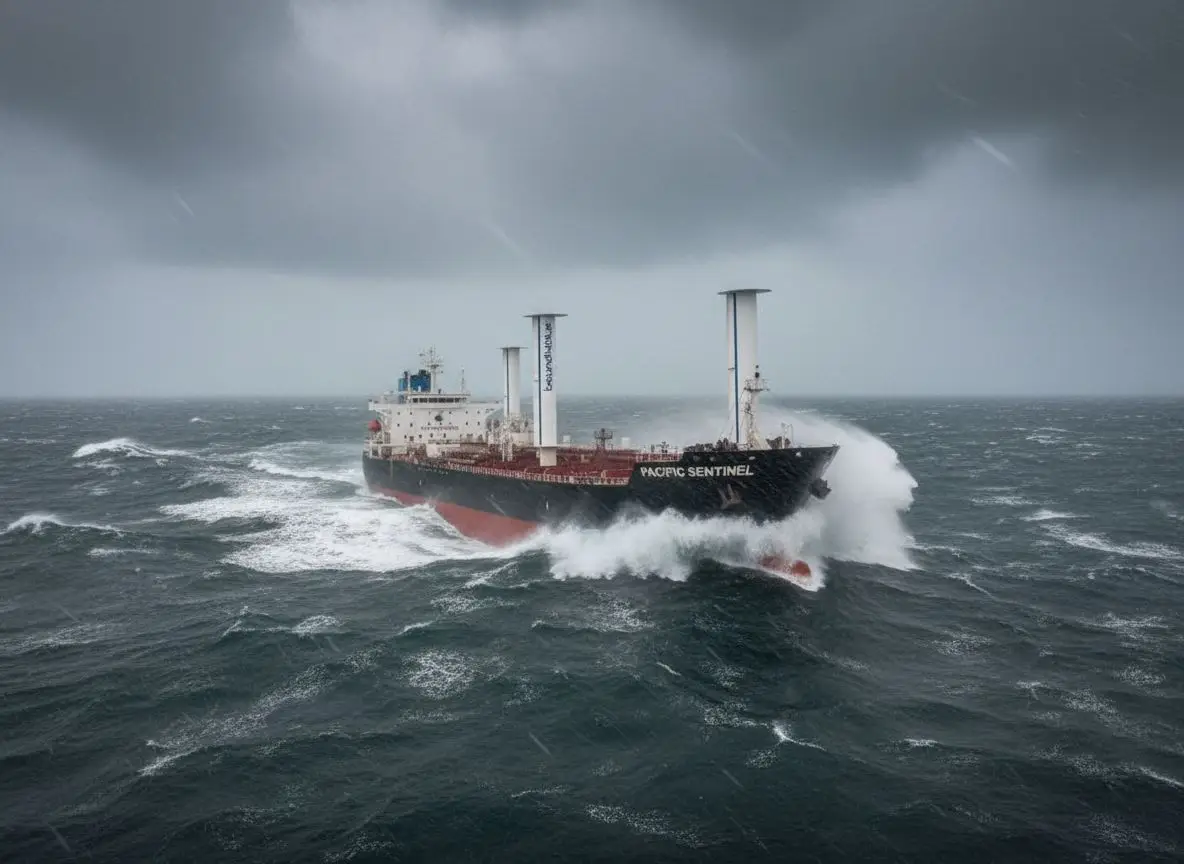
- Research was conducted on Eastern Pacific Shipping’s Pacific Sentinel tanker.
- Technological insights aim to standardize performance measurement.
- Potential for significant fuel savings and emissions reduction.
Global shipping accounts for nearly 3% of worldwide greenhouse gas emissions, making decarbonisation a top priority for regulators and operators alike. With the IMO’s 2030 and 2050 targets looming, shipowners are exploring innovative solutions to reduce fuel consumption and emissions. Among these, wind-assisted propulsion systems (WAPS) have emerged as a practical, scalable technology that leverages one of the oldest forces in maritime history—wind.
In 2025, Eastern Pacific Shipping (EPS) partnered with the Global Centre for Maritime Decarbonisation (GCMD) to conduct a landmark study on the Pacific Sentinel, a 50,322 DWT product tanker. The results offer compelling evidence that wind power can transform modern shipping.
What Are Wind-Assisted Vessels?
Wind-assisted vessels integrate aerodynamic devices to harness wind energy and reduce engine load. These systems complement conventional propulsion, delivering measurable fuel savings and emissions reductions.
Types of Wind-Assisted Propulsion Systems
- Rotor Sails (Flettner Rotors): Cylindrical structures that rotate to create lift via the Magnus effect.
- Wing Sails: Rigid, airfoil-shaped panels offering high aerodynamic efficiency.
- Suction Sails: Advanced designs that use air suction to enhance lift and minimise drag.
- Soft Sails & Kites: Lightweight, flexible options for retrofitting existing vessels.
Fuel Savings Potential: Studies show WAPS can cut fuel consumption by 5–25%, depending on vessel type, route, and wind conditions. Some trials have reported annual savings of up to 19%, making WAPS a cost-effective solution for compliance with carbon pricing and emissions regulations.
Pacific Sentinel Case Study: A Maritime Milestone
EPS’s Pacific Sentinel project is one of the most comprehensive WAPS performance evaluations to date. Here’s what makes it significant:
Vessel Specifications
- Type: Product tanker
- Deadweight: 50,322 DWT
- Technology Installed: Three 22-metre suction sails by Bound4blue
- Study Period: May–September 2025
- Routes: U.S. East Coast to South America
Methodology
- Data Collection: High-frequency measurements every 15 seconds, including speed, heading, wind speed, and engine power.
- Testing Protocol: On-off testing aligned with ITTC and DNV guidelines to isolate WAPS contribution.
- Analysis: Statistical modelling to ensure accuracy and confidence intervals.
Key Findings from the Pacific Sentinel Study
- Average Fuel Savings: 7.2% (95% confidence interval: 6.2–8.2%).
- Peak Savings: 28.1% under optimal wind conditions (apparent wind angle 47°, wind speed 15.3 m/s).
- Negative Savings: Up to -14% in strong headwinds (rare events), highlighting the importance of operational flexibility.
The study confirms that suction sails deliver consistent performance gains under favourable conditions and can be deactivated when winds are adverse, ensuring operational safety and efficiency.
Why This Research Matters
1. Environmental Impact
By reducing fuel consumption, WAPS directly cuts CO₂ emissions, helping shipowners meet IMO and EU decarbonisation targets.
2. Economic Benefits
Lower fuel bills and reduced exposure to carbon pricing make wind propulsion a financially attractive option.
3. Standardisation & Scalability
The Pacific Sentinel study establishes a framework for performance measurement, boosting confidence among financiers and insurers. This is critical for scaling WAPS adoption across global fleets.
Challenges and Considerations
- Variable Performance: Wind conditions vary by route, requiring careful voyage planning.
- Initial Investment: Upfront costs for installation can be significant, though payback periods are improving.
- Crew Training: Operators need training to manage hybrid propulsion systems effectively.
The Future of Wind-Assisted Shipping
The success of Pacific Sentinel signals a turning point for maritime innovation. As technology advances, expect to see:
- Integration with AI: Smart routing systems that optimise wind utilisation.
- Hybrid Solutions: Combining WAPS with alternative fuels like LNG, ammonia, and hydrogen.
- Regulatory Incentives: Carbon credits and green financing to accelerate adoption.
