

by A. Dimitriou
Introduction
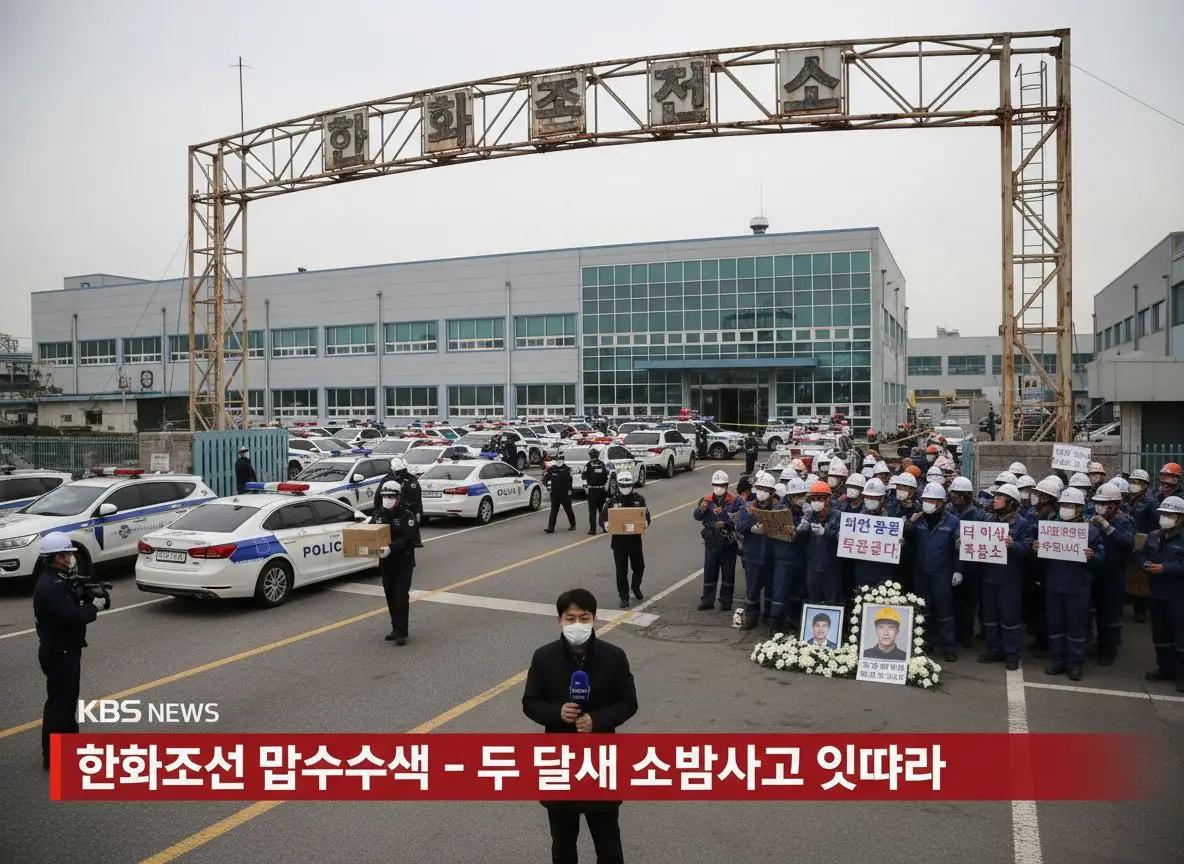
South Korea’s shipbuilding industry is under intense scrutiny following a series of tragic accidents at the shipyard in Geoje. In November 2025, authorities raided the facility after a second fatality in just two months, raising urgent questions about workplace safety, regulatory oversight, and the future of one of the world’s largest shipbuilders.
Timeline of Fatal Incidents
October 17, 2025: Scaffold Collapse Claims a Life
On October 17, 2025, a subcontracted worker in his 60s was killed when a steel scaffold housing unit collapsed during assembly work on a liquefied natural gas (LNG) carrier. The worker, employed by a subcontractor, was struck by the falling structure and died shortly after being rushed to the hospital. The Ministry of Employment and Labor immediately suspended operations in the affected area. It launched an investigation into possible violations of the Serious Accidents Punishment Act and the Occupational Safety and Health Act.
September 3, 2025: Platform Collapse During FPSO Testing
Just seven weeks earlier, on September 3, a supervisor—identified as a Brazilian national—was killed when a platform collapsed during load testing on a floating production storage and offloading (FPSO) vessel. The supervisor fell over 30 feet into the water and was later pronounced dead at a local hospital. Two other workers were rescued from the scene. This incident also led to an immediate suspension of related work and a joint investigation by the Coast Guard and labor authorities.
The Raid: Authorities Take Action
In response to these back-to-back fatalities, more than 40 investigators from the Ministry of Employment and Labor and the police raided the shipyard in late November 2025. The raid aimed to uncover evidence of systemic safety failures and potential negligence by management. Investigators are focusing on whether the company violated key safety laws and if there are broader issues affecting worker safety at the site.
A Troubling Pattern: Hanwha Ocean’s Safety Record
These recent tragedies are not isolated events. Between January and September 2024, at least seven deaths were reported at the Geoje shipyard. Labor unions and safety advocates have repeatedly called for stricter enforcement of safety regulations and greater accountability for both contractors and subcontractors. In one case, a worker died from heat-related illness, which unions attributed to insufficient preventive measures by the company.
Industry and Regulatory Response
The repeated accidents have prompted lawmakers to consider summoning executives for a National Assembly audit. The Ministry of Employment and Labor has already imposed fines and conducted special inspections at the shipyard. The company, for its part, has suspended operations after each incident, issued public apologies, and pledged to improve safety protocols.
Why This Matters: Implications for Shipbuilding and Worker Safety
The Hanwha Ocean incidents highlight the ongoing risks faced by workers in South Korea’s shipbuilding sector—a vital industry for the national economy. As global demand for LNG carriers and FPSO vessels grows, the pressure to meet deadlines must not come at the expense of human lives. The outcome of the current investigations could set important precedents for workplace safety standards, not only in South Korea but across the global maritime industry.
Conclusion
The raid on after a second fatality in two months is a wake-up call for the entire shipbuilding sector. As authorities continue their investigations, the world is watching to see whether meaningful changes will be implemented to protect workers and prevent future tragedies.
Sources:
