

By Sanvee Gupta
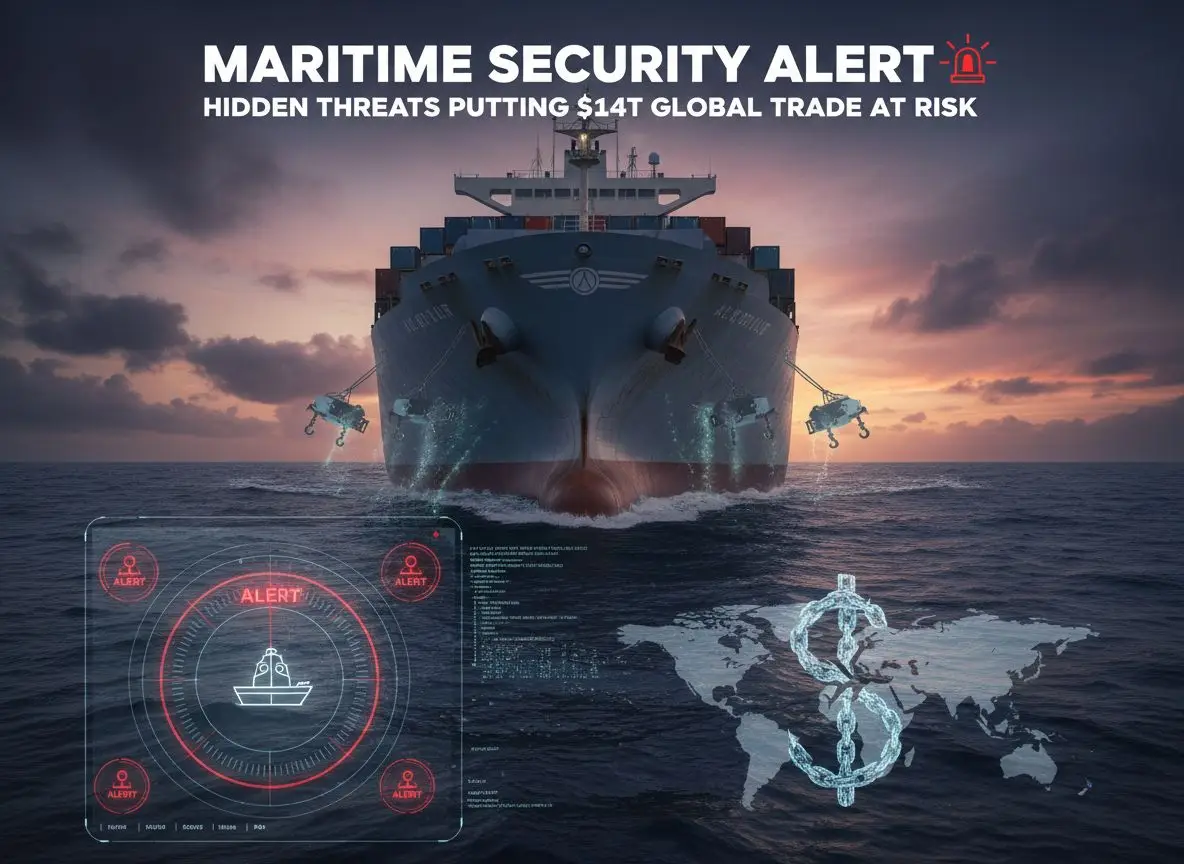
Maritime security threats are escalating at an alarming rate, putting approximately $14 trillion in global trade at risk. Every day, massive cargo vessels traverse the world’s oceans carrying essential goods that power the global economy—from oil and electronics to food and medicine. However, these vital trade routes face increasingly sophisticated dangers that often remain hidden until they strike.
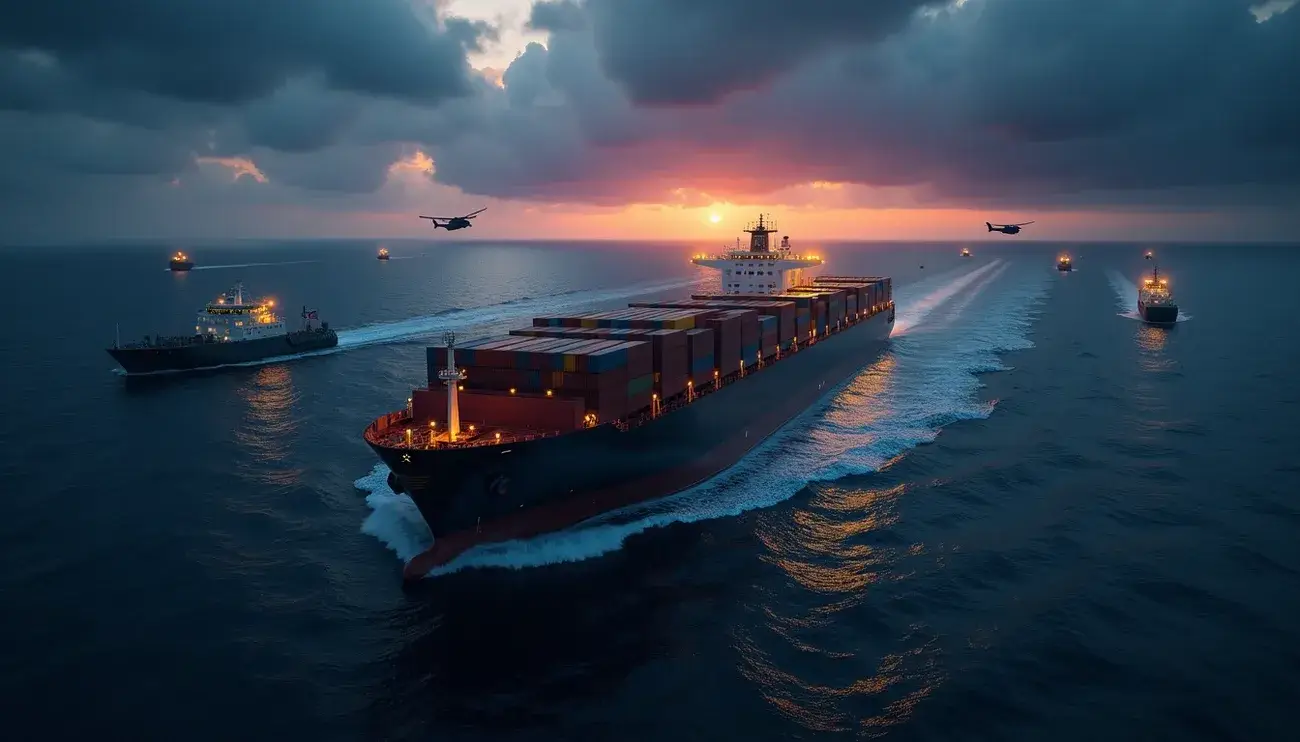
The safety of international shipping lanes, once taken for granted, has deteriorated significantly in recent years. Piracy has resurged in critical maritime corridors, while sophisticated cyberattacks target vulnerable port infrastructure. Meanwhile, vessels with AIS switched off operate in the shadows, evading detection systems designed to maintain order on the high seas. Furthermore, strategic chokepoints such as the Strait of Hormuz and the Suez Canal have become flashpoints where a single disruption can trigger global supply chain chaos.
These maritime security challenges extend far beyond the shipping industry itself. When sea lanes are disrupted, the effects ripple through global supply chains, causing shipping delays, higher insurance premiums, and surging freight costs. Consequently, both exporters and importers must prepare for potentially severe disruptions that could affect businesses and consumers worldwide.
Hidden Threats Disrupt Global Shipping Routes
The global maritime transport network, once considered relatively secure, now faces a trifecta of evolving threats that maritime security experts struggle to counter effectively. Recent intelligence reports reveal a concerning pattern of sophisticated attacks targeting shipping lanes, with perpetrators adapting their methods faster than defensive measures can be implemented.
Piracy Resurges in Key Maritime Corridors
Modern piracy bears little resemblance to its historical counterpart. Today’s maritime predators operate with military precision, utilizing advanced weaponry and real-time intelligence. The Gulf of Guinea has emerged as a particular hotspot, with armed groups executing coordinated attacks on tankers and cargo vessels. Additionally, the Malacca Strait, through which approximately one-fourth of global trade passes, continues to experience sporadic yet violent boarding attempts despite increased naval patrols.
“These aren’t opportunistic attacks anymore,” states Commander James Wilson, maritime security advisor at the International Maritime Bureau. “We’re seeing evidence of reconnaissance, planning, and tactical coordination that suggests professional criminal organizations rather than isolated groups.”
Cyberattacks Target Port Infrastructure
Perhaps more alarming than physical threats are the invisible digital attacks targeting vital port infrastructure. Sophisticated hackers have successfully penetrated vessel tracking systems, cargo management platforms, and even navigational equipment. These breaches allow malicious actors to manipulate shipping schedules, reroute vessels, or potentially cause catastrophic accidents.
The NotPetya cyberattack against Maersk in 2017 served as a wake-up call for the industry, causing over $300 million in damages and disrupting operations across 76 ports worldwide. Nevertheless, many port facilities remain vulnerable due to:
-
Legacy systems with inadequate security protocols
-
Insufficient investment in cybersecurity infrastructure
-
Limited awareness and training among maritime personnel
Unmarked Vessels Evade Detection Systems
A third threat category has emerged in recent years: unmarked vessels deliberately operating outside international tracking protocols. These “ghost ships” navigate through regulated waters with transponders disabled or broadcasting false identification data. Although some engage in mundane smuggling operations, others serve as platforms for more sinister activities, including weapons trafficking and surveillance.
Maritime authorities report an alarming increase in detection failures along key shipping routes. Modern vessels employing sophisticated electronic countermeasures can effectively “disappear” from conventional tracking systems for hours or even days. Moreover, certain vessels employ hull designs and materials specifically engineered to minimize radar signatures.
In response, maritime security agencies have begun deploying more advanced detection technologies, including satellite-based synthetic aperture radar and artificial intelligence systems to identify vessels operating covertly. Nevertheless, the technical arms race between regulatory authorities and those seeking to evade detection continues to escalate.
Collectively, these threats represent a fundamental shift in maritime security challenges. Unlike traditional hazards such as weather or mechanical failures, these human-directed threats adapt and evolve deliberately to exploit vulnerabilities in the global maritime transport network.
Chokepoints Amplify Global Trade Vulnerabilities
Strategic maritime chokepoints represent critical vulnerabilities in global shipping lanes where even brief disruptions can paralyze international trade. These narrow passages, through which approximately one-third of seaborne oil and a quarter of global commerce transit daily, function as both economic lifelines and security pressure points in an increasingly contested maritime domain.
Strait of Hormuz Faces Escalating Tensions
The Strait of Hormuz, connecting the Persian Gulf to the Arabian Sea, remains the world’s most strategically sensitive maritime passage. Only 21 miles wide at its narrowest point, this waterway handles nearly 21 million barrels of oil daily—equivalent to 20% of global consumption. Recent incidents involving naval forces, commercial tankers, and surveillance drones have heightened concerns about freedom of navigation through this vital corridor.
“The Strait presents a perfect storm of geopolitical risk,” explains Admiral Jonathan Reeves, former maritime security coordinator. “Any disruption—even temporary—sends immediate shockwaves through energy markets and supply chains.”
Military analysts note the growing presence of naval vessels, missile systems, and maritime drones along adjacent coastlines. These developments raise the specter of miscalculation in a region where commercial shipping and security operations increasingly overlap in confined waters.
Suez Canal Blockages Reveal Fragility
The 2021 grounding of the container ship Ever Given in the Suez Canal exposed the fragility of global maritime infrastructure. For six days, a single vessel blocked this crucial shortcut between Europe and Asia, delaying over 400 ships and costing approximately $9 billion daily in delayed goods. This incident demonstrated how quickly localized disruptions can cascade into global economic shocks.
Egyptian authorities have since accelerated canal widening projects, yet fundamental vulnerabilities persist. Maritime security experts point to the Suez Canal’s susceptibility to both accidental blockages and potential deliberate interference. With no practical alternative routes for many shipping lines, vessels must either transit the canal or accept significantly longer journeys around Africa’s Cape of Good Hope—adding weeks to delivery schedules and substantially increasing costs.
South China Sea Becomes Strategic Flashpoint
The South China Sea, through which approximately $5.3 trillion in trade passes annually, has evolved into perhaps the most contested maritime space globally. Overlapping territorial claims, military installations on artificial islands, and increasing naval activity create navigation uncertainties for commercial vessels traversing this critical region.
“What makes the South China Sea particularly challenging is the combination of territorial disputes, resource competition, and its critical importance to global supply chains,” notes Dr. Eleanor Chen, maritime security analyst. “Commercial shipping increasingly navigates not just physical hazards but geopolitical ones.”
Several nations have expanded maritime security operations in the region, including freedom of navigation exercises, aerial patrols, and enhanced coastal monitoring systems. These activities, though intended to maintain open sea lanes, occasionally increase tensions when military vessels operate in proximity to commercial shipping routes.
The vulnerability of these chokepoints highlights a fundamental paradox in global trade: the most efficient shipping routes often run through the most contested waters. As maritime security challenges intensify, shipping companies face difficult decisions balancing optimal routes against escalating security risks, ultimately affecting delivery schedules and transportation costs worldwide.
How $14 Trillion in Trade Faces Mounting Risk
Economic shockwaves from maritime security breaches now directly threaten the global trading system, which handles approximately $14 trillion in merchandise annually. As security incidents multiply across key shipping lanes, what begins as localized disruption quickly transforms into worldwide economic fallout.
Shipping Delays Ripple Through Supply Chains
The cascading effect of maritime disruptions extends far beyond the immediate impact zone. When vessels reroute to avoid dangerous waters, delivery schedules immediately stretch from days into weeks. Primarily affected are time-sensitive goods including:
-
Perishable foods and agricultural products
-
Pharmaceutical supplies and medical equipment
-
Just-in-time manufacturing components
-
Seasonal retail merchandise
“Each day a container ship sits idle or diverts around a security hotspot creates a multiplier effect throughout connected industries,” explains Anita Ramirez, supply chain analyst. “Factory production lines in Asia, distribution centers in Europe, and retail outlets in North America all experience the ripples simultaneously.”
Manufacturing operations therefore face critical component shortages as maritime security incidents disrupt carefully calibrated delivery schedules. Companies operating with minimal inventory buffers prove especially vulnerable, often forcing production halts within days of shipping disruptions.
Insurance Premiums and Freight Costs Surge
The financial impact of maritime security threats manifests directly in transportation economics. Vessels transiting high-risk areas now face war-risk insurance surcharges that have increased tenfold in certain regions during the past year alone. Indeed, underwriters have designated expanding “listed areas” where standard marine insurance no longer applies without substantial premium increases.
Simultaneously, freight rates fluctuate dramatically as shipping companies pass along these increased costs. Generally, companies calculate risk premiums based on:
-
Vessel type and cargo value
-
Specific route and known threat levels
-
Onboard security measures implemented
-
Historical incident data for the region
For many shipping companies, these escalating costs have become unsustainable unless passed to customers. “We’re seeing situations where freight costs for certain routes have essentially doubled overnight following security incidents,” notes Captain Thomas Lee, maritime operations director. “This creates immediate pricing pressures throughout the supply chain.”
Exporters and Importers Brace for Disruptions
Businesses dependent on maritime shipping have begun implementing adaptive strategies to mitigate security-related disruptions. Firstly, many companies now maintain larger inventory buffers—reversing decades of just-in-time logistics optimization. Additionally, some manufacturers actively diversify suppliers across multiple regions to reduce geographic concentration risk.
Contract negotiations between shippers and carriers likewise reflect these new realities, with force majeure clauses specifically addressing maritime security incidents. Importers typically now request greater transparency regarding vessel routing, security protocols, and contingency plans.
Retailers face particularly challenging decisions balancing inventory costs against potential stockouts. According to retail logistics surveys, nearly 60% of major retailers have established alternative supply arrangements for critical products, including shifting from ocean to air freight for high-value items during periods of heightened maritime risk.
The financial sector has responded accordingly, with trade financing terms increasingly reflecting maritime security considerations. Banks now commonly require more comprehensive risk assessments and contingency planning before approving letters of credit for shipments through troubled waters.
Thus, as maritime security challenges intensify, the economic impacts extend far beyond shipping companies themselves, fundamentally altering business practices across global supply chains.
Who Is Responding to the Maritime Security Crisis?
In response to escalating maritime threats, multiple stakeholders have mobilized resources and expertise to safeguard critical shipping lanes. As the crisis deepens, coordinated international efforts aim to protect the vital arteries of global commerce from both traditional and emerging dangers.
NATO and Allied Navies Increase Patrols
Naval forces from NATO and allied nations have substantially expanded their presence across troubled waters. Combined Task Force 150, operating primarily in the Gulf of Aden and Indian Ocean, now coordinates warships from over 30 nations dedicated to counter-piracy operations. These vessels conduct round-the-clock surveillance using advanced radar systems and unmanned aerial vehicles to track suspicious activity.
“Our mission scope has widened considerably,” explains Rear Admiral Helena Svensson of the European Union Naval Force. “Beyond combating piracy, we now monitor for cyber threats against vessel navigation systems and coordinate intelligence on unmarked vessels operating outside international protocols.”
Naval assets previously assigned to training exercises have been redeployed to strategic chokepoints, notably in the Strait of Hormuz and South China Sea. These deployments include frigate escorts for commercial vessels and rapid response teams capable of boarding suspicious craft.
Private Security Firms Expand Operations
Facing heightened threats, shipping companies increasingly contract specialized maritime security providers. These firms deploy armed personnel aboard vessels traversing high-risk corridors and offer sophisticated electronic countermeasures against cyber intrusions. Smaller shipping companies often pool resources to share security costs, creating consortium arrangements for collective protection.
Maritime security contractors also provide remote monitoring services, analyzing vessel tracking data for anomalies that might indicate potential threats. Several firms now operate 24-hour operations centers that maintain constant communication with client vessels.
“The demand for our services has grown exponentially,” notes Marcus Reynolds, operations director at OceanGuard Maritime Security. “We’ve doubled our personnel deployment capacity within the last eighteen months alone.”
International Maritime Organization Issues New Guidelines
Recognizing the evolving threat landscape, the International Maritime Organization has issued comprehensive security directives focused on emerging challenges. These updated protocols establish minimum cybersecurity standards for all commercial vessels and mandate enhanced crew training for responding to security threats.
The IMO’s latest Best Management Practices manual outlines specific procedures for:
-
Vessel hardening against physical boarding attempts
-
Communications protocols during security incidents
-
Coordination with naval forces and private security
-
Cybersecurity measures for navigation and operational systems
Port authorities worldwide have implemented these guidelines through enhanced inspection regimes and certification requirements. Vessels failing to meet the new security standards increasingly face delays or denial of port entry at major shipping hubs.
Together, these coordinated responses represent an unprecedented mobilization of military, private, and regulatory resources aimed at preserving the integrity of global maritime commerce.
What Solutions Are Emerging to Secure Sea Lanes?
Technological advancements and international cooperation are rapidly changing the maritime security landscape as nations seek sustainable solutions to protect vulnerable shipping lanes.
AI and Satellite Surveillance Enhance Monitoring
Advanced artificial intelligence systems coupled with constellation satellite networks now detect vessel anomalies in real time across vast ocean expanses. These platforms analyze movement patterns, identify ships operating without proper identification, and flag suspicious behavior that may indicate piracy preparations. Currently, commercial satellite operators provide imagery at resolutions capable of identifying vessels as small as fishing boats even in remote waters. Alongside this, automated radio frequency monitoring stations installed along key coastlines intercept communications between suspicious vessels.
Global Maritime Task Forces Coordinate Intelligence
Joint intelligence fusion centers have emerged as vital hubs where naval forces, commercial shipping operators, and security agencies share threat data instantaneously. Subsequently, these collaborative efforts enable rapid response to emerging threats through coordinated deployment of assets. In fact, recent exercises demonstrated communication protocols allowing naval vessels from different nations to seamlessly coordinate protection of commercial shipping convoys. Plus, standardized intelligence formats facilitate cross-border information exchange even between nations with historical tensions.
New Trade Routes Explored to Bypass Risk Zones
Shipping companies increasingly analyze alternative pathways that avoid high-threat regions entirely. As a result, Arctic shipping lanes, once considered impractical, now receive serious investment as climate change makes these routes increasingly viable year-round. Even so, these alternative corridors require substantial infrastructure development at key ports and comprehensive environmental impact assessments before widespread adoption becomes possible.
Conclusion
Maritime security threats clearly represent one of the most significant yet underappreciated challenges facing global commerce today. Multiple dimensions of this crisis demand immediate attention as approximately $14 trillion in trade remains vulnerable to increasingly sophisticated attacks. Pirates operating with military precision, cybercriminals targeting vital port infrastructure, and ghost ships evading detection systems collectively create a perfect storm of maritime vulnerabilities.
Strategic chokepoints further amplify these risks. The Strait of Hormuz, Suez Canal, and South China Sea serve as critical arteries for world trade while simultaneously functioning as potential bottlenecks where disruption can trigger worldwide economic shockwaves. The Ever Given incident demonstrated how quickly a single vessel could paralyze global supply chains, causing billions in economic damage daily.
These security challenges directly translate into economic consequences for businesses and consumers worldwide. Shipping delays cascade throughout interconnected supply chains, while insurance premiums and freight costs surge in response to heightened risks. Companies must therefore adapt their logistics strategies, often abandoning decades of just-in-time optimization in favor of more resilient but costly approaches.
Fortunately, substantial response efforts have mobilized across multiple fronts. Naval forces coordinate international patrols through dangerous waters, private security firms provide specialized protection services, and regulatory bodies establish enhanced protocols. Additionally, technological solutions offer promising capabilities, particularly through AI-powered surveillance systems and satellite monitoring networks that detect suspicious activities across vast ocean expanses.
The future security of maritime trade will undoubtedly depend on continued innovation and international cooperation. Alternative shipping routes may eventually reduce dependence on vulnerable chokepoints, though such transitions require significant investment and time. Until then, safeguarding existing sea lanes remains paramount for maintaining global economic stability. The invisible infrastructure of maritime commerce—once taken for granted—now requires vigilant protection against threats that continue to evolve in sophistication and scale.
