
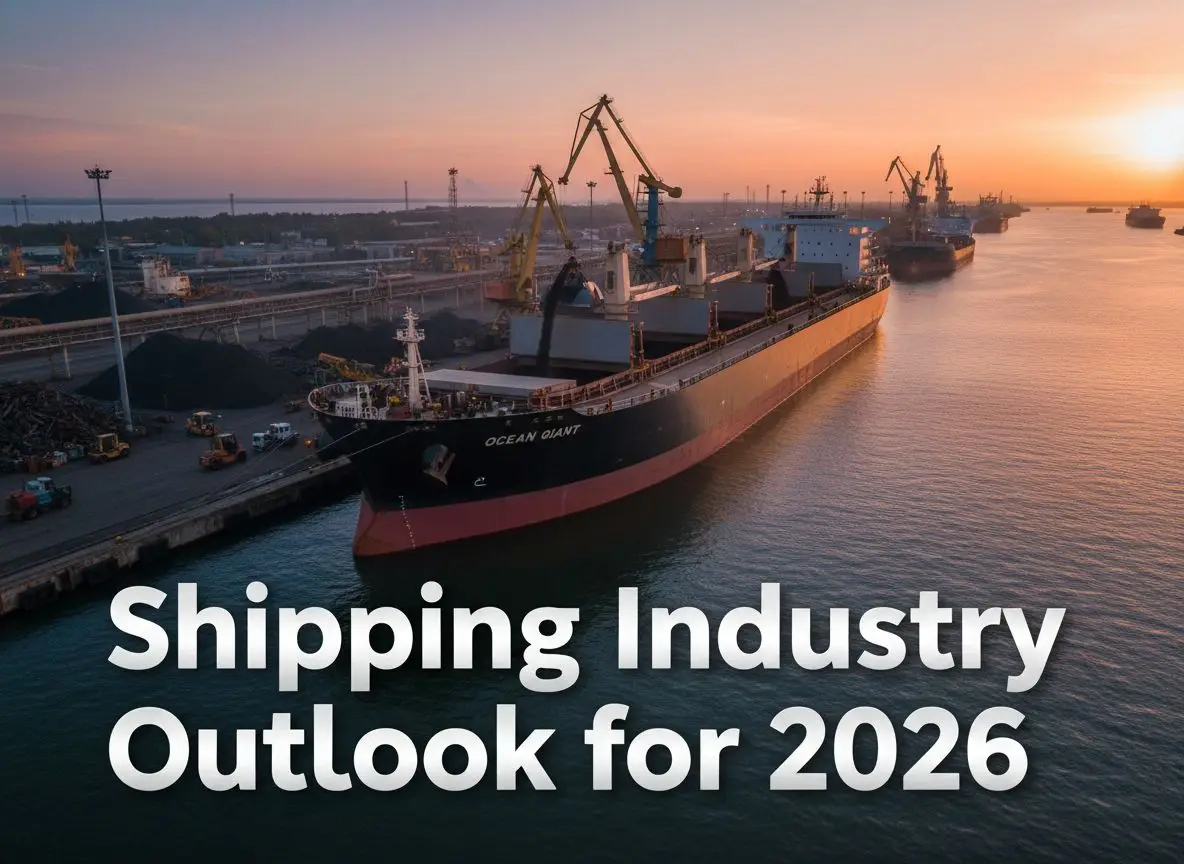
As 2026 approaches, analysts predict a challenging year for the global shipping industry. The sector faces a convergence of risks and opportunities, from overcapacity and tightening environmental regulations to rapid digital transformation. Here’s what to expect—and how industry leaders can prepare.
Overcapacity Risks: New Vessel Deliveries and Freight Rate Pressure
A surge in new vessel deliveries is set to reshape the market landscape. The global orderbook stands at record highs, with over 30% of the active containership fleet scheduled for delivery by 2028. In 2026 alone, fleet capacity is projected to increase by 5%, intensifying competition and putting downward pressure on freight rates. Analysts forecast average overcapacity hovering around 27% through 2028, creating a shipper-favourable environment but challenging carriers to maintain profitability.
Older vessels, while candidates for scrapping, remain essential for feeder operations, limiting the industry’s ability to balance capacity. This paradox—where “overcapacity” can quickly become “resilience” during disruptions—was highlighted during the Red Sea crisis, when excess tonnage provided a crucial buffer.
For a deeper dive into market dynamics, see our https://maritime-hub.com/container-shipping-trends-2026.
Environmental Compliance: IMO’s CII and EU FuelEU Maritime Rules
IMO’s Carbon Intensity Indicator (CII)
From 2026, the International Maritime Organization (IMO) will enforce stricter requirements under its Carbon Intensity Indicator (CII) framework. All ships over 5,000 GT must achieve at least a “C” rating for carbon intensity, with annual improvement targets becoming more stringent each year. Ships rated “D” for three consecutive years or “E” in any year must submit corrective action plans. The reduction factor for CII will escalate to 11% by 2026, with further tightening expected through 2030.
Learn more about IMO’s CII regulations and their impact on shipping.
EU FuelEU Maritime
The EU’s FuelEU Maritime regulation, fully applied from January 2025, sets maximum limits for the greenhouse gas (GHG) intensity of energy used by ships calling at European ports. The targets will become progressively stricter, aiming for an 80% reduction in GHG intensity by 2050. From 2026, the EU Emissions Trading System (ETS) will cover 100% of maritime emissions for ships operating in EU waters, including methane and nitrous oxide.
For compliance strategies and updates, visit our https://maritime-hub.com/shipping-environmental-compliance-2026.
Digital Transformation: Automation and AI-Driven Systems
The shipping industry is embracing digital transformation at an unprecedented pace. By 2026, over 80% of logistics and shipping enterprises are expected to use AI-driven tools for route optimisation, predictive maintenance, and real-time decision-making. Automation is becoming standard across warehousing, fleet management, and customer service, with digital twins and autonomous systems enabling smarter, more resilient supply chains.
Key trends include:
- AI-powered forecasting for demand and routing, reducing operational costs and improving service reliability.
- Robotic automation in warehouses and ports, streamlining repetitive tasks and enhancing safety.
- End-to-end visibility through IoT sensors and real-time data, enabling proactive risk management.
Explore our https://maritime-hub.com/shipping-digital-transformation-2026 for practical guidance and case studies.
Conclusion: Preparing for a New Era
2026 will test the shipping industry’s adaptability and resilience. Overcapacity, environmental compliance, and digital transformation are not just challenges—they are opportunities for forward-thinking operators to differentiate and thrive. By investing in sustainable technologies, embracing regulatory change, and leveraging digital innovation, shipping companies can chart a course for long-term success.
References
- Container Transportation: Key Trends Shaping 2026
- 2026 Ocean Shipping Outlook: Overcapacity, Chaos & Opportunities
- EEXI and CII – ship carbon intensity and rating system – IMO
- EEXI and CII: 2025 Guide to Shipping’s Sustainability Regulations
- CII – Carbon Intensity Indicator — Sustainable Ships
- FuelEU Maritime – Mobility and Transport
- COMMODITIES 2026: Marine LNG, biofuel demand to grow on tighter EU GHG rules
- AI in Logistics 2026: AI, Autonomy & Digital Twins
- 2026 Logistics Trends: AI-Powered Supply Chains Transform the Road Ahead
- The Top 7 Logistics Trends Shaping 2026 [AI, Automation, Sustainability]
