

The Trump administration has seized a VLCC accused of moving sanctioned Venezuelan oil and Iranian oil, triggering a 40% surge in tanker rates across global shipping markets. The enforcement action targets Venezuela’s oil exports despite the country holding the world’s largest proven crude reserves.
Venezuelan crude production has collapsed from 3 million barrels per day in the early 2000s to 0.9 million bpd today. Seaborne exports declined 30% between November and December, dropping from 800,000 barrels per day to 550,000 bpd. U.S. authorities have intensified interdictions as part of sanctions enforcement against the Maduro government.
The seized vessel previously transported 7.3 million barrels of Iranian crude and 3.7 million barrels of Venezuelan crude to China, according to tracking data. China purchases approximately 76% of Venezuela’s oil output, making the enforcement actions particularly significant for both countries’ trade relationships.
State oil producer Petróleos de Venezuela (PDVSA) has begun shutting down oilfields as storage facilities reach capacity. The shutdowns compound operational challenges for shipping executives and traders working in Venezuelan crude markets. VLCC vessels now face heightened operational risks when approaching Venezuelan waters.
US Seizes Venezuelan Oil Tankers in Coordinated Operation
US forces have seized five oil tankers linked to Venezuelan exports since December 2025, according to multiple reports. The VLCC Skipper was captured on December 10, carrying approximately 1.6 million barrels of Venezuelan crude. The tankers Bella-1 (later renamed Marinera), Sophia, Olina, and Centuries were intercepted in rapid succession across international waters.
“These vessels are part of a ghost fleet attempting to evade US forces while carrying embargoed oil,” Homeland Security Secretary Kristi Noem said. The seizure operations involved US Marines and Coast Guard personnel launching from the USS Gerald R. Ford aircraft carrier.
The tankers employed complex deception strategies to avoid detection. The Bella-1 was hastily renamed and reflagged to Russia as US forces pursued it across the Atlantic. The Sophia was carrying between 1.8 to 2 million barrels of Venezuelan crude when intercepted.
US Attorney General Pam Bondi linked the operations to “an illicit oil-shipping network supporting foreign terrorist organizations”. The legal basis for seizures stems from the vessels’ alleged statelessness after flying false flags.
Officials declared that between 30 and 50 million barrels of seized oil will be sold at market rates. The coordinated enforcement represents the Trump administration’s strategy to control Venezuela’s oil distribution globally.
VLCC Rates Surge 40% Amid Market Uncertainty
Very Large Crude Carrier (VLCC) rates have skyrocketed following the U.S. operations against Venezuelan oil vessels, with average earnings jumping 42% week-on-week to USGBP 93,346.37/day—the highest since April 2020. Charterers struggle to secure vessels amid growing uncertainty in shipping markets.
The Baltic Dirty Tanker Index soared 5% immediately after the first tanker seizure. Daily VLCC charter rates climbed from GBP 30,178.08 to GBP 41,296.33. The number of laden VLCCs has reached record levels as traders hesitate to complete voyages.
Risk premiums have expanded considerably, with “war clauses” now standard in contracts for vessels operating near Venezuelan waters. Venezuelan Merey heavy crude discounts have widened to approximately GBP 16.68 per barrel below Brent benchmark prices—a substantial increase from the GBP 11.12-11.91 range observed earlier.
These disruptions occur within an already tight market. Total crude and condensate in transit reached 1.31 million barrels per day in mid-October—the highest since May 2020. VLCC utilization has hit its highest point since the floating storage boom, with many vessels now turning away from Venezuelan waters.
The effects extend beyond VLCCs, as Suezmax tankers firmed with weighted-average earnings rising 19% week-on-week. Industry analysts anticipate these elevated rates will continue into 2026, particularly as the crude tanker orderbook-to-fleet ratio recently peaked at 14.1%—its highest level since 2016.
Shadow Fleet and China’s Oil Imports Face New Risks
The shadow fleet transporting sanctioned oil faces unprecedented enforcement pressure following U.S. interdictions. These aging vessels operate under flags of convenience to mask ownership and activities, but U.S. authorities have developed enhanced tracking capabilities that penetrate traditional deception tactics.
Chinese refiners, who previously received over 320,000 barrels per day of Venezuelan crude, have begun seeking alternative suppliers from Russia and Iran, according to multiple trading sources. Several major Chinese firms have suspended Venezuelan oil purchases while awaiting clarity on enforcement patterns. The supply disruption has forced China to withdraw approximately 15 million barrels from strategic petroleum reserves in January alone.
Protection and indemnity clubs now exclude coverage for vessels linked to Venezuelan trade entirely. Chinese insurers have implemented premium increases of 75-100% for tankers operating in the Western Atlantic. Banks have strengthened compliance procedures, refusing financing for any cargo lacking clear documentation of origin.
Trading companies have implemented extraordinary measures to adapt to enforcement pressure. Ship-to-ship transfers now occur further from monitoring zones, while alternative payment mechanisms outside traditional banking channels are being developed. These operational changes signal a fundamental reshaping of the shadow fleet operations that have sustained Venezuela’s oil exports despite years of sanctions.
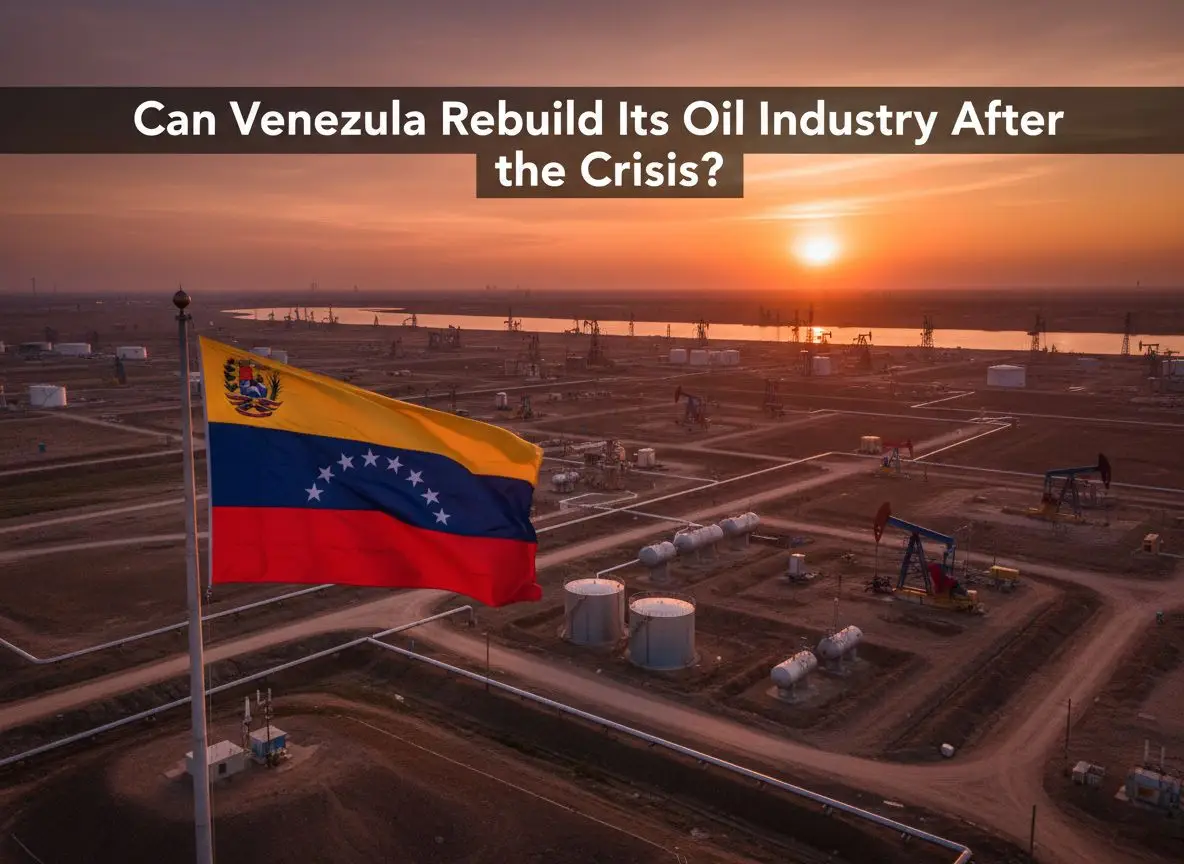
Can Venezuela Rebuild Its Oil Industry After the Crisis?
Venezuela’s oil industry faces a long road to recovery after years of decline. Production has plummeted from over 3 million barrels per day before expropriation to under 1 million bpd currently. Infrastructure deterioration, corruption, mismanagement, and sanctions have driven the collapse.
Restoring production to 3 million bpd would require approximately GBP 145.33 billion in investment over the 2026-2040 period. Maintaining current levels needs GBP 42.09 billion over 15 years. Only 300,000-350,000 bpd could potentially be restored within two to three years through basic repairs.
“We’ve had our assets seized there twice, so you can imagine to re-enter a third time would require some pretty significant changes,” stated Darren Woods, ExxonMobil CEO. Unresolved compensation claims from ConocoPhillips (GBP 9.53 billion) and ExxonMobil (GBP 1.31 billion) complicate re-entry decisions for major oil companies.
Recovery depends on political stability, favourable fiscal terms, access to skilled personnel, and mechanisms to repay outstanding debts. A return to pre-2007 production levels would take a decade or more under optimal conditions. Chevron currently operates as the only major U.S. oil company in Venezuela under special license from the Treasury Department.
The combination of technical challenges and political uncertainties makes Venezuela’s oil recovery timeline highly uncertain. Industry executives remain cautious about committing resources without substantial guarantees against future expropriation.
Conclusion
The U.S. seizure of Venezuelan oil tankers has created immediate disruptions across global shipping markets. VLCC rates jumped 42% following the enforcement actions, with effects extending throughout the tanker sector. The operations against Venezuela’s shadow fleet have altered risk calculations for shipping executives and vessel operators.
Chinese refiners face supply chain adjustments as Venezuela’s primary oil customer. Insurance markets have responded with coverage exclusions and premium increases of 75-100% for tankers in Western Atlantic regions. Banks have implemented stricter compliance procedures for cargo financing.
Venezuela’s oil industry faces substantial reconstruction challenges. Restoring production to 3 million bpd would require approximately $145 billion in investment over the 2026-2040 period. Major oil companies remain cautious about market re-entry given unresolved compensation claims totaling over $10 billion.
“We’ve had our assets seized there twice, so you can imagine to re-enter a third time would require some pretty significant changes,” stated Darren Woods, ExxonMobil CEO.
Market conditions indicate continued volatility ahead. VLCC utilization has reached record levels while the crude tanker orderbook-to-fleet ratio hit 14.1%—its highest since 2016. The enforcement actions demonstrate how geopolitical developments can rapidly reshape global trade flows and vessel economics.
Key Takeaways
The US seizure of Venezuelan oil tankers has created significant disruptions across global shipping markets, driving up freight rates and forcing major supply chain adjustments.
• VLCC rates surged 42% to highest levels since 2020 following US military seizures of five Venezuelan oil tankers carrying sanctioned crude
• China faces major supply disruptions as Venezuela’s primary oil customer, forcing Chinese refiners to seek alternatives and tap strategic petroleum reserves
• Shadow fleet operations now face unprecedented risks with enhanced US tracking capabilities penetrating traditional deception tactics and insurance exclusions
• Venezuela’s oil recovery requires $145+ billion investment over 15 years, with major oil companies remaining hesitant due to past expropriations and unresolved claims
• Tanker market volatility will likely continue as enforcement actions reshape global trade flows and vessel economics in an already tight shipping market
These developments signal a fundamental shift in how sanctioned oil trades operate globally, with lasting implications for shipping rates, supply chains, and energy security.