
This case highlights growing concerns about dark fleet practices, AIS manipulation, and fraudulent documentation within the global shipping industry.
OFAC Clears Altomare and Removes VLCC Kallista From Sanctions List
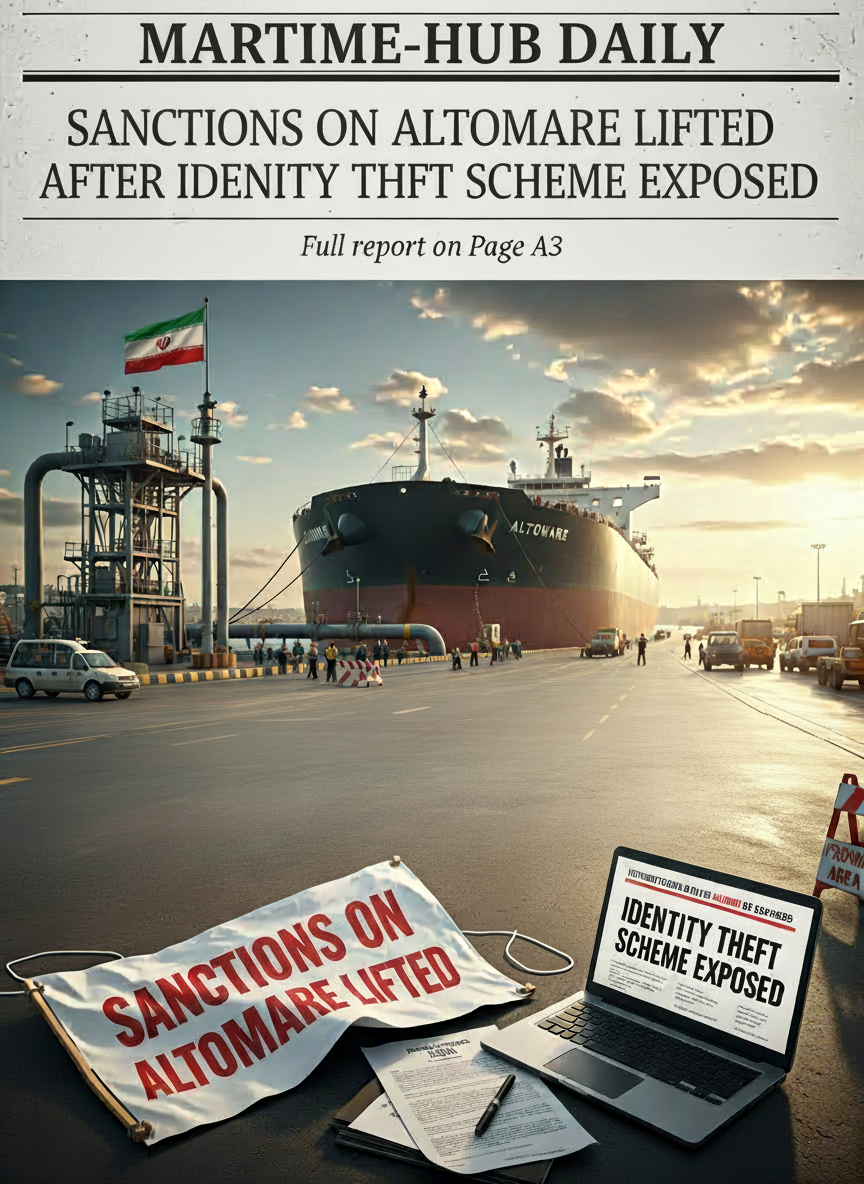
OFAC officially removed Altomare and its 299,000‑dwt VLCC Kallista (built 2010) from the US sanctions blacklist after determining that the company had no involvement in the alleged transport of Iranian oil.
The initial sanctions were imposed after the US Treasury accused Kallista of carrying approximately 4 million barrels of Iranian crude on behalf of Sepehr Energy, a long‑sanctioned entity linked to Iran’s military financing.
However, new evidence revealed that the accusations were based on false tracking data and forged documents generated by a completely different vessel.
A Case of “Extensive Identity Theft”
Matthew Thomas, a lawyer at Blank Rome representing Altomare, described the situation as a case of “extensive identity theft.”
Investigators found that another VLCC had:
- Transmitted falsified AIS (Automatic Identification System) signals
- Used forged paperwork
- Operated under the stolen identity of Kallista
This elaborate scheme allowed the rogue vessel to masquerade as Altomare’s tanker while transporting sanctioned Iranian oil.
Altomare’s Vessel Was Nowhere Near Iran
From the beginning, Altomare strongly denied the allegations, expressing both surprise and disappointment. The company provided verifiable evidence showing that during the period in question:
- Kallista was chartered by reputable charterers
- The vessel was physically located in Basra, Iraq
- It was loading cargo destined for Paradip, India
These facts directly contradicted the initial claims made by US authorities.
The Real Culprit: Dark Fleet VLCC Limas
The investigation ultimately traced the suspicious activity to a 319,000‑dwt VLCC named Limas (built 2003), a vessel associated with the so‑called dark fleet—ships known for evading sanctions through deceptive practices.
Limas had been:
- Spoofing AIS signals
- Assuming Kallista’s identity
- Engaging in illicit oil transport operations
This vessel—not Altomare’s Kallista—was responsible for the activities cited by US authorities.
What This Means for the Maritime Industry
The Altomare case underscores several critical issues affecting global shipping:
1. Rising AIS Manipulation
Identity theft and AIS spoofing are becoming increasingly common among vessels attempting to evade sanctions.
2. Increased Compliance Burden
Shipowners and managers must invest in stronger monitoring, documentation, and verification systems.
3. Regulatory Vigilance
OFAC’s willingness to reverse sanctions demonstrates a commitment to accuracy—but also highlights the complexity of modern maritime enforcement.
Conclusion
The lifting of sanctions against Altomare and the exoneration of VLCC Kallista bring closure to a case rooted in deception and identity theft. The incident serves as a powerful reminder of the evolving tactics used by dark fleet operators and the importance of robust compliance measures across the maritime sector.
