
188
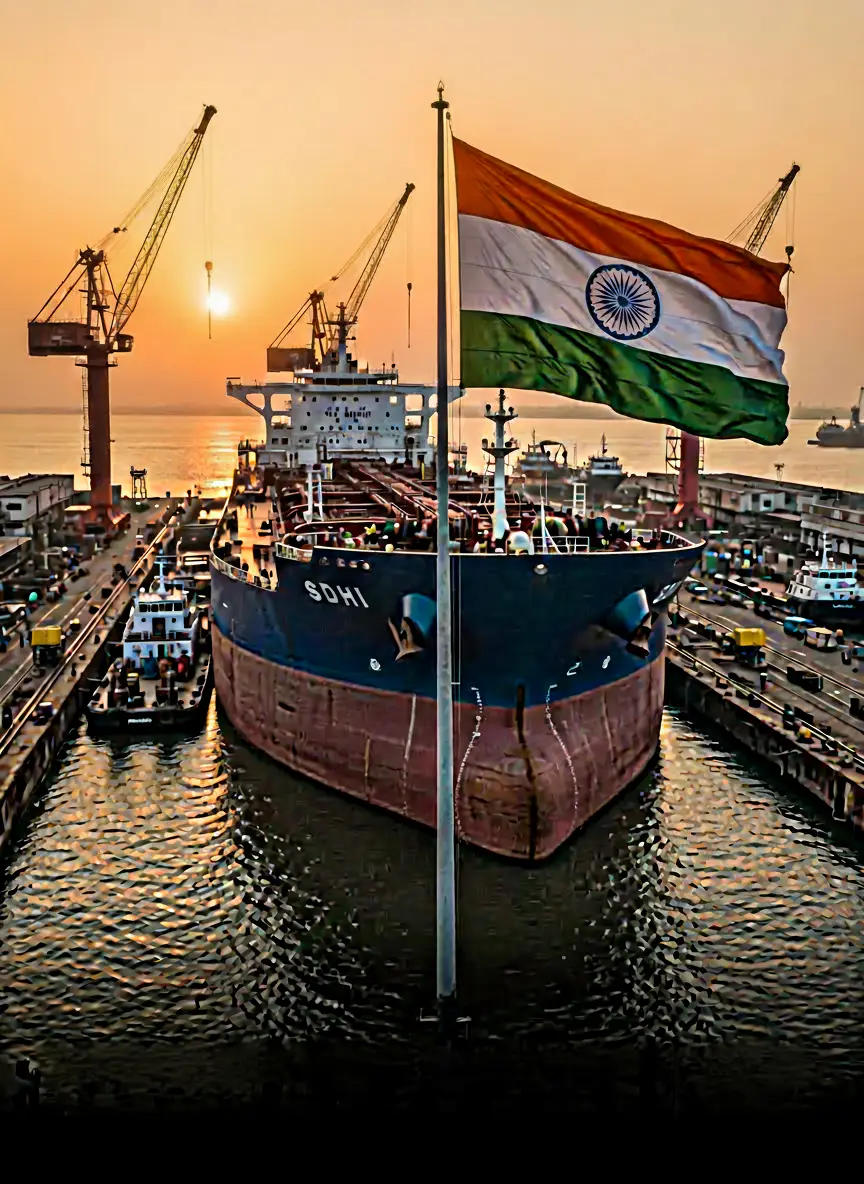
India’s shipbuilding industry is making waves globally with Swan Defence and Heavy Industries (SDHI), with shipbuilding orders, securing a landmark $227 million order for six IMO Type II chemical tankers from European shipowner Rederiet Stenersen AS. This historic deal positions India as a rising force in maritime manufacturing and sustainability.
Why This Matters
The contract is not just a commercial win; it’s a strategic leap forward. With government-backed incentives and a renewed focus on green technologies, India is emerging as a competitive player in global shipbuilding. The agreement includes an option for six additional vessels, signalling long-term confidence in Indian capabilities.
Technical information
18,000 DWT capacity
Dual-fuel LNG-ready hybrid propulsion
Ice Class 1A certification
Advanced automation systems
Designed by Marinform AS and StoGda Ship Design & Engineering, and classified by DNV, these tankers meet the highest international standards for safety and sustainability.
Impact on Indian Shipbuilding
This order revives Pipavav shipyard operations and sets the stage for future foreign investments. It also accelerates technology transfer, skill development, and positions India as a hub for eco-friendly maritime solutions.
Environmental features
1. Dual-Fuel LNG-Ready Hybrid Propulsion
The vessels are equipped with dual-fuel engines that can run on conventional marine fuel or Liquefied Natural Gas (LNG).
LNG significantly reduces SOx (Sulphur Oxides) and NOx (Nitrogen Oxides) emissions compared to traditional fuels. Hybrid systems allow for optimised energy consumption, reducing fuel usage and emissions during low-load operations.
2. Energy Efficiency Design Index (EEDI) Compliance
The tankers meet IMO’s EEDI standards, ensuring lower carbon intensity per tonne-mile.
Advanced hull design and propulsion efficiency contribute to reduced greenhouse gas emissions.
3. Shore Power Connectivity
Vessels are designed to connect to shore-side electricity while docked, eliminating emissions during port stays.
This feature supports compliance with zero-emission port regulations in Europe and other regions.
4. Waste Heat Recovery Systems
Integrated systems capture and reuse waste heat from engines for auxiliary power, reducing fuel consumption and improving overall energy efficiency.
5. Ballast Water Treatment
Equipped with IMO-approved ballast water treatment systems to prevent marine ecosystem contamination and invasive species transfer.
6. Advanced Automation for Optimised Operations
High automation enables real-time monitoring of fuel efficiency, emissions, and energy consumption.
Predictive maintenance reduces downtime and unnecessary fuel burn.
7. Ice Class 1A with Eco-Friendly Coatings
Hull coatings are biocide-free, reducing marine pollution while maintaining anti-fouling properties.
Ice Class certification ensures safe navigation in harsh environments without compromising environmental standards.
