
Shipping Decarbonization
As we move through 2026, the maritime industry is no longer just “talking” about green transitions; it is being moved into them by a pincer movement of tightening global regulations and escalating carbon costs. While the International Maritime Organization (IMO) continues to refine its global framework, regional mandates—particularly from Europe—are creating immediate financial and operational pressure for shipping companies.
The Regulatory Squeeze: From Targets to Taxes
The era of voluntary “green” initiatives has been replaced by mandatory compliance. Two primary regulatory engines are driving this acceleration in 2026:
1. The EU ETS Full Implementation
The European Union Emissions Trading System (EU ETS) has reached a critical milestone this year. As of January 1, 2026, the phase-in period has advanced, requiring companies to cover a significantly larger share of their emissions.
| Year | Emission Coverage (EU ETS) |
| 2024 | 40% of reported emissions |
| 2025 | 70% of reported emissions |
| 2026 | 100% of reported emissions |
Furthermore, the scope has expanded. Starting this year, the EU ETS no longer just tracks $CO_2$; it now includes methane ($CH_4$) and nitrous oxide ($N_2O$). This specifically affects vessels using LNG, as “methane slip”—the release of unburnt gas—now incurs a direct financial penalty.
2. FuelEU Maritime Enforcement
January 2026 marks the first major compliance deadline for the FuelEU Maritime regulation. By January 31, 2026, companies must submit their first verified reports for the 2025 period. Unlike the ETS, which is a tax on carbon, FuelEU mandates a reduction in the greenhouse gas (GHG) intensity of energy used on board.+2
The Global Horizon: IMO’s Net-Zero Framework
While the EU implements regional regulations, the IMO aims to prevent a fragmented “patchwork” of rules. Following the adjournment in 2025, 2026 will be a crucial year for negotiations concerning the IMO Net-Zero Framework.
The industry is currently awaiting consensus on the “economic pillar”—a global GHG pricing mechanism (often called a “carbon levy”). The goal is to funnel these revenues into a Global Net-Zero Fund to support sustainable practices for green shipping and bridge the price gap between fossil fuels and zero-emission alternatives like green ammonia and methanol.
Technical Solutions: Beyond the “Silver Bullet”
Decarbonization isn’t just about fuel; it’s about a holistic approach to vessel efficiency. Shipyards are currently focusing on three main technological pillars:
- Fuel Flexibility: Engines capable of running on multiple fuel types (e.g., Methanol-ready or Ammonia-ready) to “future-proof” assets against shifting fuel availability.
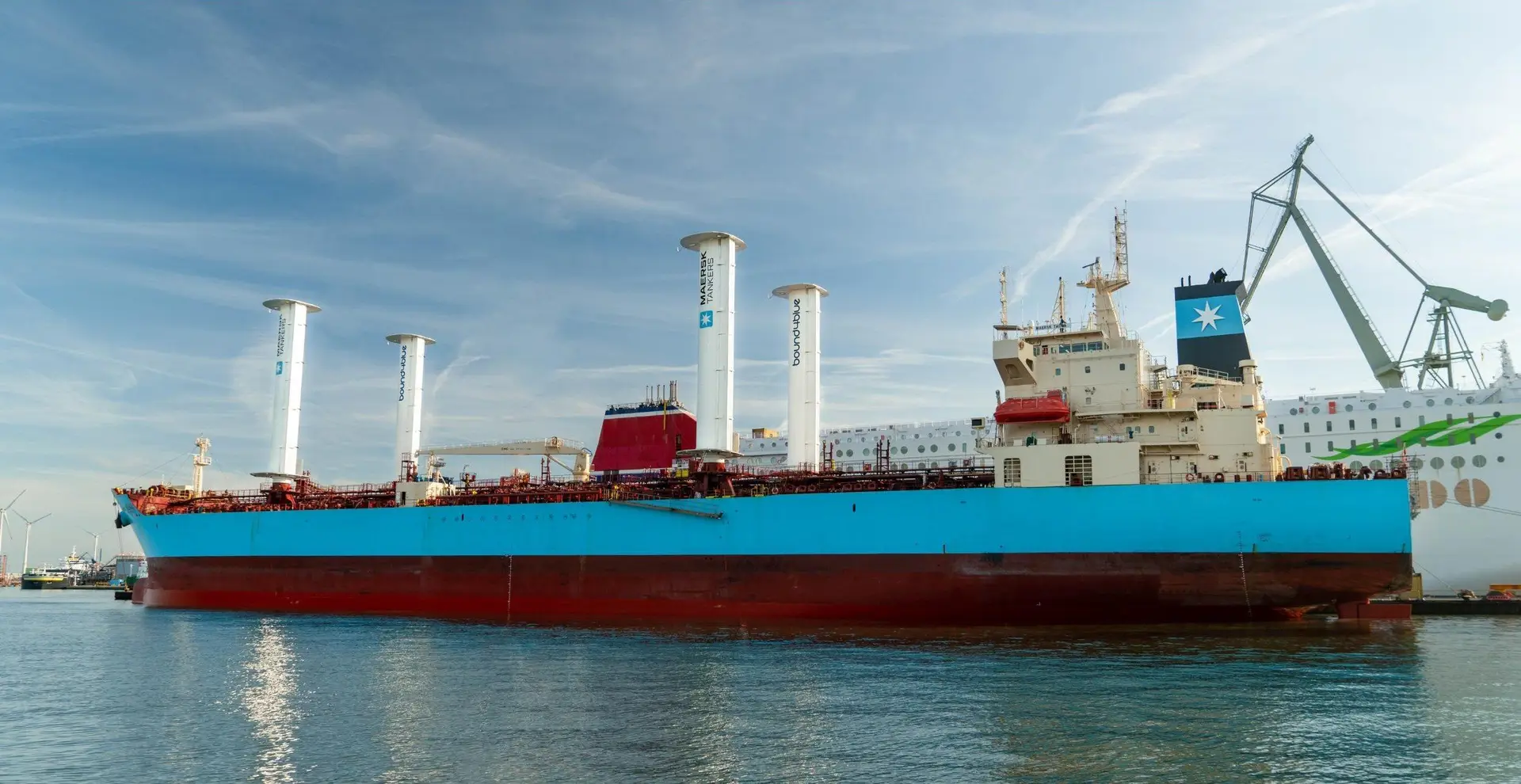
- Wind-Assisted Propulsion: Rotor sails and wing sails are seeing increased adoption as “bolt-on” solutions to reduce fuel consumption by 5% to 20% depending on the route.
- Digital Lifecycle Optimization: Using big data to optimize voyages in real-time. If you aren’t monitoring your data with audit-ready precision in 2026, you are essentially flying blind into a regulatory storm.
“The conversation has shifted from targets to trade-offs. Owners must now balance the high CAPEX of new technologies against the soaring OPEX of carbon allowances.” — Industry Insight, 2026.
Strategic Outlook: Managing the Transition
For shipping companies, 2026 is the year of Pragmatic Compliance. The gap between regulation and infrastructure (fuel availability) remains a challenge. Many are turning to “pooling” mechanisms under FuelEU, allowing over-compliant ships to balance out those still running on traditional fuels.
Ultimately, the pressure to decarbonise is no longer a distant threat—it is a line item on the 2026 balance sheet.
Sources
- International Maritime Organization (IMO) – Marine Environment Protection Committee (MEPC) 84 Updates.
- European Commission – Climate Action: Maritime Transport and the EU ETS (2026 Revision).
- Wärtsilä Marine – “Maritime Trends 2026: Lifecycle Optimization and Digitalization.”
- DNV – “Maritime Forecast to 2050: The 2026 Update.”