

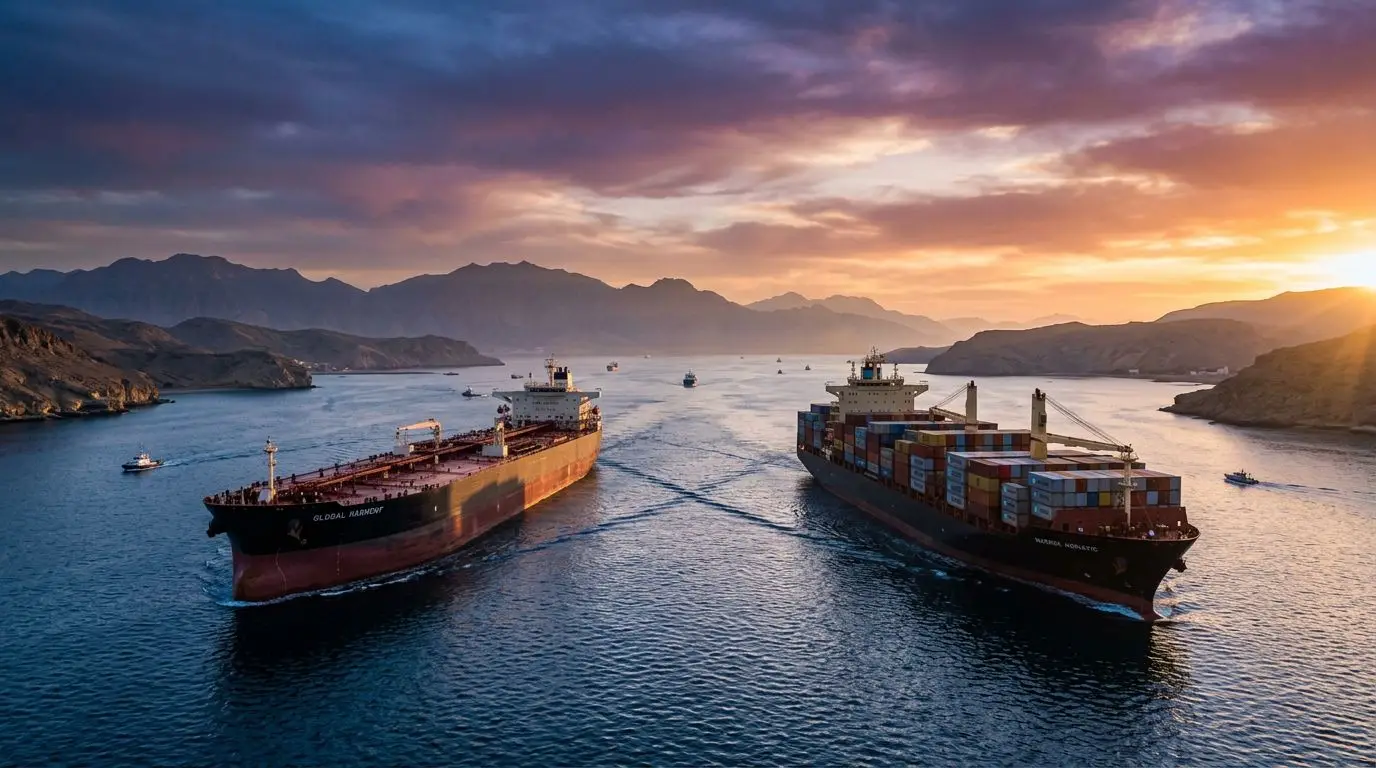
The global maritime industry has long operated amid geopolitical risk, yet few episodes have reshaped commercial shipping as profoundly as the recent escalation between the United States and Iran. What was once treated as a remote contractual contingency—War Risks—has become a front‑line operational variable, influencing routing decisions, voyage economics, insurance availability, and even whether a ship is legally able to sail.
For shipowners, charterers, cargo interests, and insurers alike, war risk is no longer a clause in the policy wording; it is a daily cost driver and go-or-no-go decision point.

Practical next steps for key stakeholders include:
– Shipowners should review existing contracts for war risk clauses, ensure that emergency response plans are up to date, and maintain direct communication lines with insurers and naval authorities.
– Charterers need to conduct fresh risk assessments for planned routes, clarify liability terms with owners, and establish transparent protocols for sharing real-time intelligence and voyage updates.
– Cargo interests are advised to re-examine their insurance coverages, account for possible surcharges in logistics budgets, and engage more closely with carriers on security assurances and contingency planning.
– Insurers should update underwriting guidelines, require comprehensive security documentation, and proactively communicate with clients regarding evolving threats and coverage preconditions.
By taking these steps, each stakeholder group can adapt more effectively to the heightened and dynamic war risk environment.
Understanding War Risks in Modern Maritime Trade
In shipping, War Risks refer to perils arising from hostilities, terrorism, rebellion, or politically motivated violence. These risks sit outside standard hull and machinery cover and are insured separately, typically through war hull and war P&I extensions.

What distinguishes the current U.S.–Iran conflict from earlier regional crises is the asymmetric and non‑linear nature of the threat environment. Modern maritime risk is no longer confined to declared war zones or territorial waters. Vessels have been targeted based on:
- flag state,
- ownership nationality,
- cargo origin or destination,
- or even perceived political alignment.
As a result, the Joint War Committee (JWC) has been forced to redesignate Listed Areas rapidly and frequently, sometimes with only days’ notice. For operators, this has dramatically compressed decision timelines: a voyage that was commercially viable at fixture can become uninsurable by the time the vessel reaches the approach channel. In this environment, regulatory requirements and compliance obligations can shift just as quickly, affecting access to particular waters, reporting duties, and crew safety protocols. Operators must actively monitor official advisories, flag state circulars, and updates from relevant authorities, and be ready to adapt internal compliance processes to maintain legal and contractual eligibility for transit. Establishing a regular review of regulatory changes and designating responsible personnel to track compliance developments can help minimise the risk of noncompliance under rapidly changing conditions.
From Seamanship to Survival: How Maritime Safety Has Changed
The U.S.–Iran maritime standoff has accelerated a fundamental shift in shipboard safety philosophy. Safety is no longer limited to compliance with SOLAS and ISM requirements—it has become defensive risk management.
Practical examples from current operations include:
- Vessel hardening: installation of physical barriers, blast‑resistant window films, and reinforced citadel spaces.
- Electronic countermeasures: enhanced AIS monitoring to detect spoofing or signal manipulation, now a documented risk in the Gulf region.
- Security personnel: armed guards, once largely restricted to anti‑piracy operations off Somalia, are increasingly deployed on tankers and high‑value cargo ships transiting the Gulf and Gulf of Oman.
- Naval coordination: participation in escorted transits organised by coalitions such as the International Maritime Security Construct (IMSC) or EMASoH, often involving reporting protocols, speed restrictions, and convoy windows.
In practical terms, this has turned the ship’s bridge into a tactical operations centre. Masters and officers are now expected to assess threat intelligence, manage real-time risk reporting, and coordinate with naval forces—skills that were peripheral to navigation a decade ago. This shift requires bridge teams to develop new competencies, including advanced risk assessment, mastery of security communication protocols, real-time data analysis, and the use of threat-monitoring technologies. Additional training in crisis decision-making, cyber risk awareness, and procedures for interaction with naval or military escorts has become essential. As a result, companies should prioritise upskilling crew members through scenario-based drills, interpretation of intelligence briefings, and the integration of security-focused modules into standard operational training.
The Insurance Shock: When Risk Becomes a Price Tag
Nowhere is the impact of the conflict more visible than in the insurance market.
War‑Risk Premiums: From Marginal to Material
Before the escalation, war‑risk premiums for Gulf transits were typically 0.02–0.05% of hull value. In early March 2026, premiums rose sharply to 0.5–1.0% per voyage, with quotes often valid for only 24–48 hours due to market volatility.
Practical example:
- A tanker valued at USD 100 million
- Pre‑crisis war premium: ~USD 40,000
- Current war premium: USD 600,000 to USD 1,000,000 for a single transit
This cost is payable per voyage, not annually, fundamentally altering voyage economics. To manage or mitigate these increased expenses, operators can consider negotiating cost-sharing agreements with charterers or cargo interests, especially in high-risk regions. Exploring alternative routing, even if longer, may sometimes provide a more favourable risk-to-cost balance. In addition, consolidating voyages or timing transits to coincide with lower-risk periods can help reduce overall premium outlays. Proactively engaging with insurers may also open the door to favourable terms if robust security protocols are demonstrated.
Container Shipping: Surcharges Passed Downstream
Container lines have responded by imposing explicit war‑risk and emergency conflict surcharges, typically:
- USD 1,500–2,000 per TEU
- USD 3,000–4,000 per FEU
- Higher still for reefers and special equipment
For a cargo owner moving 500 FEU of consumer goods, this can mean an unplanned USD 1.5–2.0 million increase in transport costs—before considering delays or rerouting.
Insurers, meanwhile, have tightened underwriting criteria. Coverage increasingly depends on:
- detailed voyage security plans,
- real‑time tracking access,
- compliance with naval guidance,
- and documented crew training.
In today’s market, transparency and preparedness are prerequisites for insurability, not optional enhancements.
Navigation in Contested Waters: A Permanent Condition
The long‑term implication of the U.S.–Iran conflict is not a temporary disruption but a persistent risk premium on freedom of navigation.
Even where limited transits resume, they do so under:
- convoy or escort constraints,
- selective vessel acceptance,
- elevated insurance deductibles,
- and continued threat monitoring.
Looking forward, the industry is already moving toward:
- AI‑driven threat intelligence feeds,autonomous surveillance and anomaly detection,
- Predictive risk modelling integrated into voyage planning software
- However, implementation of these advanced technologies is not without challenges. High upfront costs can be prohibitive for smaller operators, and integration with legacy systems often requires significant time and technical expertise. Resistance to change and gaps in crew training can further slow adoption. To realise the benefits of innovation, industry leaders must plan for these barriers by investing in phased rollouts, tailored crew training, and partnerships with technology providers. Addressing these challenges early on will help ensure that digital transformation actually delivers on its promise of enhanced maritime security and resilience..
Navigation in contested waters is no longer an exception—it is becoming a baseline operating condition.
Conclusion
The transformation of maritime safety and insurance in response to the U.S.–Iran conflict reflects a broader reality: geopolitics now directly shapes the viability of voyages, not just market sentiment.
War Risks have evolved from a contractual footnote into a decisive operational factor that determines:
- whether a vessel can sail,
- how much a voyage costs,
- and who ultimately bears the risk—shipowner, charterer, insurer, or consumer.
Despite this volatility, the maritime sector continues to adapt. Through enhanced security practices, dynamic risk pricing, and closer coordination with international authorities, global trade continues to move—even through increasingly hostile waters.
The lesson is clear: in today’s maritime environment, resilience is not achieved by avoiding risk, but by pricing, managing, and navigating through it intelligently.