

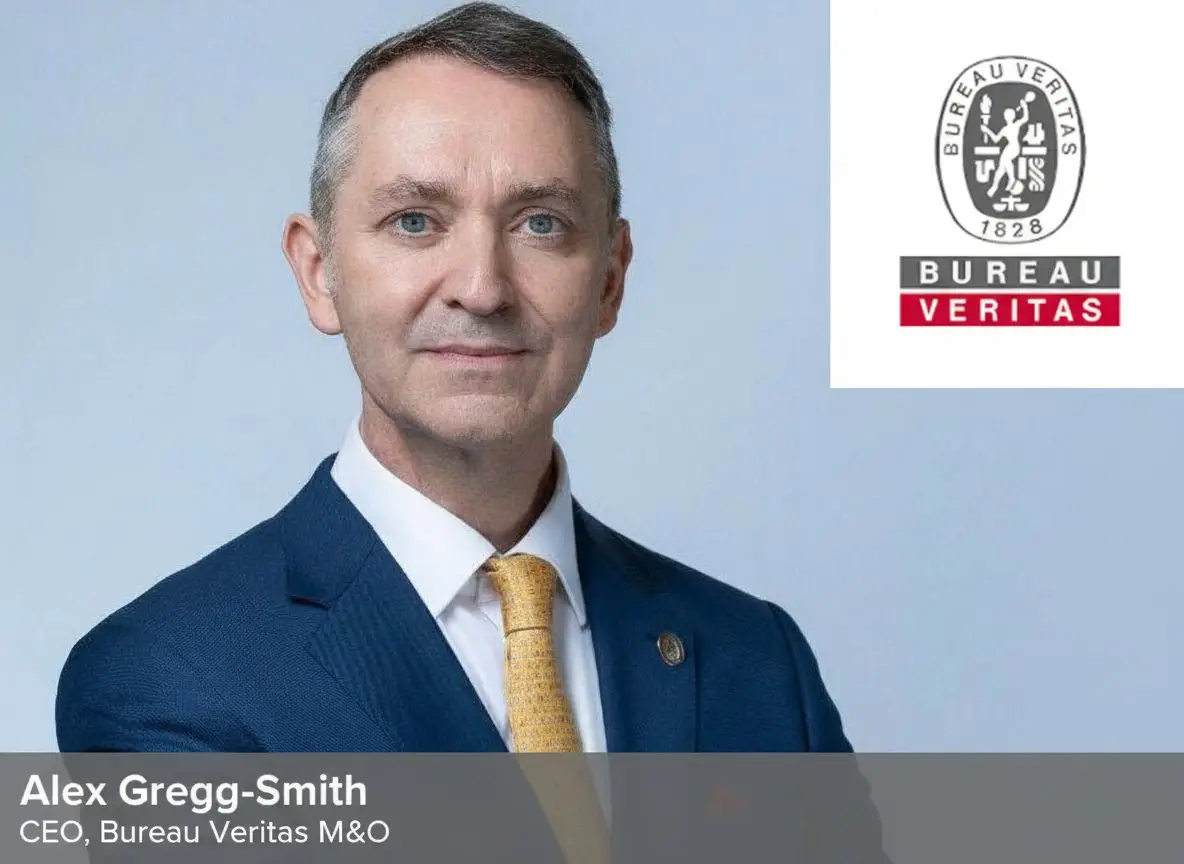
Bureau Veritas executive Alex Gregg-Smith will take the helm as the next chair of the International Association of Classification Societies (IACS) beginning July 1, 2026. Currently serving as president of marine and offshore at Bureau Veritas, Gregg-Smith’s term will continue through December 31, 2027. This leadership transition comes at a particularly significant moment for the maritime sector.
With more than twenty years of experience at Bureau Veritas, as well as extensive leadership roles in both shipyards and with shipowners, Gregg Smith is a graduate from Newcastle upon Tyne University with an M.Eng degree in Naval Architecture and Marine Engineering. Gregg-Smith brings valuable industry knowledge to the position. Bureau Veritas, a global leader in testing, inspection, and certification services, has prepared him well for this prestigious role. Furthermore, his appointment marks the third elected IACS council chair following governance changes introduced in 2020.
The timing of Gregg-Smith’s appointment is especially important because the maritime industry currently stands at a crucial stage in its technical, digital, and environmental evolution. Additionally, his leadership will influence an organisation with extraordinary reach and impact, as more than 90% of the world’s cargo-carrying tonnage is covered by the classification design, construction, and through-life compliance rules and standards set by the twelve Member Societies of IACS.
Gregg-Smith Assumes IACS Chairmanship from July 1
The Council of the International Association of Classification Societies has unanimously elected Alexander Gregg-Smith as its next Chair. The President of Bureau Veritas Marine & Offshore will formally step into this leadership role on July 1, with his term extending through December 31, 2027.
Notably, Gregg-Smith becomes just the third elected IACS Council Chair since the association implemented significant governance changes in 2020. These reforms also established an elected General Policy Group Chair position, co-located with the IACS Secretariat in London.
Upon his election, Gregg-Smith remarked: “The maritime industry is at a crucial stage in its technical, digital and environmental evolution”. His leadership will be instrumental in implementing the IACS Strategic Plan, which emphasizes consistent application of high technical standards, risk-based safety approaches, and environmentally sound technological advancements.
During the transition period, Gregg-Smith will work closely with both the IACS Secretary General and the GPG Chair to ensure continuity of the association’s extensive work program. IACS Secretary General Robert Ashdown praised the appointment, stating it reflects the collective desire of all twelve Member Societies to maintain IACS’s role in providing “impartial, non-commercial, expert technical input” toward the goal of safer, cleaner shipping.
Gregg-Smith Brings Two Decades of Maritime Leadership
Gregg-Smith’s appointment to the IACS Council Chair builds upon a distinguished career path in the maritime industry. Before assuming his new role as President of Bureau Veritas Marine & Offshore Division on January 1, 2026, he served as Senior Vice-President for Marine and Offshore in the Asia Pacific region.
His professional journey includes a unique career trajectory, having accumulated his 20 years with Bureau Veritas across two separate periods, interspersed with leadership positions at both shipowners and shipyards. This diverse background gives him an exceptional understanding of multiple perspectives within the maritime sector.
A dual UK-French national, Gregg-Smith will be based in Paris in his new position, where he reports to Matthieu de Tugny, who transitioned to Executive Vice-President of Industrials & Commodities last September.
While leading Bureau Veritas’ China team since 2020, Gregg-Smith received the 2025 Shanghai Magnolia Gold Award, the city’s highest recognition for expatriates. Upon accepting this honor, he reflected on his 27-year connection with Shanghai, stating: “It’s been a pleasure to lead our China team, contributing to this dynamic city’s journey”.
In his IACS role, Gregg-Smith will leverage this extensive global experience to address the maritime industry’s evolving challenges.
IACS Faces Pivotal Moment in Maritime Evolution
The maritime sector currently faces unprecedented transformation across multiple fronts. This evolution presents both opportunities and challenges that IACS must address as it upholds its core mission of ensuring “safe ships and clean seas”. More than 90% of global cargo-carrying tonnage relies on IACS member societies’ standards, making the association’s role critical during this transitional period.
IACS has identified three primary workstreams requiring focused attention. First, the industry’s decarbonization efforts demand careful oversight. Though IACS remains “agnostic about the choice of renewable energy or green fuel,” it recognises that “an early significant accident might jeopardise the implementation of a promising novel technology”.
Second, IACS has established a Safe Digital Transformation Panel to address the industry’s digital evolution. This panel tackles cyber resilience, complex system integration, ship-to-shore data communication, and autonomous vessels. The smart ship market, valued at USD 6.10 billion in 2023, is projected to reach USD 8.50 billion by 2030, underscoring this area’s importance.
Third, IACS focuses on the human element as ships increasingly incorporate novel technologies. This transition requires a new generation of skilled engineers capable of operating complex, integrated systems.
Throughout these changes, IACS continues providing technical support, compliance verification, and research to maintain maritime safety standards, positioning itself as a trusted partner for regulators and classification societies during this pivotal maritime evolution.
Conclusion
Alex Gregg-Smith’s appointment as IACS Council Chair represents a significant leadership transition during a crucial period for the maritime industry. His extensive twenty-year career at Bureau Veritas, combined with leadership roles across shipyards and shipping companies, equips him with comprehensive industry knowledge essential for this position. The timing of his chairmanship proves particularly noteworthy as the maritime sector navigates complex technical, digital, and environmental transformations.
The industry certainly benefits from Gregg-Smith’s global perspective, gained through his work in Asia Pacific and China, where he earned Shanghai’s highest recognition for expatriates. This international experience will undoubtedly strengthen IACS as it addresses pressing challenges facing modern shipping.
IACS member societies currently oversee standards for more than 90% of global cargo-carrying tonnage, thus placing the organization at the center of maritime safety and environmental protection efforts. Gregg-Smith’s leadership will therefore guide three critical workstreams: industry decarbonization, safe digital transformation, and human element considerations.
First, decarbonization efforts require careful oversight to prevent accidents that might hinder promising new technologies. Second, digital evolution necessitates addressing cyber resilience and complex system integration through the Safe Digital Transformation Panel. Third, the human element remains vital as ships incorporate increasingly sophisticated technologies requiring skilled operators.
Gregg-Smith steps into this role as just the third elected Chair since IACS implemented governance reforms in 2020. His leadership arrives at a pivotal moment when the maritime industry seeks balanced approaches to innovation and safety. Through technical support, compliance verification, and ongoing research, IACS continues its fundamental mission of ensuring safe ships and clean seas while supporting the industry’s evolution toward a more sustainable and technologically advanced future.
