
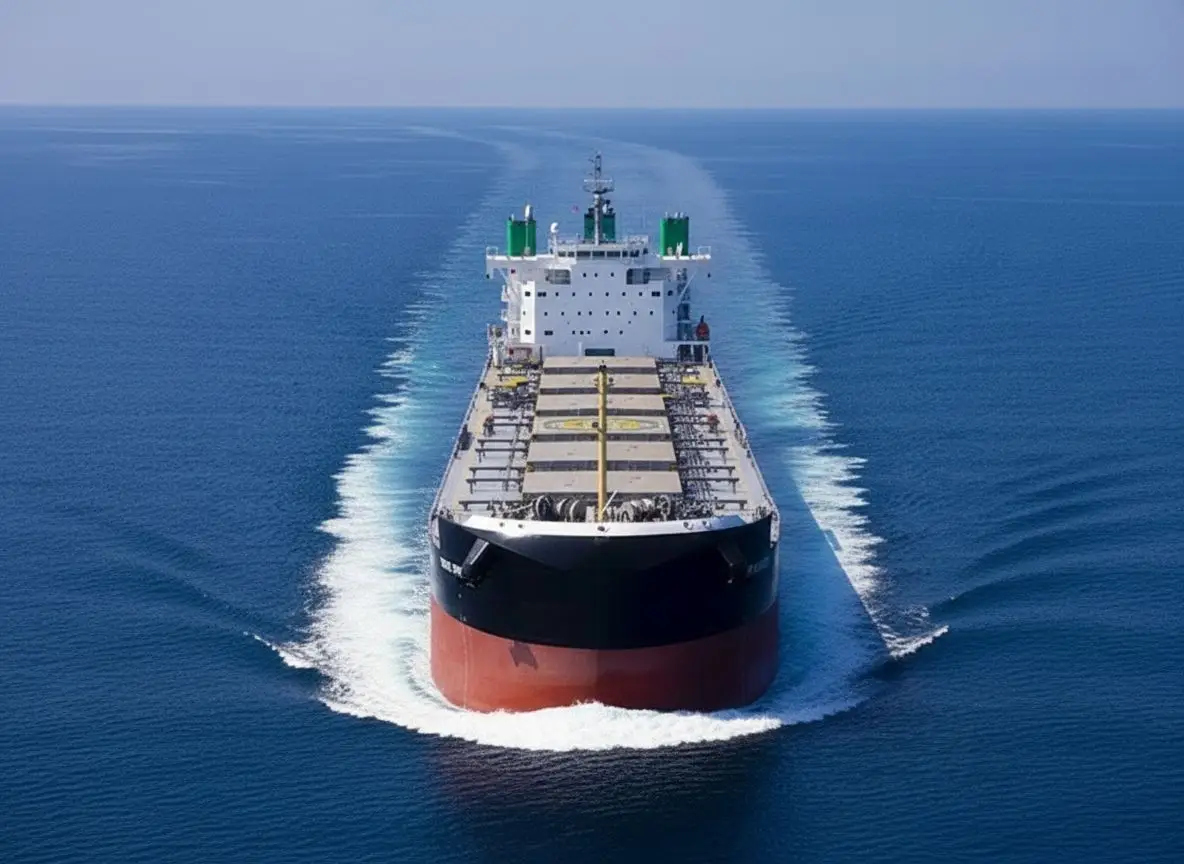
Cargill recently made maritime history with the launch of its first methanol-powered bulk carrier, marking a significant milestone in the shipping industry’s journey toward decarbonization. The groundbreaking vessel, built by Tsuneishi Shipbuilding, represents the first Kamsarmax methanol-fueled bulker to enter commercial service and promises to slash greenhouse gas emissions by up to 70% compared to conventional fuels.
Notably, this innovative ship embarks on an ambitious maiden voyage spanning from the Philippines to Singapore, then to Western Australia, before reaching its European destination. The vessel features dual-fuel engine technology that allows it to run primarily on methanol while maintaining conventional fuel capabilities. Furthermore, Cargill has partnered with Mitsui & Co. on the project’s ownership structure, thereby strengthening its commercial viability. Significantly, this launch represents just the beginning of Cargill’s multi-solution decarbonization strategy, with four additional methanol-capable vessels scheduled to join the fleet soon.
Brave Pioneer Embarks on Groundbreaking Methanol-Powered Journey
The Brave Pioneer made history on January 15, 2026, when it was officially named by H.E. President of the Republic of the Philippines, Ferdinand R. Marcos Jr., during a ceremonial event at Tsuneishi’s Philippine shipyard [1]. This vessel represents a pivotal advancement in maritime decarbonization efforts, serving as the first of five green methanol dual-fuel dry bulk vessels chartered by Cargill [2].

Courtesy: Cargill
Vessel Specifications and Design Features
The groundbreaking vessel boasts impressive specifications that combine environmental innovation with practical functionality. Measuring 229 meters in length, the Brave Pioneer features both shallow-draft and low-air-draft configurations, enabling access to a wide range of ports worldwide [1]. This versatile 82,000 deadweight tonnage vessel can transport various commodities, including iron ore, grain, and coal [3].
As a Kamsarmax design, the ship can enter Kamsar Port in the Republic of Guinea, further enhancing its operational versatility [1]. Distinctively, the vessel has a 98,000 cubic meter capacity [3] and houses a propulsion system engineered to operate efficiently on conventional fuel while enabling a transition to greener alternatives as availability improves [2].
Tsuneishi Shipbuilding Delivers First Kamsarmax Methanol-Fueled Bulker
Tsuneishi Heavy Industries (CEBU), Inc., the manufacturing base in the Philippines, successfully completed and delivered the world’s first Methanol Dual-Fuelled Kamsarmax Bulk Carrier [1]. This achievement marks a significant milestone for both the shipbuilder and the Philippines’ maritime industry, as the yard has now completed 381 ships [4].
The vessel was initially floated out in July 2025, followed by its final delivery in January 2026 [3]. OKUMURA Sachio, Representative Director, President & Executive Officer of Tsuneishi Shipbuilding Co., Ltd., expressed immense pride in the completion of this pioneering vessel [1]. Additionally, the construction represents a major advancement in sustainable shipbuilding technology and supports broader industry decarbonization efforts.
Mitsui & Co. Partners with Cargill on Ownership Structure
The ownership structure behind the Brave Pioneer illustrates a strategic collaboration between industry leaders. Although chartered by Cargill, the vessel is officially owned by Mitsui & Co. Ltd. [2]. This partnership demonstrates the increasing industry commitment to sustainable shipping solutions.
Mitsui placed the original order for two vessels in 2023, both destined for charter to Cargill [4]. Subsequently, J. Lauritzen, through its Lauritzen NexGen Shipping division, signed a letter of intent with Tsuneishi Shipbuilding for the construction of at least two additional methanol dual-fuel Kamsarmax bulk carriers [5]. These vessels were ordered in partnership with Cargill, which will operate them for a minimum of seven years [5].
Jan Dieleman, President of Cargill’s Ocean Transportation business, emphasized the importance of testing innovative technologies: “Decarbonising global shipping requires a mix of technologies and the willingness to take bold steps before the entire ecosystem is ready” [2]. Moreover, he highlighted that technologies like green methanol come with uncertainty, but industry leaders have a responsibility to test these innovations at sea and share their findings to facilitate wider adoption.
Ship Navigates Philippines-Singapore-Australia-Europe Route
The Brave Pioneer commenced its historic journey on January 15, 2026, departing from the Philippines as the first milestone in an ambitious global route [6][7][8]. This pioneering voyage represents more than transportation—it serves as a floating laboratory for Cargill to evaluate methanol as a viable shipping fuel under real-world conditions.
Singapore Port Prepares First Green Methanol Bunkering Operation
Following departure, the vessel heads directly to Singapore for a landmark green methanol bunkering operation [6][7][8]. This stop is particularly significant as Singapore’s Maritime and Port Authority (MPA) has recently awarded methanol bunkering licenses to three companies—Global Energy Trading Pte Ltd, Golden Island Pte Ltd, and PetroChina International (Singapore) Pte Ltd—valid from January 1, 2026, through December 31, 2030 [9]. These companies emerged from a competitive field of 13 applicants through a comprehensive evaluation process [10].
Singapore has positioned itself at the forefront of alternative marine fuels, having already completed three green methanol bunkering operations prior to Brave Pioneer’s arrival. In July 2023, Hong Lam bunkered 300 tons of biomethanol to Maersk’s first methanol dual-fuel vessel Laura Maersk [11]. The port has also developed Technical Reference 129, establishing comprehensive framework for safe methanol bunkering operations, including custody transfer requirements and guidance on mass flow meters [12].
For Brave Pioneer’s bunkering operation, Towngas delivered 5,000 tons of ISCC EU-certified green methanol to Golden Island through Mitsubishi Corporation [13]. This specific green methanol achieves carbon intensity reduction exceeding 75% compared to conventional very low sulfur fuel oil [13].
Western Australia Welcomes Innovative Vessel
After refuelling in Singapore, the Brave Pioneer will proceed to Western Australia [6][7][8], marking another important stage in its journey. This Australian stop demonstrates the vessel’s global operational capacity and Cargill’s commitment to establishing low-carbon shipping routes across major maritime corridors.
Australia has already shown interest in methanol bunkering infrastructure, with the Port of Melbourne signing a Memorandum of Understanding with several shipping companies and fuel producers to explore establishing a green methanol bunkering hub [11]. Brave Pioneer’s visit consequently represents an opportunity to showcase methanol-powered shipping technology in the Asia-Pacific region.
European Destination Marks Completion of Historic Voyage
The final leg of Brave Pioneer’s journey will take it from Western Australia to Europe [6][7][8], completing a truly global demonstration of methanol-powered shipping. Throughout this extensive journey, Cargill is conducting crucial operational trials focusing on three key areas: evaluating methanol bunkering readiness, understanding how environmental attributes can be traced through carbon accounting systems, and assessing market appetite for low-carbon freight services [6][7][8].
Though specific European port details remain unannounced, this final destination carries symbolic importance. Similar methanol-powered vessels have already made successful voyages to European ports—for instance, Maersk’s methanol-powered feeder container ship A P Moller arrived in Europe after refueling in Rotterdam, completing a journey from South Korea via Singapore and Egypt to Copenhagen [14].
Brave Pioneer’s arrival in Europe will conclude a voyage that demonstrates the practical viability of methanol as a marine fuel across different seas, climates, and regulatory environments—establishing a model for future low-carbon shipping operations worldwide.
Methanol Propulsion Slashes Emissions by Up to 70%
Methanol stands out as a leading candidate for sustainable marine fuel, offering substantial environmental benefits for the shipping industry. The Brave Pioneer‘s propulsion system demonstrates how this alternative fuel can dramatically reduce environmental impacts across multiple emission categories.
CO₂ Reductions Compared to Conventional Fuels
Methanol-powered vessels like Cargill’s Brave Pioneer can achieve significant reductions in carbon dioxide emissions. When using conventional methanol, CO₂ emissions decrease by approximately 7% compared to heavy fuel oil (HFO) in a tank-to-wake analysis [15]. However, methanol’s true potential lies in its renewable variants. Green methanol, produced from biomass or captured CO₂, creates a pathway toward carbon neutrality [16].
The carbon footprint varies significantly based on production methods. Fossil-based methanol actually generates more lifetime CO₂ emissions than diesel, making green methanol the appropriate choice for decarbonization efforts [15]. Methanol contains carbon but can still function as a net-zero emission fuel when produced from renewable sources [16].
Methanol possesses the highest hydrogen-to-carbon ratio of any liquid fuel, a characteristic that naturally lowers CO₂ emissions compared with conventional marine fuels [1]. Specifically, combustion of methanol emits 69 grams of CO₂ per megajoule of fuel [3]. In contrast, CO₂ from combusted bio-methanol is considered climate neutral and therefore not counted as a greenhouse gas [3].
NOx and SOx Emissions Drop Dramatically
Beyond carbon reductions, Cargill’s methanol-powered vessel delivers even more impressive results regarding other harmful pollutants. Marine vessels fueled by methanol emit 60% less nitrogen oxides (NOx) compared to conventional petroleum bunker-fueled ships [17]. Wartsila’s tests confirm this figure, showing NOx emissions approximately 40% of those from HFO using the same engines at similar loads [3].
The reduction in sulfur oxides (SOx) is even more substantial—up to 99% less than traditional marine fuels [17][15]. This virtually eliminates a major contributor to acid rain and respiratory issues. The adoption of methanol fuel aligns perfectly with International Maritime Organization (IMO) goals for improving air quality in the shipping industry [18].
Particulate matter emissions likewise decrease significantly with methanol combustion. This clean-burning alcohol produces fewer pollutants overall when compared to traditional marine fuels [19]. Importantly, methanol is miscible with water, greatly reducing environmental hazards from inadvertent spills [17].
| Emission Type | Reduction Percentage |
| CO₂ | 7-10% (fossil methanol) / Up to 70% (green methanol) |
| NOx | 60% |
| SOx | 99% |
| Particulate Matter | Significant reduction |
Environmental Certification and Verification Processes
Ensuring these environmental benefits requires rigorous verification systems. For Brave Pioneer, the methanol fuel system complies with the IMO’s Interim Guidelines for the Safety of Ships Using Methyl/Ethyl Alcohol as Fuel, adopted in November 2020 [1]. These guidelines cover essential aspects including ship design, fuel containment, materials, pipe design, bunkering procedures, and crew training [1].
The environmental attributes of methanol must be traced through carbon accounting systems—one of the primary purposes of Cargill’s operational trials with the Brave Pioneer [15]. Specifically, green methanol certification requires validation that it achieves carbon intensity reduction exceeding 75% compared to conventional fuels [1].
Environmental certification extends beyond just the fuel itself. The vessel’s methanol propulsion systems undergo testing by classification societies to verify emissions reductions. Naturally, advanced engine testing results suggest that 90-95% reductions in tank-to-wake emissions are achievable with newer engines under development [16].
For Cargill, these verification processes form a critical component of their broader decarbonization strategy, as emissions data collected will inform future vessel deployments and fuel choices across their global fleet.
Cargill Conducts Real-World Operational Trials at Sea
Beyond launching the vessel, Cargill has transformed the Brave Pioneer’s maiden voyage into an extensive operational testing program. The company’s real-world trials aim to generate vital data that will shape future methanol adoption across the shipping industry.
Bunkering Procedures Undergo Rigorous Testing
The first key focus area involves comprehensive evaluation of green methanol bunkering procedures. Cargill is assessing safety protocols, time requirements, and operational efficiencies at major port hubs throughout the journey [2]. These tests are designed to identify practical challenges in methanol fueling that might not emerge during theoretical planning. Since methanol requires different handling procedures than conventional marine fuels, these trials provide essential insights for standardizing bunkering operations globally.
Carbon Accounting Systems Track Environmental Performance
Simultaneously, Cargill is evaluating how environmental attributes can be traced and verified through carbon accounting systems [4]. This testing aspect focuses on data integrity—ensuring accurate tracking of fuel attributes to support credible emissions reporting [2]. Indeed, establishing reliable carbon accounting frameworks remains essential for validating the environmental benefits of alternative fuels. The outcomes will help develop verification standards that shipping companies, ports, and regulators can adopt.
Market Response to Low-Carbon Freight Options
The third dimension of testing involves gaging market appetite for low-carbon freight services in dry bulk trades [4]. Essentially, Cargill aims to understand whether customers are willing to pay premium rates for cargo transported with significantly lower emissions. According to Jan Dieleman, President of Cargill’s Ocean Transportation business, “Decarbonising global shipping requires a mix of technologies and the willingness to take bold steps before the entire ecosystem is ready” [4][20].
These structured trials will generate operational data to inform vessel design, fuel procurement strategies, and emissions verification frameworks [2]. Accordingly, the results will guide the introduction of four additional vessels scheduled to join Cargill’s fleet [21]. As one of the world’s largest dry-bulk charterers, Cargill’s pioneering approach signals to shipyards, fuel suppliers, and ports that demand for alternative fuels is becoming a commercial reality [21].
Jan Dieleman Reveals Multi-Solution Decarbonization Strategy
Expanding beyond the Brave Pioneer’s voyage, Cargill’s President of Ocean Transportation, Jan Dieleman, has unveiled a comprehensive approach to maritime decarbonization. “We know the road to low-carbon shipping will require a mix of solutions and green methanol is one part of that portfolio,” Dieleman explained [4].
Four Additional Methanol-Capable Vessels Join Fleet Soon
Following the Brave Pioneer’s maiden voyage, Cargill plans to introduce four additional green methanol dual-fuel vessels to its chartered fleet over the coming years [4]. These vessels represent part of a multi-year program aimed at scaling lower-carbon operations across Cargill’s fleet [21]. Evidently, the company has designed this expansion with flexibility in mind. “Our new fleet is about optionality and adaptability. These vessels are engineered to perform at a best-in-class level on conventional fuel today, while allowing us to switch to greener fuels as availability improves,” noted Dieleman [4].
Wind-Assisted Propulsion Complements Fuel Innovations
Besides alternative fuels, Cargill has invested heavily in wind-assisted propulsion technology. This approach offers remarkable advantages:
- Provides auxiliary thrust during navigation by utilizing renewable wind energy [5]
- Reduces main engine power output requirements [5]
- Can effectively decrease fuel consumption and carbon emissions [5]
The company has already installed various wind technologies across its fleet, including WindWings on the Pyxis Ocean, VentoFoil vertical suction sails on the NBA Magritte, and rotor sails on the TR Lady [22]. Markedly, Dieleman believes purpose-built windships could reduce the technology payback period from 10 years to just 3-5 years, making it “something very interesting on a ship that normally has a lifetime of, say, 20 to 25 years” [23].
Voyage Optimization Technologies Enhance Efficiency
Undeniably, digital innovation forms another pillar in Cargill’s strategy. The company invested in ZeroNorth, a provider of voyage, vessel and bunker optimization software that was used across all Cargill’s time-chartered voyages by 2024 [7]. Furthermore, Cargill employs advanced digital tools to create digital twins of vessels, enabling optimal speed and route planning to reduce fuel consumption [22]. These technologies work alongside energy-efficiency retrofits and continued exploration of biofuels and ethanol [4].
“Our role extends beyond freight-shipping services; we aim to catalyze a shift across the industry toward sustainable practices,” emphasized Dieleman [22].
Conclusion
The launch of Cargill’s methanol-powered Brave Pioneer undoubtedly represents a watershed moment for maritime sustainability. Consequently, this pioneering vessel demonstrates how alternative fuels can slash greenhouse gas emissions by up to 70% while maintaining operational versatility across global shipping routes. Dramatic reductions in NOx, SOx, and particulate matter further highlight methanol’s potential as a cleaner marine fuel alternative.
Cargill’s approach extends beyond simply deploying a single vessel. Therefore, the company has crafted a comprehensive strategy that includes four additional methanol-capable ships, wind-assisted propulsion technologies, and advanced digital optimization tools. This multi-solution pathway acknowledges the complexity of maritime decarbonization while testing practical solutions in real-world conditions.
Most importantly, the Brave Pioneer serves as a floating laboratory, generating valuable data on methanol bunkering procedures, carbon accounting systems, and market acceptance of low-carbon freight options. These insights will benefit the entire shipping industry as stakeholders work to meet increasingly stringent emissions targets.
The historic voyage from the Philippines through Singapore and Australia to Europe likewise establishes crucial precedents for methanol-powered shipping across diverse maritime environments. This journey proves that sustainable shipping solutions can operate effectively within existing global trade networks, albeit requiring coordinated infrastructure development at key ports.
Though challenges remain regarding methanol production, availability, and pricing, Cargill’s bold initiative demonstrates that commercial viability and environmental responsibility can align today rather than waiting for perfect solutions tomorrow. Ultimately, the Brave Pioneer lives up to its name—charting a course toward a more sustainable maritime future while proving that industry leaders can drive meaningful progress through practical innovation and collaboration.
