
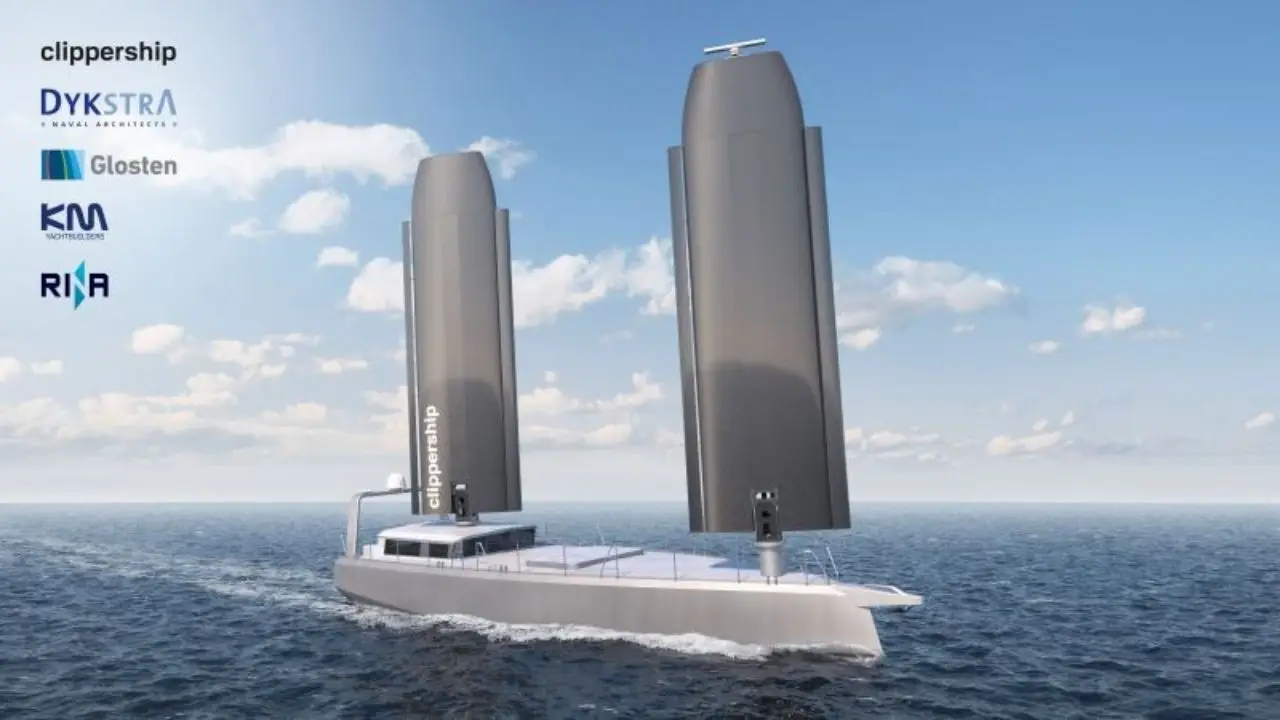
The maritime industry has reached a significant milestone with the announcement that Clippership has entered into a groundbreaking contract with Netherlands-based KM Yachtbuilders for the construction of their first 24-meter Zero Emission Ship. This innovative vessel, scheduled for launch in late 2026, will be classed by RINA and represents a significant step forward in sustainable maritime transport technology.
The Zero Emission Ship will operate on transatlantic, Caribbean, and South American routes, marking a new era in commercial shipping where environmental responsibility meets practical cargo transportation needs. This collaboration brings together Clippership’s cutting-edge maritime robotics expertise with KM Yachtbuilders’ renowned craftsmanship in sustainable aluminium vessel construction.
Revolutionary Contract Advances Sustainable Shipping Industry
The contract between Clippership and KM Yachtbuilders represents more than just a business agreement – it signals a fundamental shift toward Sustainable Shipping practices that the industry desperately needs. Founded by brothers Nico and Luca Cymbalist along with Kai Matsuka, Clippership emerged from a Los Angeles garage with a mission to revolutionize cargo transportation through autonomous, wind-powered ships.
The company’s core objectives align perfectly with global maritime sustainability goals: opening new trade routes, revitalizing small ports, and significantly reducing the environmental impact of maritime transport. This Zero Emission Ship project directly supports the International Maritime Organization’s climate goals, which target a 20% emission reduction by 2030 and net-zero emissions by 2050.
KM Yachtbuilders brings decades of expertise in constructing custom sustainable aluminum yachts and expedition vessels to this partnership. Known for their Bestevaer range and industry recognition for craftsmanship and safety standards, the Dutch shipbuilder specializes in rugged and innovative vessel designs that can withstand the demands of open-ocean operations.
Innovative Wind-Powered Vessel Design Features
The technical specifications of this Wind-Powered Vessel showcase remarkable innovation in maritime engineering. The vessel features twin foldable rigid wings as its primary propulsion system, eliminating the need for traditional fossil-fuel engines. This wind-assisted propulsion system (WAPS) enables the ship to harness natural wind power to transport cargo efficiently over long ocean distances.
The Zero Emission Cargo Ship boasts impressive cargo capacity, with up to 75 Euro-pallets in a climate-controlled cargo hold. This design ensures that sensitive goods remain protected during extended voyages while maintaining the vessel’s commitment to zero-emission operations. A climate-controlled environment is a crucial requirement for modern cargo, particularly for pharmaceutical, food, and technology shipments.
Dykstra Naval Architects provide naval architecture for the project, while Glosten handles structural engineering. Both autonomy software and wind propulsion systems are being developed in-house by Clippership, demonstrating the company’s commitment to maintaining control over critical technological components.
Next-Generation Autonomous Cargo Ship Technology
The Autonomous Cargo Ship will incorporate advanced navigation and control systems designed to operate with minimal human intervention. Clippership’s in-house development of autonomy software ensures that the vessel can safely navigate complex shipping lanes while optimizing wind capture for maximum efficiency.
The autonomous capabilities extend beyond basic navigation to include cargo management, route optimization, and real-time weather analysis. These systems work together to ensure that the Wind-Powered Vessel can adapt to changing conditions while maintaining schedule reliability that commercial shippers demand.
The vessel’s design for open-ocean autonomy represents a significant technological achievement. Unlike coastal vessels that can rely on frequent port access and support, this Zero Emission Ship must operate independently for extended periods across challenging maritime environments.
RINA Classification Standards for Zero Emission Cargo Ship
RINA’s involvement in classifying this Zero Emission Cargo Ship ensures compliance with the highest international maritime safety and environmental standards. The vessel will be constructed under RINA classification rules and registered as a WAPS General Cargo Ship under the Maltese flag, providing access to global shipping routes while maintaining regulatory compliance.
RINA’s classification system includes specific requirements for zero-emission vessels, including the EFFICIENT SHIP – EEDI notation for superior energy efficiency. The classification process involves assessment of hull design, propulsion systems, and electrical power generation to ensure optimal performance at operational speeds while meeting deadweight tonnage requirements.
The regulatory framework established by RINA encompasses guidelines for alternative fuel usage, safety protocols for new technologies, and environmental performance standards. This structured approach provides vessel operators with confidence that their Zero Emission Ship meets all necessary safety and operational requirements.
Impact on Eco-Friendly Shipping Future
This project represents the future of Eco-Friendly Shipping solutions as the maritime industry responds to increasing environmental regulations and customer demand for sustainable transportation options. The successful development and operation of this vessel could serve as a template for larger-scale adoption of wind-powered cargo ships.
Current maritime technology trends show increased adoption of alternative fuels and growing interest in wind-assisted propulsion systems. The development of supporting infrastructure, including specialized port facilities and maintenance capabilities, will be crucial for widespread adoption of these technologies.
Industry experts recognize that commercially viable zero-emission ships must be operational by 2030 to meet climate targets, with goals of deploying 600 large zero-emission ships by that date. This Clippership-KM Yachtbuilders collaboration directly contributes to achieving these ambitious targets.
Conclusion
The contract between Clippership and KM Yachtbuilders for this 24-meter Zero Emission Ship represents a pivotal moment in maritime history. By combining innovative wind propulsion technology with autonomous navigation systems and RINA classification standards, this project demonstrates that Sustainable Shipping is not just an environmental aspiration but a practical reality.
As the vessel moves toward its late 2026 launch date, the maritime industry will be watching closely to see how this Wind-Powered Vessel performs in real-world commercial operations. Success could accelerate the adoption of similar technologies across the global shipping fleet, bringing the industry significantly closer to its net-zero emission goals.
