

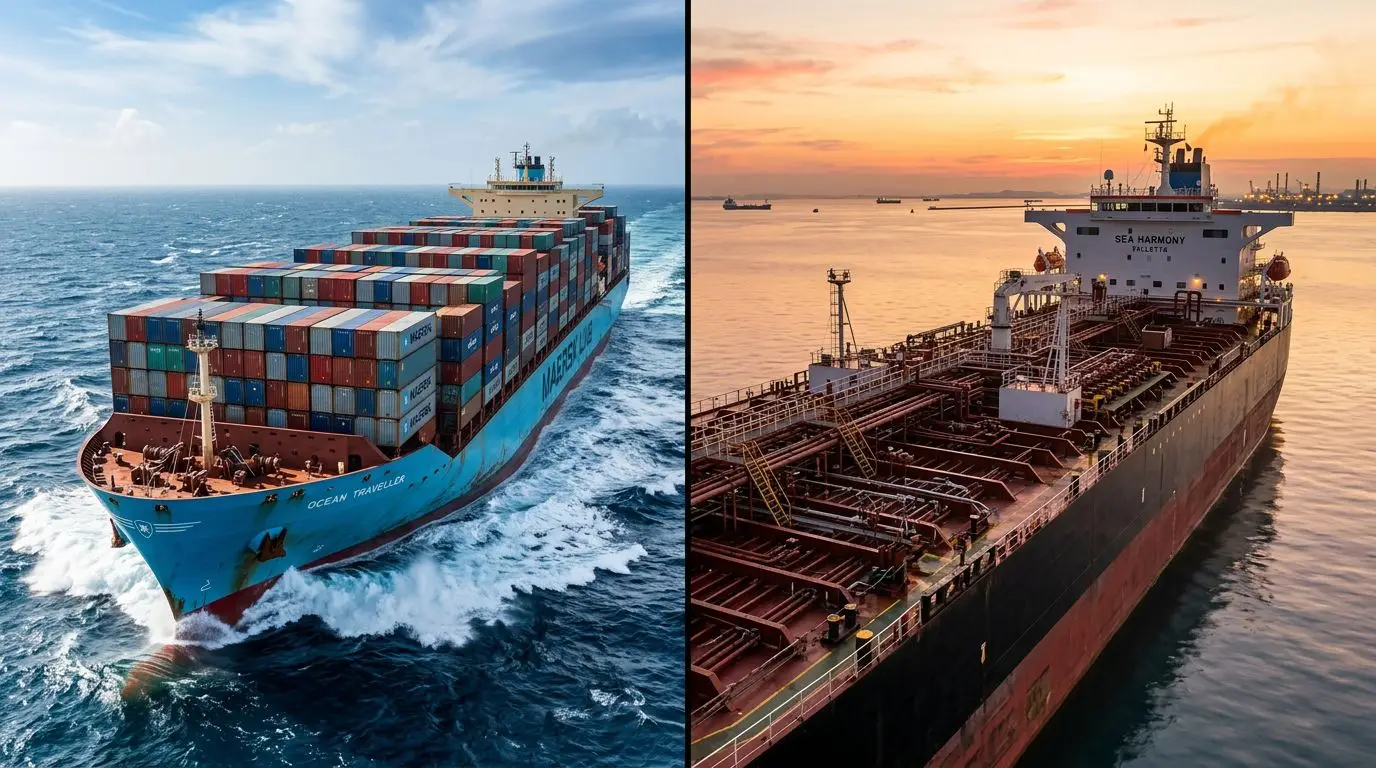
The maritime industry drives global trade, yet seafarers’ experiences differ significantly based on vessel type. There is no simple answer when comparing container ship and tanker life. Each presents unique lifestyles, challenges, and professional rewards. Whether you are a cadet selecting your first contract or an officer considering a departmental change, understanding these differences is crucial for a sustainable maritime career.
Life on a Container Ship: The Fast-Paced Marathon
Container ships operate on demanding schedules and maintain a relentless pace. The main challenge for seafarers is the frequent port calls. Unlike vessels that may spend days at anchor, container ships typically complete port operations within 12 to 24 hours.
This fast turnaround keeps the deck department engaged in mooring, supervising container lashing, and managing vessel stability as cargo is exchanged. Officers often have limited rest, moving directly from sea watch to cargo watch in port. The main benefit is variety; you visit many countries and ports, even if only briefly.
The physical environment on a container ship is distinct, with decks crowded by steel containers. While this can feel claustrophobic, it also reinforces the sense of participating in a large, efficient logistics operation.
Life on a Tanker: Precision and Patience
In contrast, tankers transport liquid cargo such as crude oil, chemicals, or liquefied natural gas (LNG). Operations on tankers prioritize caution and deliberate, slower movements.
Tanker life is often considered lonelier but more structured. Tanker terminals are typically located far from city centers for safety, so shore leave is rare. In port, crews are usually isolated, surrounded by pipes and storage tanks.

At sea, the pace is generally more relaxed, with tankers often spending weeks in transit without interruption. This provides a stable routine for the crew. However, cargo operations are intense and high-stakes, as mistakes can result in environmental incidents or fires.
Key Differences in Container Ship vs Tanker Life
Consider these primary factors when choosing between vessel types: Port Frequency: Container ships visit ports every few days, while tankers may remain at sea for weeks.
Cargo Operations: Container ships focus on speed and lashing, while tankers require expertise with valves, pumps, and strict safety protocols.
Social Life: Container ships provide more opportunities to see land, while tankers often foster closer crew relationships due to isolation.
Career Specialization: Tanker experience is highly specialized and can lead to higher pay in certain officer ranks because of the hazardous cargo.
Physical Environment: Container ship decks are crowded with containers, while tanker decks are open but feature complex piping systems.
Choosing between container ship and tanker life depends on your personality and career goals. If you thrive in fast-paced environments, enjoy seeing new places, and prefer constant activity, the container sector may suit you best.
If you prefer a steady routine, can manage extended isolation, and value technical precision, the tanker industry offers a prestigious and often more lucrative career path. Many officers appreciate the “tanker bonus” and the structured safety culture provided by oil majors.
Conclusion
There is no universally better ship type, only the one that aligns with your lifestyle. Container ships provide a dynamic routine, while tankers offer disciplined operations and perhaps higher salaries. Understanding these differences will help you prepare for the demands of the maritime industry and support a successful career. Both vessel types are essential to the global economy and require dedicated professionals.
