
: A Strategic Turning Point for Korean Shipbuilding
The Korean shipbuilding landscape is entering a new phase of consolidation and modernisation as EcoPrime Marine Pacific—the largest shareholder of HJ Shipbuilding & Construction (HJSC) / HJ Heavy Industries—moves to acquire HD Hyundai Heavy Industries’ (HHI) Gunsan Shipyard. A Memorandum of Agreement (MOA) was formally signed on March 13, 2026, marking the beginning of one of the most significant asset transfers in Korea’s maritime industrial sector in nearly a decade. [biz.chosun.com]
With capacity, location, and strategic alignment at stake, this acquisition positions EcoPrime to become a cornerstone player in both domestic and global shipbuilding markets.
A Major Shipyard Changing Hands
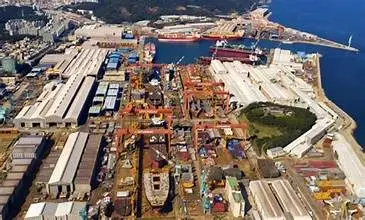
The Gunsan Shipyard, constructed in 2010 on a 1.8 million‑m² site in North Jeolla Province, has long been considered one of Korea’s most structurally capable facilities. It features:
- A 700‑meter dock, the largest in South Korea
- A 1,650‑ton Goliath crane
- A 1.4 km quay for large‑vessel mooring
This infrastructure enables the simultaneous construction of large commercial vessels and delivers an annual block production capacity of approximately 100,000 tons.
Though the shipyard previously suspended operations in 2017 due to declining orders, it resumed partial operations in 2022—focused mainly on block production rather than full vessel construction.
Deal Value and Transaction Terms
Industry observers estimate the acquisition value at ₩700 billion to ₩1 trillion, reflecting both the facility’s scale and its future potential within Korea’s renewed shipbuilding push.
The MOA outlines that the final contract price will be set after:
- Comprehensive due diligence
- A formal asset appraisal
- Negotiations based on assessed values
This measured, multi-stage process signals the complexity and magnitude of revitalising a shipyard of this scale.
EcoPrime’s Ambition: Reviving Full-Scale Shipbuilding
EcoPrime Marine Pacific intends to resume full-vessel construction, marking a return to high-output production not seen at Gunsan since before 2017.
The company’s strategy is two-pronged:
1. Reinforce HJ Heavy Industries & HJSC
As the largest shareholder, EcoPrime aims to integrate Gunsan operations with its existing portfolio, boosting:
- Production flexibility
- Large-vessel construction capability
- Operational resilience across multiple yards
2. Build a Global Shipbuilding Specialist Group
The acquisition is positioned as a step toward creating a world-class specialised shipbuilding cluster, leveraging:
- Gunsan Shipyard
- HJSC infrastructure
- EcoPrime’s financial and engineering capabilities
Post‑Acquisition Support from HD Hyundai
To ensure operational stability during EcoPrime’s early stewardship, HD Hyundai has agreed to:
- Continue placing 100,000 tons of block fabrication orders per year for three years.
- Provide design and engineering services.
- Support procurement logistics
- Offer technical assistance for smart‑shipyard automation.
This cooperation reduces early risk and accelerates Gunsan’s path back to full‑capacity shipbuilding.
Strategic U.S. Navy MRO Potential
Multiple sources highlight potential alignment between Gunsan Shipyard and U.S. Navy Maintenance, Repair, and Overhaul (MRO) needs. [koreatimes.co.kr]
This fits into broader Korea‑U.S. industrial initiatives, including the government-backed push linked to the Make American Shipbuilding Great Again (MASGA) project, which aims to revitalise U.S. shipyards through Korean investment.
A Gunsan facility capable of MRO operations could become a vital node in the U.S. Navy’s Indo-Pacific logistics chain.
Industry Impact: A Turning Point for Korean Shipbuilding
1. Revitalising an Industrial Region
Local authorities expect major economic revitalisation for North Jeolla Province as shipbuilding activity returns, bringing:
- Employment stabilization
- Industrial reactivation
- Increased maritime cluster competitiveness
2. Strengthening Korea’s Global Position
Korean shipbuilders have already accelerated overseas investment and partnerships—particularly in the U.S. defense and commercial sectors—creating momentum for domestic consolidation.
3. Increasing Capacity for Large Commercial and Naval Vessels
The Gunsan dockyard’s large-scale capabilities allow it to:
- Build large container ships.
- Construct LNG carriers
- Support naval auxiliary vessels
- Boost Korea’s total shipbuilding throughput
EcoPrime Sets the Course for a New Korean Shipbuilding Era
EcoPrime Marine Pacific’s move to acquire HD Hyundai’s Gunsan Shipyard is more than a corporate transaction—it’s a strategic realignment of Korean maritime capacity. With world-class infrastructure, renewed government backing, and growing international demand for advanced shipbuilding and MRO services, Gunsan is poised to reemerge as a major player in global ship construction.
If executed as planned, this acquisition could set the foundation for Korea’s next-generation shipbuilding dominance, both in commercial markets and the rapidly expanding Indo-Pacific defense ecosystem.