

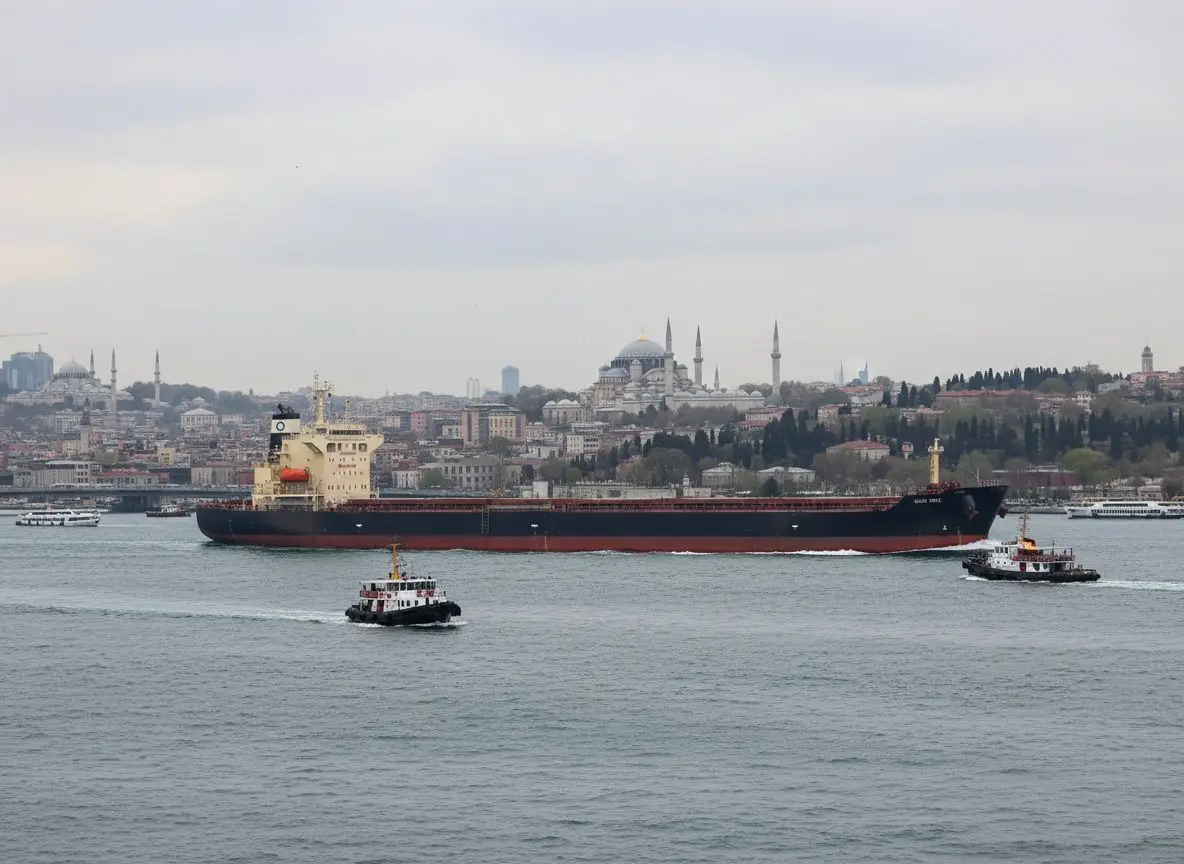
The Turkish Straits—the Bosporus and the Dardanelles—are renowned for their breathtaking views and treacherous currents. However, February 2026 has added a less desirable reputation to these waterways: a hotspot for mechanical reliability issues. Within the first two weeks of the month, three separate vessels have been found “dead in the water,” putting the rapid-response capabilities of the Turkish Directorate General of Coastal Safety (KEGM) to the ultimate test.
A Month of Mechanical Failures
The narrow channels of the Dardanelles and Bosporus leave zero room for error. When a vessel loses propulsion, it isn’t just a technical problem for the crew; it’s a potential blockade for a multi-billion-dollar global supply chain.
The following table summarises the primary incidents that have kept tugboat crews on high alert this month:
February 2026 Incident Log
| Date | Vessel Name | Location | Flag | Size/Load | Response Units |
| Feb 1 | Lady Sham | Bosporus (Keçilik Bay) | San Marino | 109m / General Cargo | Kurtarma 9 & 11 |
| Feb 14 | Sotra | Dardanelles (Eceabat) | [N/A] | 73m / 1,800t Marble | Kurtarma 2 |
| Feb 14 | Santa Cruz | Dardanelles (Gocuk Burnu) | Malta | 229m / General Cargo | Kurtarma 14 & 21 |
The February 14th Double-Header
Valentine’s Day was anything but romantic for the Çanakkale Vessel Traffic Services (VTS). The day saw two distinct failures in the Dardanelles, requiring simultaneous coordination of resources.
1. The Heavyweight: Santa Cruz
The Santa Cruz poses the greatest risk of the month due to its scale. Measuring 229 meters, any loss of steerage in the Gocuk Burnu area is a nightmare scenario for VTS operators. En route from Russia to Sudan, the vessel’s engines quit mid-transit. It took the combined power of the Kurtarma 14 and Kurtarma 21 tugs to stabilise the giant and tow it to the Şevketiye anchorage.+1
2. The Marble Carrier: Sotra
Just hours apart, the Sotra reported its own machinery failure near Eceabat. While smaller than the Santa Cruz, its cargo of 1,800 metric tons of block marble made it a dense, difficult-to-maneuver weight in the strait’s shifting currents. The Kurtarma 2 tug successfully intercepted the vessel before it could drift toward the shoreline.
The “Lady Sham” Precursor
Setting the tone for the month, the Lady Sham suffered a failure on February 1st in the Bosporus. This incident was particularly tense as the ship’s anchors reportedly became tangled in an unidentified underwater object while it was drifting, nearly pulling the vessel toward the coast. KEGM teams prevented what could have been a serious grounding in a densely populated area of Istanbul.
Industry Expert Analysis: Why Now?
While three incidents in two weeks might seem like a statistical anomaly, industry experts point to a “perfect storm” of factors:
- Winter Strain: Lower temperatures can affect fuel viscosity and cooling systems if not properly managed.
- Increased Traffic Density: As Black Sea trade volumes fluctuate, more vessels are pushing their maintenance windows to meet tight delivery schedules.
- Current Volatility: February currents in the Dardanelles can reach up to 4-5 knots, placing additional stress on ageing propulsion systems during transit.
Sources
- Turkish Directorate General of Coastal Safety (KEGM) Official Bulletins.
- MarineTraffic AIS Incident Tracking.
- VesselTracker.com Maritime Insight Reports (Feb 2026).
- GAC Turkey Port News Archives.
