

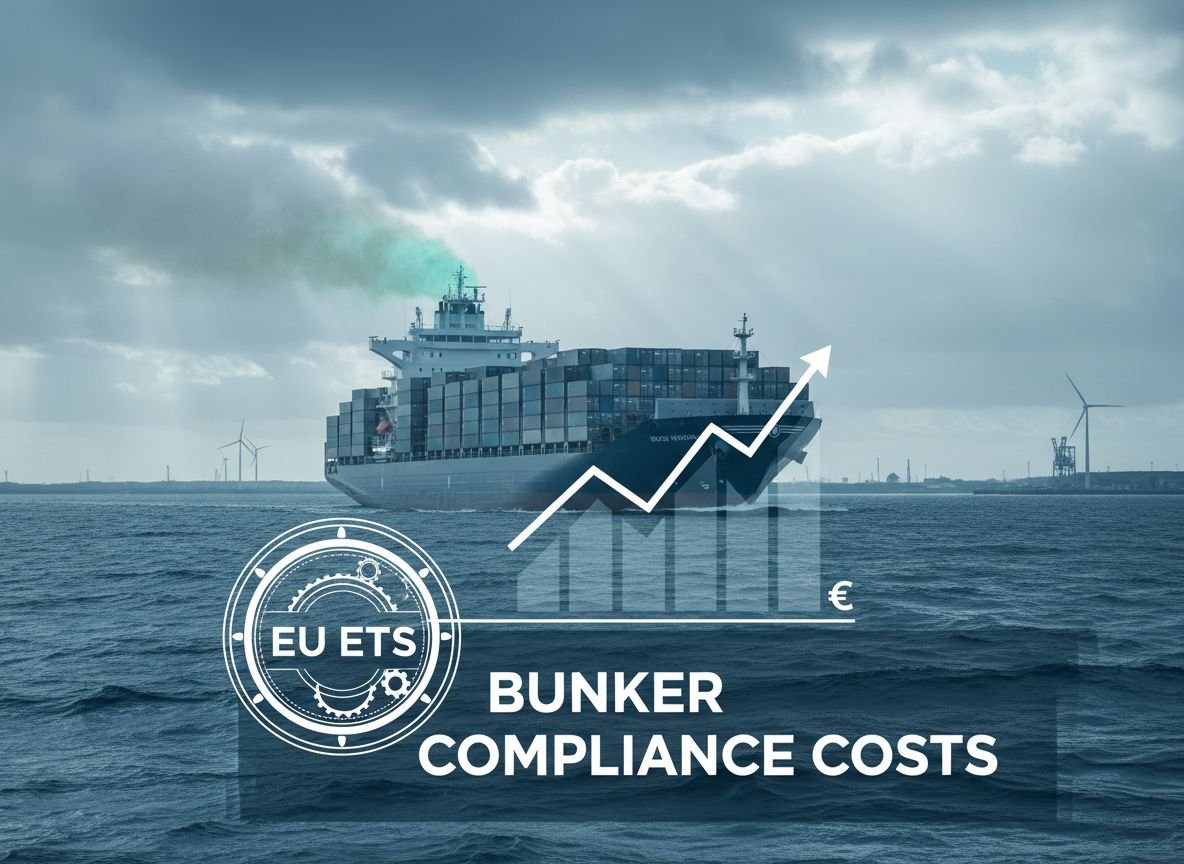
From January 1, shipowners operating in European waters are facing significantly higher fuel‑related expenses as the European Union Emissions Trading System (EU ETS) enters its full compliance phase for maritime transport. The expanded rules have sharply increased per‑tonne bunker compliance costs, marking a major shift in the cost structure of shipping within the EU.
According to data from Ship & Bunker, shipowners must now cover 100% of applicable EU ETS costs for emissions generated on covered voyages—up from 70% in 2025 and 40% in 2024. This transition to full exposure has pushed compliance costs to new highs across all major marine fuel types.
Bunker Compliance Costs Rise by 45% Under Full EU ETS Exposure
At the end of 2025, shipowners were paying roughly $220 per tonne in EU ETS compliance costs for very low sulphur fuel oil (VLSFO) burned on intra‑EU voyages. With the shift to full compliance from January 1, this figure has surged by approximately 45%, reaching around $315 per tonne.
Using an assumed EU Allowance (EUA) price of €85.02, estimated compliance costs per tonne of fuel burned now stand at:
| Fuel Type | Compliance Cost per Tonne (2026) | Previous Cost (2025) |
|---|---|---|
| HSFO | ~$315 | ~$217–$224 |
| VLSFO | ~$319 | ~$217–$224 |
| (LS)MGO | ~$324 | ~$217–$224 |
These increases reflect both the higher EUA price environment and the transition to full 100% cost coverage.
Impact on Total Bunker Costs in the EMEA Region
Average VLSFO prices in the EMEA region were around $464.50 per tonne at the end of 2025. When combined with the new EU ETS compliance costs, the total cost burden for shipowners has risen substantially.
Under EU ETS rules, ships above 5,000 GT calling at EU ports must pay for emissions on a per‑voyage basis. Actual compliance costs vary based on voyage patterns, particularly for vessels calling at a single EU port or operating partly outside EU waters.
How EU ETS Compliance Works: Settlement Timeline and Emission Factors
Emissions generated during a calendar year must be covered by the purchase and surrender of EUAs, with surrender due by September of the following year.
- 2025 emissions → settled in September 2026 at 70% compliance
- 2026 emissions → settled in September 2027 at 100% compliance
The EU has also updated the emission factors used to calculate the number of EUAs required per tonne of fuel burned. From 2026 onward, the factors increase to:
- HSFO: 3.163
- VLSFO: 3.200
- (LS)MGO: 3.255
These exceed the factors used in 2024–2025, further increasing EUA demand and compliance costs.
EU Carbon Market Trends Influence Shipping Costs
EU carbon prices began 2025 at approximately €70 per allowance, dipped to around €60 by the end of Q1, and have been rising since. As EUA prices climb, so do maritime compliance costs—making carbon pricing a critical factor in voyage planning and fuel strategy for shipowners.
Conclusion: EU ETS Is Reshaping the Economics of Maritime Transport
The full implementation of EU ETS rules marks a transformative moment for the shipping industry. With per‑tonne bunker compliance costs rising sharply, shipowners must adapt through:
- Optimized voyage planning
- Fuel‑efficient operations
- Alternative fuels and decarbonization strategies
- Carbon‑cost forecasting and hedging
As the EU continues tightening its climate policies, the maritime sector faces increasing pressure to reduce emissions and manage escalating compliance costs.
