

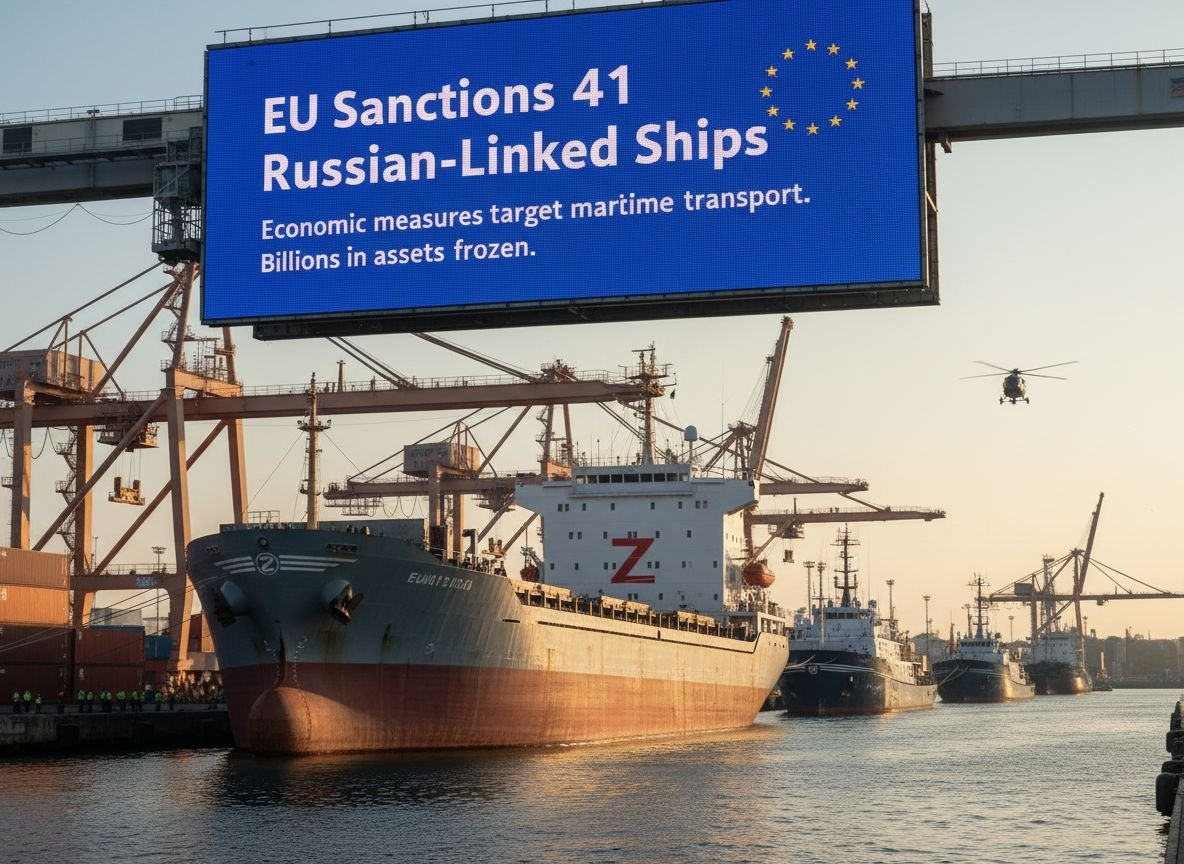
On 18 December 2025, the European Union announced a new wave of sanctions targeting 41 vessels identified as part of Russia’s so-called “shadow fleet.” This move is part of the EU’s ongoing efforts to curtail Russia’s ability to finance its war in Ukraine through energy exports, and it marks a significant escalation in maritime enforcement.
What Are the Latest EU Sanctions?
The EU’s latest sanctions package adds 41 ships to a growing list of nearly 600 vessels now barred from EU ports and denied a wide range of maritime services. These vessels are accused of circumventing the oil price cap, supporting Russia’s energy sector, transporting military equipment, or being involved in the export of stolen Ukrainian grain and cultural goods. The targeted ships are typically older, often uninsured, and operate under opaque ownership structures and foreign flags, making regulatory oversight challenging.
Why Is the EU Targeting the “Shadow Fleet”?
Russia’s so-called shadow fleet has become a critical tool for sustaining its oil exports despite Western sanctions. Since the invasion of Ukraine in February 2022, Russia has exported nearly €1 trillion in fossil fuels, with oil accounting for 68% of that total. By targeting the vessels that facilitate these exports, the EU aims to choke off a vital revenue stream for the Kremlin and disrupt the logistics supporting Russia’s war effort.
How Do These Sanctions Work?
The new measures ban sanctioned vessels from accessing EU ports and prohibit EU-based companies from providing them with essential maritime services, including insurance, bunkering, and ship-to-ship transfers. The sanctions also extend to companies and individuals facilitating the shadow fleet’s operations, with recent packages targeting shipping firms in the UAE, Vietnam, and Russia, as well as businessmen linked to state oil giants Lukoil and Rosneft.
Impact on the Shipping Industry
The sanctions are reshaping global shipping in several ways:
- Reduced Fleet Availability: With hundreds of tankers now sanctioned, the pool of vessels available for legitimate trade has shrunk, driving up freight rates and increasing operational risks for charterers and insurers.
- Compliance Complexity: Shipowners and operators face heightened scrutiny, with compliance now central to commercial decision-making. The risk of fines, reputational damage, and loss of market access has never been higher.
- Market Disruption: The sanctions have forced a re-routing of oil flows, with Russian crude increasingly shipped to India, China, and other non-Western markets. However, even these trades are becoming riskier as enforcement tightens and secondary sanctions loom.
- Rise of Deceptive Practices: The shadow fleet’s operators are employing increasingly sophisticated tactics to evade detection, including frequent flag changes, turning off AIS transponders, and using shell companies.
Broader Geopolitical and Economic Implications
The EU’s actions are part of a broader, coordinated effort with the US and UK to clamp down on maritime networks supporting sanctioned regimes. This has led to a more fragmented and unpredictable shipping landscape, with compliance and due diligence now essential for all industry participants. The sanctions are also contributing to higher shipping costs and market volatility, with the full impact likely to be felt well into 2026.
Conclusion
The EU’s decision to sanction 41 additional ships linked to Russian trading networks underscores the bloc’s determination to disrupt the financial and logistical lifelines sustaining Russia’s war in Ukraine. For the shipping industry, this means navigating an increasingly complex regulatory environment, where agility, transparency, and robust compliance are key to staying afloat.
Sources:
- EU imposes new sanctions on Russia’s ‘shadow fleet’
- EU sanctions 41 Russian tankers in crackdown on Kremlin’s shadow oil fleet
- EU Slaps Sanctions on 41 Russian “Shadow Fleet” Vessels
- EU imposes sanctions on 41 more tankers of Russia’s shadow fleet
- Council sanctions 41 vessels of the Russian shadow fleet
- How sanctions transformed the shipping industry in 2025
- Oil tanker rates to stay strong into 2026 as sanctions remove ships for hire
