
Photo: Courtesy EXMAR
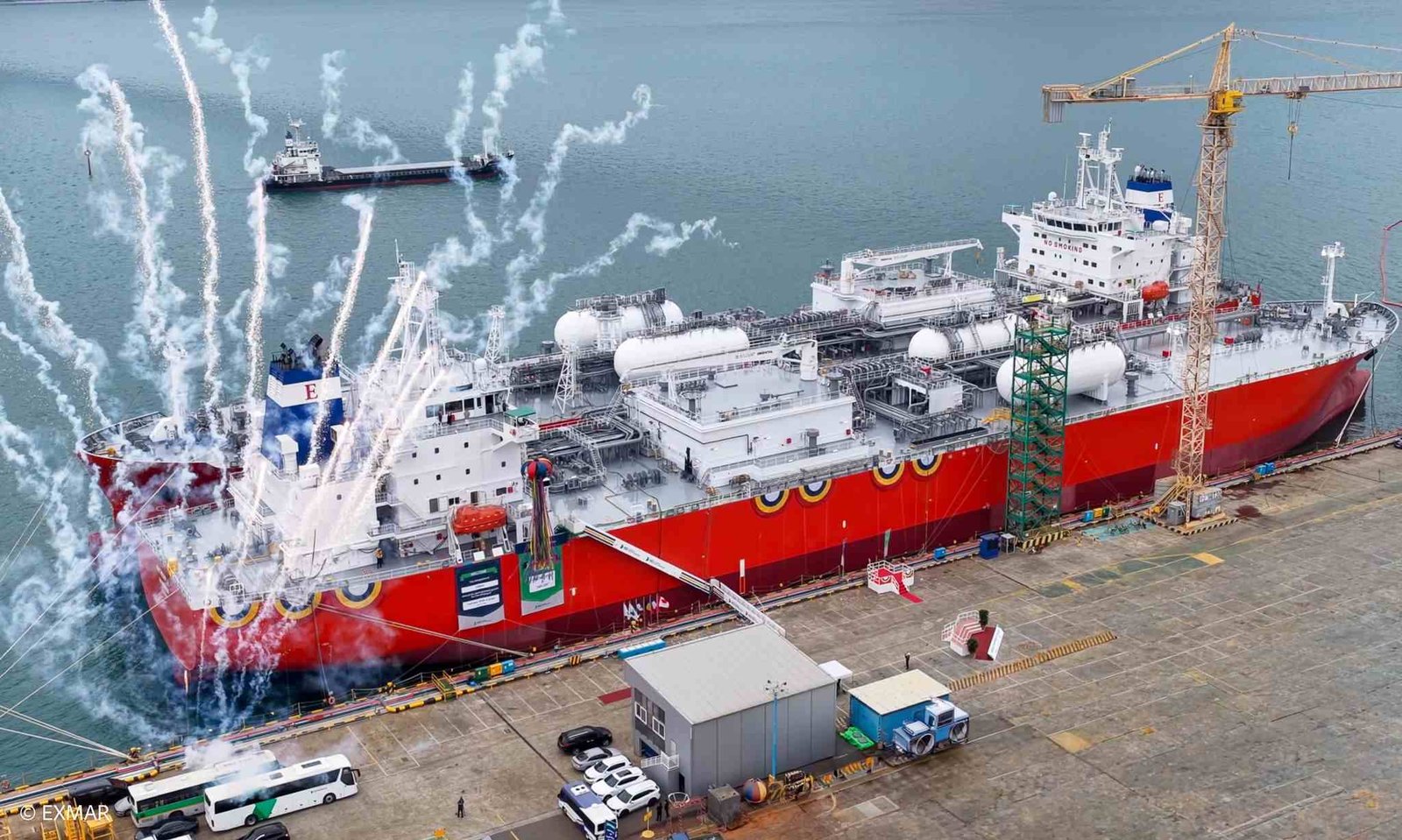
The maritime industry reached a notable milestone when Belgian shipping group Exmar named two mid‑size gas carriers (MGCs), the Antwerpen and the Arlon, at a ceremony in South Korea. These ammonia powered ships are among the first commercial ocean‑going MGCs equipped with ammonia dual‑fuel propulsion, marking a shift from demonstration projects to operational deployments.

A technical milestone and industry collaboration
The Antwerpen and Arlon were developed in partnership between Exmar and HD Hyundai with technology and classification input from suppliers, including Wärtsilä Gas Solutions, WinGD, and Lloyd’s Register. Fitted with advanced ammonia dual‑fuel engines, the vessels can operate on ammonia as the primary fuel while retaining the ability to switch to conventional fuels as a fallback—important given current limitations in global ammonia bunkering.

Emissions and lifecycle caveats
Ammonia contains no carbon, so burning it produces no CO2 at the ship’s stack. However, important caveats apply:
- NOx and N2O: Ammonia combustion can generate nitrogen oxides (NOx) and, in some conditions, nitrous oxide (N2O), a potent greenhouse gas. Engine calibration and exhaust aftertreatment are needed to control these emissions.
- Lifecycle emissions: The greenhouse‑gas benefit of ammonia powered ships depends entirely on how the ammonia is produced. Green ammonia—made using renewable electricity to produce hydrogen via electrolysis—can substantially reduce lifecycle emissions compared with fossil‑derived ammonia. Reported lifecycle reductions (commonly cited as “up to ~90%”) are conditional on assumptions about electricity source, electrolysis efficiency, and supply‑chain emissions and should be treated as illustrative rather than guaranteed.
Safety design and risk mitigation
Exmar has emphasized crew safety and risk reduction in the ship designs, reflecting ammonia’s toxicity and corrosivity. Company and industry measures include double‑walled or purged piping, continuous ventilation, dedicated ammonia-release mitigation systems, double-block-and-bleed isolation for fuel valves, and digital monitoring linked to shore teams. These features reduce risk but do not eliminate it; operational procedures, training, and regulatory oversight remain essential.
Regulatory context and standardisation
Exmar and partners have engaged classification societies and international bodies to advance interim guidance and standards for ammonia as a marine fuel. Regulatory frameworks and bunkering standards are still evolving, so ongoing collaboration and operational experience will shape the final rules.
Operational design and efficiency
Exmar reports design optimisations to maximise cargo intake and operational efficiency for ammonia carriage and fuel use. Such technical specifics should be attributed to owner or shipyard documentation; they indicate the vessels were purpose‑designed for ammonia operations.
Conclusion
The ammonia powered ships constitute an important practical step toward low‑carbon maritime operations: they demonstrate that ammonia dual‑fuel propulsion can be built and operated at scale while addressing safety and regulatory challenges. Careful wording is still needed in public communications—ammonia enables CO2‑free combustion at the point of use, but overall climate benefits depend on green production pathways, and ammonia introduces distinct emissions and safety considerations that must be actively managed.