

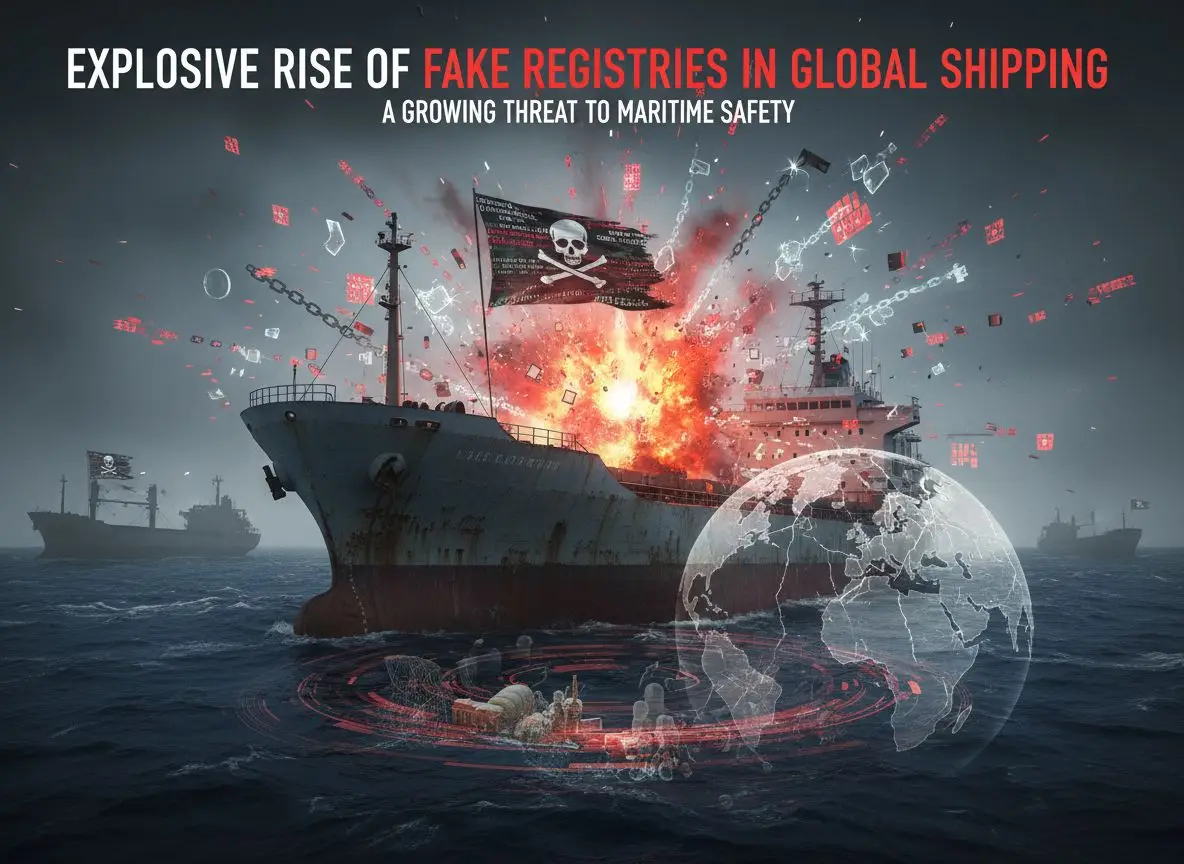
The maritime industry is facing an unprecedented surge in fake registries, posing serious risks to safety, compliance, and environmental protection. According to recent reports, the number of vessels operating under fraudulent flags has doubled in less than 2 years, with over 220 ships registered under false flags as of early 2025. This alarming trend is reshaping global shipping and challenging regulatory frameworks worldwide.
What Are Fake Registries?
Fake registries refer to unauthorised entities that claim to provide legitimate ship registration services on behalf of a flag state. These fraudulent operations often create convincing websites, issue forged certificates, and exploit loopholes in international maritime law. In many cases, vessels continue to fly a flag even after their registration has expired or been terminated, using falsified documentation to maintain the appearance of compliance.
Why Are Fake Registries on the Rise?
The surge in fake registries is largely driven by geopolitical tensions and sanctions enforcement. As Western authorities tighten restrictions on oil and commodity trades, shadow fleets and high-risk operators seek ways to remain active in global shipping. Fraudulent registries offer a convenient escape route, allowing vessels to bypass oversight while continuing to transport sanctioned cargo. Recent analysis revealed that 91% of vessels using fake registries were already sanctioned, highlighting the link between fraudulent registration and illicit trade.
Flag-hopping—a practice where ships rapidly switch registries to avoid detection—has reached record levels. Smaller states with outsourced registry management, such as Benin and Gambia, have seen explosive growth in registrations, with increases of up to 574% in 2025. These trends underscore the systemic vulnerabilities in the global maritime system.
Impact on Maritime Safety and Compliance
The rise of fake registries undermines the integrity of international shipping regulations. Vessels operating under fraudulent flags often lack valid insurance, classification, and safety certifications. This creates a cascade of risks:
- Maritime Safety: Older, poorly maintained ships evade inspections, increasing the likelihood of accidents and oil spills.
- Crew Welfare: Seafarers aboard fraudulently flagged vessels face abandonment and unsafe working conditions.
- Environmental Protection: Non-compliant ships contribute to pollution and illegal dumping, threatening marine ecosystems.
- Regulatory Enforcement: Fake registries compromise port state control and sanctions compliance, making enforcement nearly impossible.
How Fake Registries Operate
Investigations have uncovered sophisticated networks behind fake registries. Some fraudulent entities mimic official government websites, while others use cloned domains and QR codes to obscure links between fake and real sites. A recent probe revealed over 50 fraudulent websites connected to a single criminal network, illustrating the scale and complexity of the problem.
Global Response and Solutions
International bodies such as the International Maritime Organization (IMO) are calling for urgent action. Proposed measures include:
- Creating a centralised database of legitimate registries via the IMO’s Global Integrated Shipping Information System (GISIS).
- Enhancing due diligence and verification processes for flag states.
- Increasing collaboration between governments, insurers, and classification societies to detect and dismantle fraudulent networks. [wwwcdn.imo.org]
The Road Ahead
The proliferation of fake registries is more than a compliance issue—it’s a systemic threat to global shipping. As the industry moves toward decarbonisation and stricter environmental standards, tackling fraudulent practices must become a top priority. Without decisive action, fake registries will continue to erode trust, compromise safety, and expose the maritime sector to catastrophic risks.
