

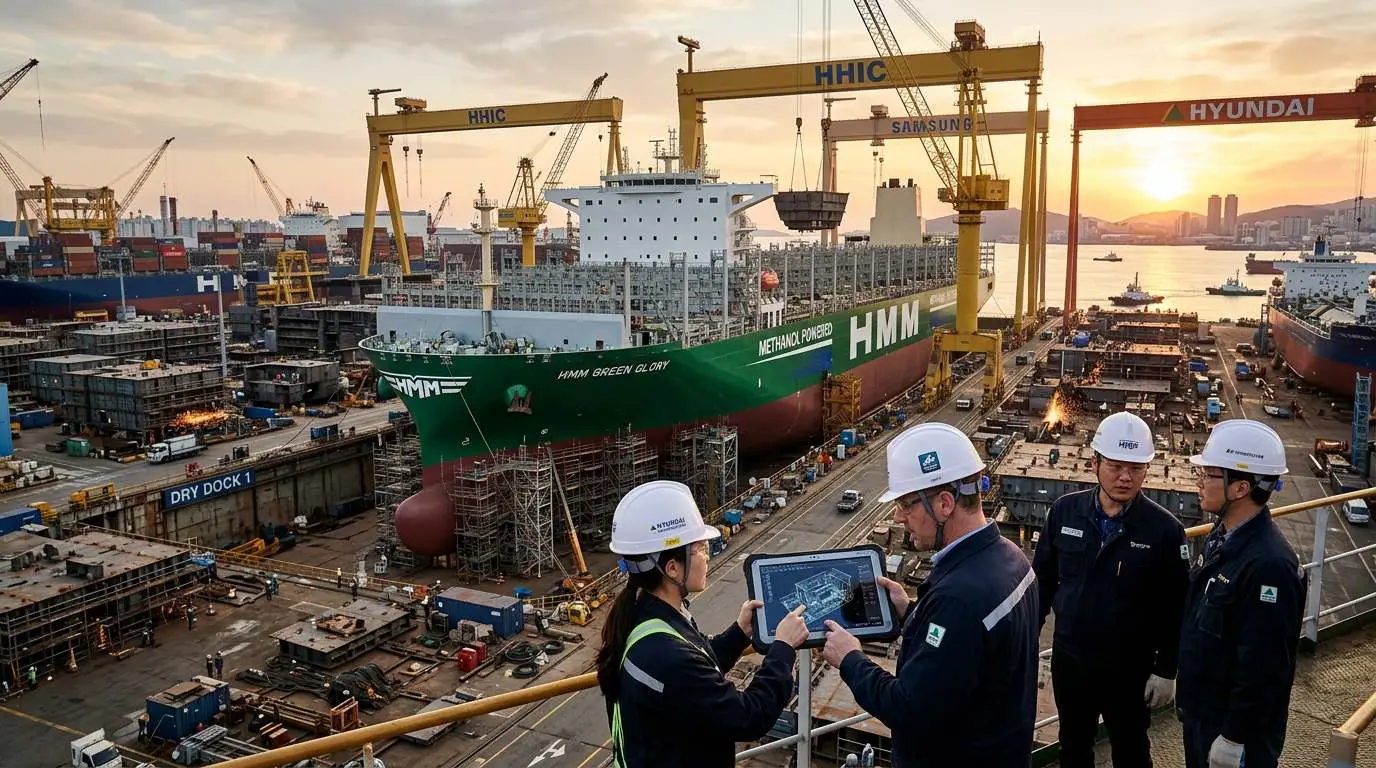
The global maritime industry is experiencing a significant shift as shipowners and operators increasingly pursue a more sustainable future. This surge in interest has propelled the green shipbuilding market to the forefront of international trade, driven by the dual pressures of environmental responsibility and strict new regulations.
As the world fleet undergoes a massive renewal cycle, the demand for vessels that can operate with a significantly reduced carbon footprint has never been higher. However, this transition faces a major obstacle: the world’s top shipyards are approaching their physical and operational capacity.
Rising Demand in the Green Shipbuilding Market
The current boom in the green shipbuilding market is fueled by a collective realisation that the traditional methods of ocean transport are no longer viable. With the International Maritime Organisation (IMO) setting ambitious targets to reduce greenhouse gas emissions, the industry is pivoting toward vessels that incorporate advanced technologies and sustainable fuels.

In 2025 alone, the global shipbuilding market was valued at over $166 billion, with a significant and growing portion of new orders dedicated to eco-friendly designs.
This demand is not merely a trend but a fundamental restructuring of the industry. Major carriers are now placing record-breaking orders for alternative fuel vessels, including those powered by liquefied natural gas (LNG), methanol, and ammonia.

The goal is clear: align with the IMO 2030 GHG strategy, which aims for a 20-30% absolute reduction in emissions by the end of the decade. As companies race to secure slots for these high-tech ships, the competition among global shipyards, particularly in China and South Korea, has intensified to levels not seen in nearly two decades.
The Challenge of Shipyard Capacity Constraints
Despite the record number of orders, a critical bottleneck has emerged: shipyard capacity constraints. The number of active large-scale shipyards globally has significantly decreased since the mid-2000s, leaving a smaller group of facilities to handle a much larger and more complex workload.
Today, the global orderbook has hit a 17-year high, with many yards booked solid through 2028 and beyond.
These constraints have several immediate impacts on the maritime sector: – Extended Delivery Timelines: New orders placed today often face a wait of four to five years before the vessel touches water.

– Rising Newbuilding Prices: Limited supply and high demand for specialised technology have driven the cost of construction to new heights.
– Maintenance Delays: Yards focused on lucrative newbuild contracts may have less space for essential repairs and retrofitting.
– Labour Shortages: The need for highly skilled workers to install complex dual-fuel engines and carbon capture systems is straining the existing workforce. For those navigating maritime careers or challenges, these delays represent a significant operational hurdle. Crew members and technical managers often have to manage ageing fleets for longer than anticipated while waiting for modern replacements to arrive.
Innovations in Eco-Friendly Ship Design and Decarbonization
To meet the strict requirements of maritime decarbonization, shipbuilders are moving beyond simple fuel switches and embracing a holistic approach to eco-friendly ship design. Modern vessels are now being built with optimised hull shapes to reduce drag, air-lubrication systems to decrease friction, and wind-assisted propulsion technologies such as rotor sails or rigid wings.
The integration of digital twins and AI-powered performance monitoring is also becoming standard. These systems allow operators to optimise routes and engine performance in real-time, ensuring that every drop of fuel is used as efficiently as possible. This technological leap is essential for complying with the IMO’s Carbon Intensity Indicator (CII) ratings, which grade ships on their efficiency. Vessels that fail to maintain high ratings risk being restricted from certain trade routes or facing financial penalties, making the move to green technology a matter of financial survival.
The Road Ahead: Navigating the IMO 2030 GHG Strategy
As we approach 2030, the pressure to deliver on the IMO 2030 GHG strategy will only increase. The industry is currently at a crossroads where the ambition for a zero-carbon horizon meets the practical realities of industrial capacity. While the expansion of shipyard facilities in Southeast Asia and India offers some hope for relief, the immediate future remains defined by tight schedules and high capital costs.
Success in this era will depend on strategic partnerships between shipowners and builders. Those who secured early slots in the green shipbuilding market are now well-positioned to lead the transition. For the rest of the industry, the focus must remain on maximising the efficiency of the existing fleet through retrofitting and operational excellence, while awaiting the next generation of alternative-fuel vessels to enter global trade.
Conclusion
The maritime industry’s commitment to a greener future is undeniable, but the path forward is complex. While the rise in orders for sustainable vessels proves that the sector is ready to embrace change, the current shipyard capacity constraints serve as a reminder of the physical limits of global infrastructure.
By focusing on innovative ship design and maintaining a steady course toward maritime decarbonization, the industry can eventually overcome these bottlenecks. The journey to net-zero is a marathon, and while the pace of construction may be limited, the momentum toward a cleaner, more efficient global fleet is irreversible.