

A New Era for U.S. Naval Shipbuilding
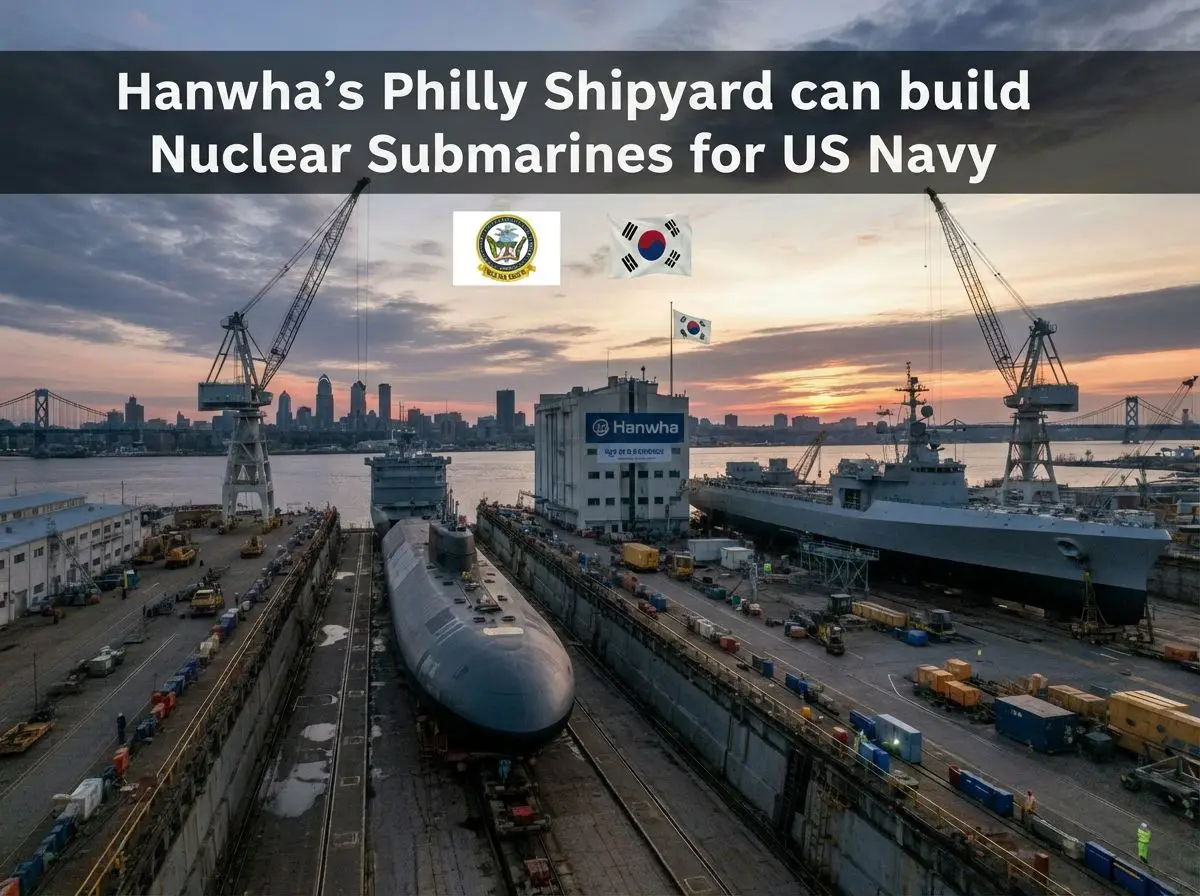
In a landmark development for the U.S. maritime defence sector, South Korean industrial giant Hanwha Group has announced that its recently acquired Philadelphia Shipyard is ready and able to construct nuclear-powered submarines for the United States Navy. This bold move comes at a critical juncture, as the U.S. Navy faces significant production bottlenecks in its submarine fleet, and the nation seeks to revitalise its shipbuilding capabilities.
Hanwha’s Strategic Investment and Expansion
Hanwha’s acquisition of the historic Philly Shipyard in 2024 for $100 million marked the beginning of a new chapter for the facility. The company has since committed a further $5 billion to expand and modernise the shipyard, transforming it into a state-of-the-art hub for advanced naval construction. This investment is part of a broader $150 billion South Korean commitment to the U.S. shipbuilding sector, agreed under a recent bilateral trade deal that also saw U.S. tariffs on Korean automobile imports reduced.
Readiness to Build Nuclear Submarines
During a recent media event at the Philadelphia facility, Alex Wong, Hanwha Group’s global chief strategy officer, declared: “Philly Shipyard has the capability of building a nuclear-powered submarine for the U.S. Navy. The U.S. government’s commitment to nuclear-powered submarine capability, its own and that of the allies, is very strong. We stand ready to fulfil the ability to build those submarines here in Philly when the governments are ready.” This statement underscores Hanwha’s confidence in its technical and industrial capacity to deliver on such a complex and strategic project.
Addressing U.S. Navy Production Bottlenecks
The U.S. Navy’s ambitious goal is to expand its fleet of Virginia-class nuclear-powered attack submarines to 66 vessels by 2054. However, with only 24 currently in service and an average annual production rate of 1.2 submarines, the Navy faces a significant shortfall. Hanwha’s Philly Shipyard is positioned to address this bottleneck, offering additional capacity and leveraging proven designs to accelerate delivery schedules.
Strategic Advantages of the Philadelphia Location
The shipyard’s location on the U.S. East Coast provides strategic proximity to existing submarine construction hubs and nuclear propulsion authorities. This enables efficient coordination, module transport, and knowledge sharing with established players such as Huntington Ingalls Industries and General Dynamics Electric Boat. Hanwha’s plans also include leveraging its global supply chain, particularly the expertise and resources of Hanwha Ocean’s shipyard in South Korea, to support both U.S. and allied submarine programmes.
Deepening U.S.–South Korea Defence Cooperation
Hanwha’s initiative is more than just an industrial expansion; it signals a deepening of defence cooperation between the United States and South Korea. The “Make American Shipbuilding Great Again” project, backed by both governments, aims to revitalise U.S. naval power and create new opportunities for Korean subcontractors and component makers within the global supply chain.
Workforce Expansion and Technology Transfer
To prepare for the potential construction of nuclear submarines, Hanwha is actively recruiting experts with experience in Virginia-class submarine programmes and investing in workforce expansion, productivity improvements, and technology transfer from its Korean shipyards. These efforts are designed to ensure that the Philly Shipyard can meet the stringent requirements of nuclear submarine construction and deliver on schedule.
Conclusion: A Game-Changer for Maritime Defence
Hanwha’s readiness to build nuclear submarines at the Philadelphia Shipyard represents a potential game-changer for U.S. national defence and the regional economy. By addressing critical production constraints and fostering international cooperation, this development positions Philadelphia as a pivotal hub in the global naval defence network.
For the latest updates and in-depth analysis on maritime industry developments, stay tuned to Maritime Hub.
References:
- US News: Hanwha’s Philly Shipyard Can Build Nuclear Submarine for US Navy, Executive Says
- KED Global: Hanwha Philly Shipyard primed to build next-generation US Navy submarines
- Korea Herald: Hanwha signals readiness to build US nuclear submarines at Philly Shipyard
- ChosunBiz: Hanwha prepares Philadelphia shipyard to build US nuclear submarines
