
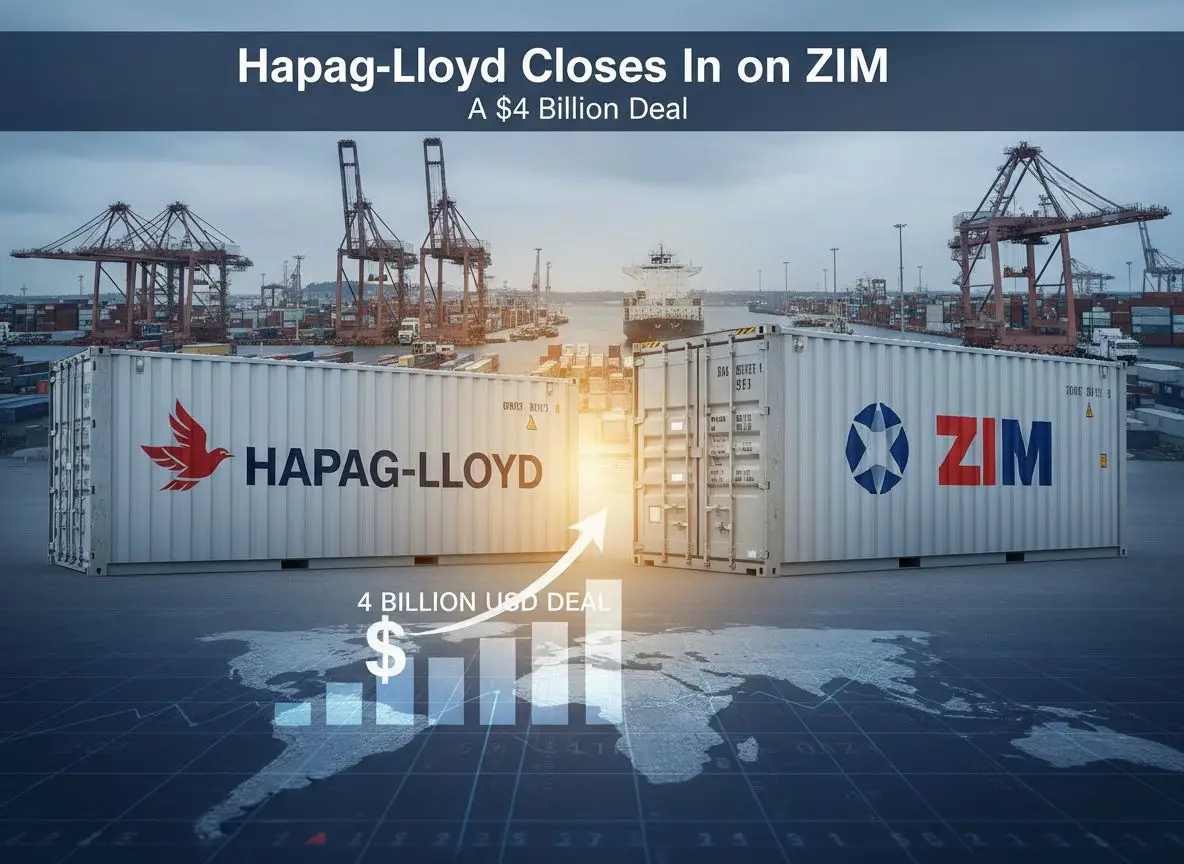
The container shipping world is bracing for a tectonic shift. In a move that could redefine the global carrier rankings, Germany’s Hapag-Lloyd has confirmed it is in advanced negotiations to acquire the Israeli carrier ZIM Integrated Shipping Services.
Valued at more than $4 billion, the deal is among the most significant consolidations in the post-pandemic era. However, this isn’t your standard corporate buyout; it’s a complex, multi-layered manoeuvre involving private equity, national security “golden shares,” and a strategic asset split.
The Master Plan: A Two-Pronged Acquisition
Because ZIM is considered a strategic national asset for Israel, Hapag-Lloyd isn’t acting alone. To navigate the regulatory hurdles—specifically the Israeli government’s “golden share” which ensures the state has access to a fleet during emergencies—the deal involves a partnership with FIMI Opportunity Funds, Israel’s largest private equity firm.
How the Deal Breaks Down
The proposed structure essentially carves ZIM into two distinct entities:
| Asset/Operation | Future Owner | Details |
| International Operations | Hapag-Lloyd | Global shipping lines, customers, and the chartered-in fleet (approx. 99 vessels). |
| Domestic & Strategic Assets | FIMI (Zim Israel) | 16 owned vessels, Israeli-flagged ships, and the “golden share” obligations. |
| Listing Status | Delisted | ZIM will be delisted from the New York Stock Exchange (NYSE). |
By splitting the company, Hapag-Lloyd gains the massive “asset-light” scale it craves without the political headache of managing a foreign state’s strategic maritime requirements.
Market Impact: Climbing the Leaderboard
If the ink dries on this agreement, the global liner landscape will look very different. Hapag-Lloyd currently sits at number five, but the addition of ZIM’s capacity would significantly narrow the gap with the industry’s “Big Four.”
- Capacity Surge: Hapag-Lloyd would add ZIM’s roughly 700,000 TEU (Twenty-foot Equivalent Unit) capacity to its own.
- Market Share: Their combined global market share is projected to rise from 7.4% to approximately 9.8%.
- Ranking Shift: Some analysts suggest this move could push Hapag-Lloyd past COSCO to become the world’s fourth-largest carrier, though regulatory approvals and final vessel tallies will determine the ultimate standing.
Strategic Friction and the “Golden Share”
It hasn’t been smooth sailing. The news has already triggered an indefinite strike by ZIM workers in Haifa, who expressed concerns over job security and national preparedness.
Furthermore, some eyebrows have been raised regarding Hapag-Lloyd’s own shareholder structure, which includes significant stakes from the Qatar Investment Authority (12.3%) and Saudi Arabia’s Public Investment Fund (10.2%). In a region where geopolitics is never far from the surface, the involvement of an Israeli partner (FIMI) is more than just a financial choice—it’s a diplomatic necessity.
“The deal is structured to ensure that ‘Zim Israel’ remains an Israeli identity, maintaining headquarters in Haifa and fulfilling the state’s emergency sealift requirements, while the global engine moves to Hamburg.”
Sources
- Container News: Hapag-Lloyd confirms acquisition talks with ZIM (Feb 2026)
- The Maritime Executive: Hapag-Lloyd Buys Out ZIM, Creating Number-Four Ocean Carrier
- Calcalist/Globes Israel: Financial reports on the FIMI partnership