
by Sanvee Goupta
Quick Summary
- Japanese shipowners K Line, MOL, and NYK are teaming up to create a common design platform.
- The initiative aims to harmonize vessel designs across Japanese shipyards.
- Collaboration through the MILES platform is expected to enhance technical competitiveness.
- Shared designs could lead to cost reductions in shipbuilding and operations.
- This move reflects a broader trend of collaboration in the maritime industry to meet increasing global demands.
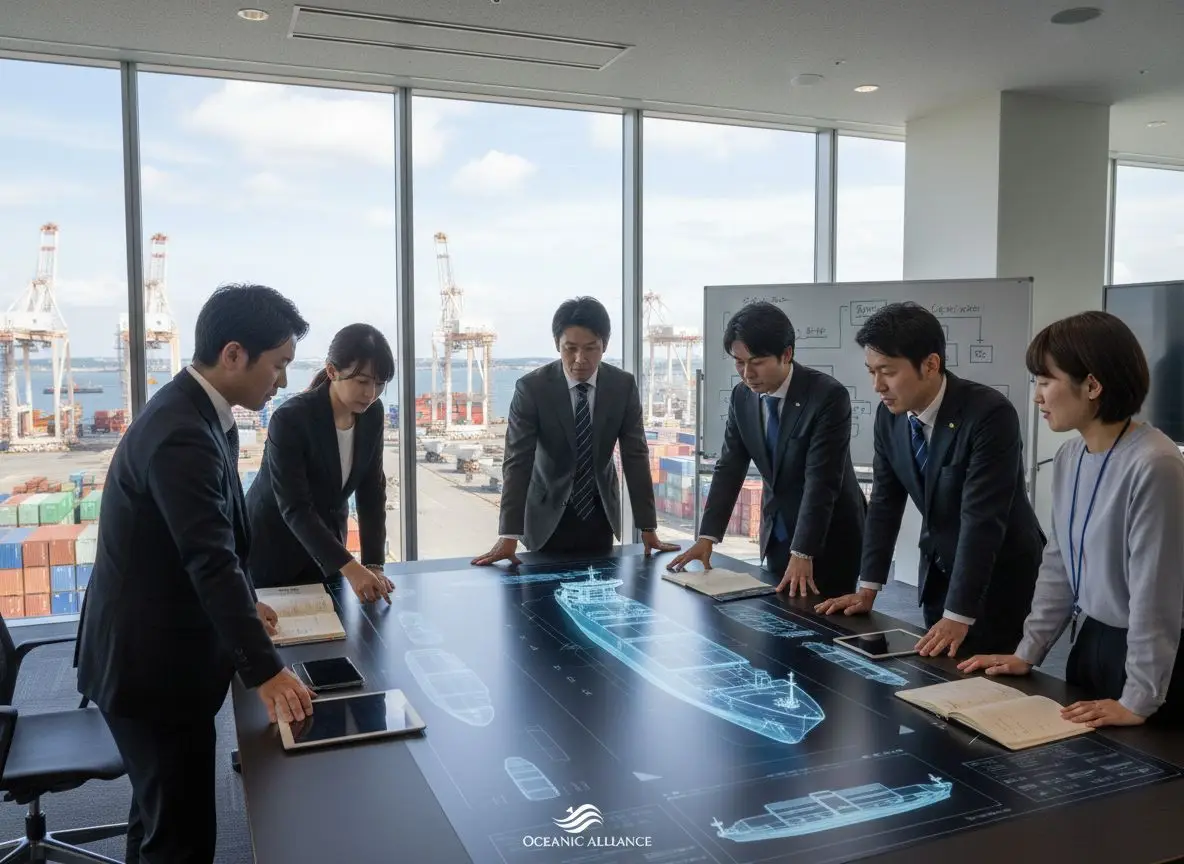
Japan’s maritime industry is taking bold steps to reclaim its global leadership position. In a strategic move, leading Japanese shipowners and shipyards have joined forces to develop standardised vessel designs to improve efficiency, reduce costs, and accelerate the transition to greener shipping solutions.
Why This Collaboration Matters
For decades, Japan was a dominant force in shipbuilding. However, in recent years, China and South Korea have surged ahead, leveraging cost advantages and standardisation. This new alliance seeks to reverse that trend by creating a “country system” approach, pooling resources and expertise to strengthen Japan’s competitive edge.
Key Players and Their Roles
The initiative brings together major industry names:
- Shipyards: Mitsubishi Shipbuilding, Imabari Shipbuilding, Japan Marine United (JMU), Nihon Shipyard (NSY)
- Shipowners: K Line, MOL, NYK Line
- Design Platform: MILES Co., Ltd. – tasked with developing initial ship designs for adaptation across multiple yards.
Focus Areas of Innovation
The collaboration will prioritise:
- Liquefied CO₂ Carriers: Supporting carbon capture and storage logistics.
- Alternative-Fuel Vessels: Including ammonia-fuel ships and other low-emission technologies.
- Standardised Design Frameworks: Reducing duplication and speeding up production cycles.
How Japan Will Achieve Its Shipbuilding Goals
To meet these ambitious targets, the alliance will implement a multi-pronged strategy:
1. Standardised Design Framework
- Shared blueprints for vessels to streamline production.
- MILES Co., Ltd. will create adaptable designs for multiple shipyards.
2. Collaborative R&D
- Joint research teams focusing on hull optimisation and propulsion systems.
- Development of ammonia-ready engines and hybrid propulsion technologies.
3. Digital Integration
- Advanced simulation tools and digital twins for performance testing.
- Real-time data sharing across a unified digital platform.
4. Economies of Scale
- Bulk procurement of components to reduce costs.
- Simplified workflows for faster delivery times.
5. Regulatory Alignment
- Designs compliant with IMO safety and environmental standards.
- Future-proofing for emerging fuels and carbon capture systems.
6. Strategic Partnerships
- Government subsidies and policy support for green shipping.
- Collaboration with classification societies and technology providers.
Strategic Goals
- Enhance Global Competitiveness: By streamlining design and production processes.
- Accelerate Decarbonisation: Aligning with IMO targets and Japan’s carbon-neutral ambitions.
- Reduce Costs: Through shared resources and standardisation.
Implications for the Global Shipping Industry
This alliance signals a major shift in Japan’s shipbuilding strategy, positioning the country as a leader in sustainable maritime solutions. It also sets a precedent for collaborative innovation, which could reshape competitive dynamics in the global shipping market.
