
Quick Summary
- Jiangsu Hantong Group is set to add up to 19 new vessels, including very large crude carriers (VLCCs).
- The shipyard’s orderbook is nearing 100 newbuilds, showcasing robust demand in the maritime industry.
- This move positions Jiangsu Hantong to strengthen its foothold in global shipping markets.
- The implications for maritime logistics and vessel operations could reshape competition.
- Focus on maritime safety and regulations continues to grow as new technologies are integrated.
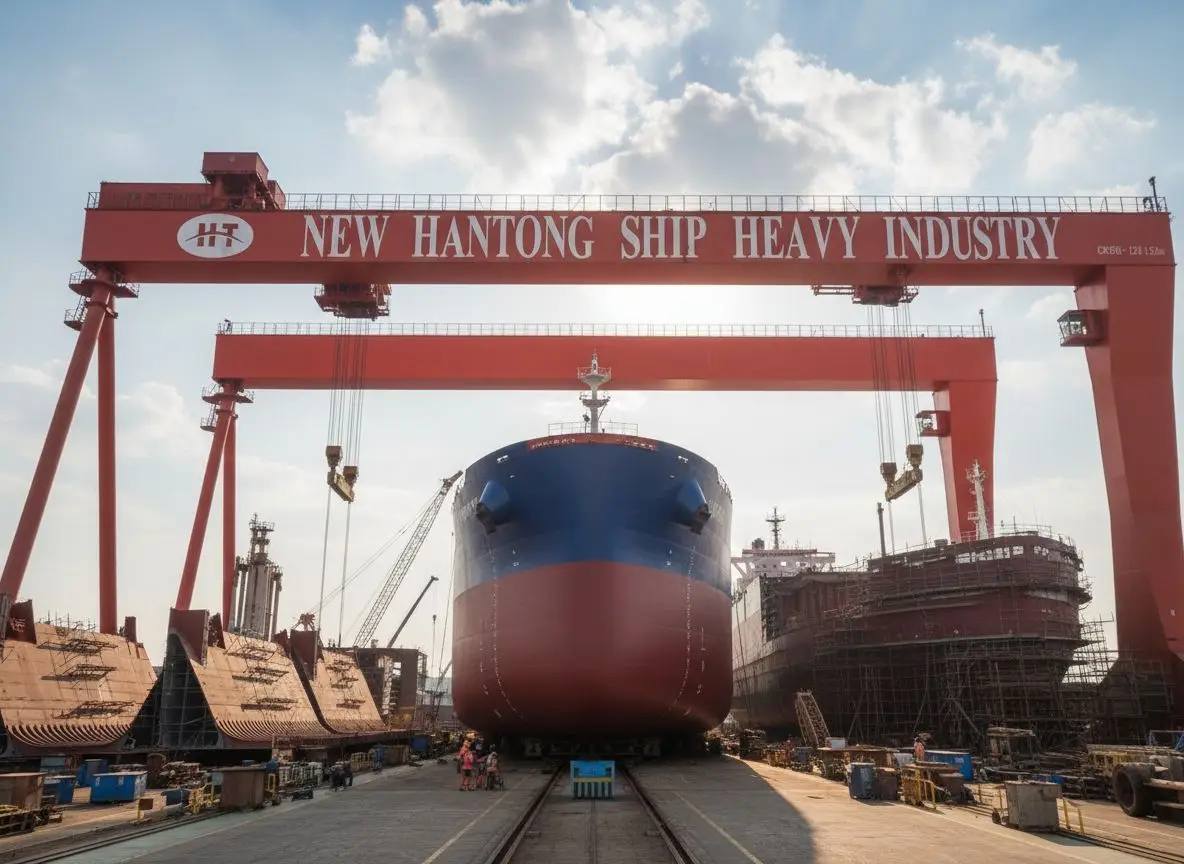
The global shipbuilding industry is undergoing a seismic shift, and Jiangsu Hantong Ship Heavy Industry (HT) is at the centre of it. With 19 newbuildings spanning tankers, bulk carriers, and container vessels, HT is signalling its intent to become a dominant force in the next generation of maritime technology and sustainability.
Background Context
China’s shipyards have long been key players in global shipping, but HT’s latest strategy goes beyond volume—it’s about innovation, diversification, and green compliance. This ambitious orderbook includes:
- First-ever VLCC orders from Trafigura, marking HT’s entry into the large tanker market.
- Multiple Kamsarmax bulk carriers for major operators like COSCO Shipping and Egypt’s National Navigation Company.
- A breakthrough in container shipping with 13 LNG-powered ultra-large vessels (22,000 TEU) for MSC.
These developments position HT as a versatile builder capable of meeting the evolving demands of global trade.

Key Highlights of the 19 Newbuildings
1. VLCC Programme
- Size: ~319,000 DWT
- Features: Ammonia-ready designs, scrubbers, and compliance with IMO’s latest energy efficiency standards.
- Delivery Window: 2026–2030.
- Client: Trafigura—one of the world’s largest commodity traders.
2. Bulk Carrier Expansion
- Type: 82,000 DWT Kamsarmax bulk carriers.
- Clients: COSCO Shipping and National Navigation Company.
- Focus: Fuel efficiency and optimised hull designs for dry cargo trade.
3. Container Vessel Breakthrough
- Type: LNG-powered ultra-large container ships (22,000 TEU).
- Client: MSC—global leader in container shipping.
- Delivery: 2027–2028.
- Significance: HT’s first entry into the container segment, diversifying its portfolio.
Innovation and Sustainability at the Core
HT’s newbuildings are designed to meet IMO decarbonisation targets and future-proof operations:
- Alternative Fuels: Ammonia-ready engines and LNG propulsion systems.
- Energy Efficiency: Advanced hull optimisation and low-emission technologies.
- Digital Integration: Smart navigation systems and digital twins for performance modelling.
Why This Matters for Maritime Professionals
- Fleet Renewal: Global operators are investing in eco-friendly vessels to replace ageing fleets.
- Market Confidence: Trafigura’s VLCC orders and MSC’s container investments signal strong demand in both tanker and liner markets.
- Competitive Dynamics: HT’s expansion challenges Korean and Japanese shipyards, reshaping the competitive landscape.
Future Outlook
HT’s strategy reflects a broader industry trend: green technology, digitalisation, and diversification. For maritime stakeholders, this means:
- Adapt to Alternative Fuels: Prepare for ammonia and LNG-ready fleets.
- Embrace Digital Tools: Optimise operations with smart systems and predictive analytics.
- Monitor Market Shifts: Chinese yards are moving aggressively into high-value segments—expect increased competition.
About Jiangsu Hantong Ship Heavy Industry
Founded in 2003 in Nantong, Jiangsu Province, Jiangsu Hantong Ship Heavy Industry has grown into one of China’s most dynamic shipbuilders. Initially focused on bulk carriers and offshore platforms, the yard now boasts advanced facilities, including a 1,000-metre deep-water coastline and multiple slipways capable of handling vessels up to VLCC size. Over the years, Hantong has expanded its portfolio to include bulk carriers, liquid cargo ships, and offshore engineering projects, while embracing green technologies and digital solutions. Today, the company is part of the Hantong Group, a diversified enterprise involved in shipbuilding, offshore wind power, and port construction. With recent contracts for VLCCs, LNG-powered ultra-large container ships, and Kamsarmax bulk carriers, Hantong is positioning itself as a global competitor, aligning with IMO decarbonisation targets and driving innovation in sustainable maritime solutions.
