

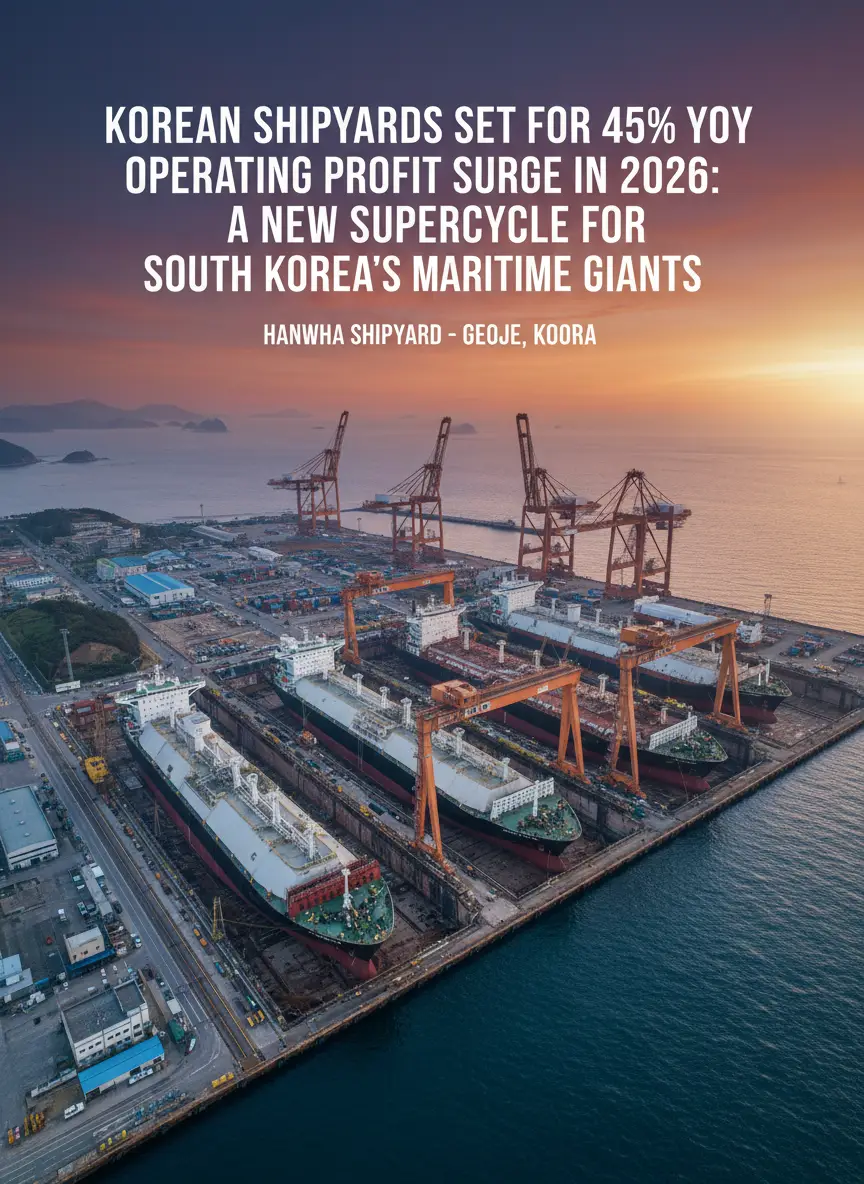
🌏 Why Korean Shipyards Are Entering a Profit Supercycle
Industry analysts attribute the expected 45% profit surge to several converging factors:
1. Massive Order Backlogs
All three major Korean shipbuilders have secured orders totalling over three years’ worth, ensuring stable production pipelines through 2026 and beyond. These backlogs consist largely of high‑value, technologically advanced vessels—LNG carriers, container megaships, and next‑generation eco‑friendly ships.
2. Shift Toward High‑Value Vessels
Korean shipyards have strategically focused on selective order intake, prioritising vessels with higher margins. This includes:
- LNG carriers
- Dual‑fuel propulsion ships
- Offshore wind installation vessels
- Specialized defense and naval ships
These categories command premium pricing and require advanced engineering—areas where Korean shipyards excel globally.
3. Rising Global Ship Prices
The global shipbuilding market is experiencing a price boom driven by:
- Environmental regulations requiring new, cleaner ships
- Increased demand for LNG transport
- Supply chain restructuring
- Limited global shipyard capacity
This price environment significantly boosts profitability for Korean shipyards, which already lead in high‑tech vessel production.
📈 Profit Margins Expected to Reach 15–20%
Reports indicate that as these high‑value ships begin delivery in 2026, operating profit margins for the top three shipbuilders could reach 15% to 20%, a dramatic improvement from previous years.
This margin expansion is driven by:
• Economies of scale
• Improved production efficiency
• Higher pricing power
• Stronger global demand
The industry is calling this phase a “quantum jump” in performance, marking the beginning of a long‑term profitability supercycle.
🛠️ Korean Shipyards: Leaders in Advanced Maritime Technology
Korean shipbuilders have maintained their global leadership by investing heavily in innovation. Key areas of technological advancement include:
Eco‑Friendly Propulsion
- LNG‑powered engines
- Methanol‑ready and ammonia‑ready ship designs
- Hybrid propulsion systems
-
Digital Shipbuilding
- AI‑driven design optimization
- Smart shipyard automation
- Real‑time digital twin monitoring
Defense and Offshore Engineering
- Submarines and naval destroyers
- Offshore platforms and FPSOs
- Wind turbine installation vessels
These innovations not only strengthen Korea’s competitive edge but also align with global decarbonization trends.
🌍 Global Market Conditions Favour Korean Shipyards
The global shipbuilding market is undergoing a structural shift:
1. Environmental Regulations
The IMO’s carbon‑reduction mandates are pushing shipping companies to replace older fleets with cleaner, more efficient vessels—an area where Korean shipyards dominate.
2. LNG Demand Surge
Geopolitical shifts and energy diversification have increased global LNG demand, driving orders for LNG carriers, a segment where Korean shipyards hold over 70% market share.
3. Limited Competition
Chinese shipyards lead in volume but lag in high‑value, technologically complex vessels. Japanese shipyards continue to shrink. This leaves Korean shipyards as the primary suppliers of premium ships.
🧭 Company‑by‑Company Outlook for 2026
HD Hyundai Heavy Industries
- Expected to benefit from strong LNG carrier and container ship orders
- Continues to expand smart shipyard automation
- Positioned for double‑digit margin growth
Hanwha Ocean
- Formerly Daewoo Shipbuilding, now revitalized under Hanwha Group
- Strong defence portfolio, including submarines and naval vessels
- Increasing presence in offshore wind and green ship technologies
Samsung Heavy Industries
- Leading in LNG carriers and offshore engineering
- Strong orderbook for dual‑fuel and eco‑friendly vessels
- Expected to post significant margin recovery
Together, these companies form the backbone of the global high‑tech shipbuilding market.
🔮 What the 2026 Profit Surge Means for the Future
The projected 45% YoY profit growth is more than a financial milestone—it signals a long‑term transformation of the global shipbuilding landscape.
Implications for the Industry
- Korean shipyards will strengthen their dominance in high‑value segments
- Increased investment in automation and green technologies
- Rising global influence in maritime defense and offshore energy
Implications for Global Shipping
- Faster adoption of eco‑friendly fleets
- More advanced vessel designs
- Improved supply chain resilience
Implications for Investors
- Stronger earnings stability
- Potential for dividend growth
- Increased global partnerships and joint ventures
📝 Final Thoughts
The forecasted 45% YoY operating profit growth in 2026 marks a defining moment for Korean shipyards. With unmatched technological capabilities, massive order backlogs, and a booming global market for advanced vessels, South Korea’s top three shipbuilders are entering a new era of sustained profitability and global leadership.
As the maritime industry accelerates toward decarbonization and digitalisation, Korean shipyards are not just participating—they are shaping the future of global shipbuilding.
