
Introduction
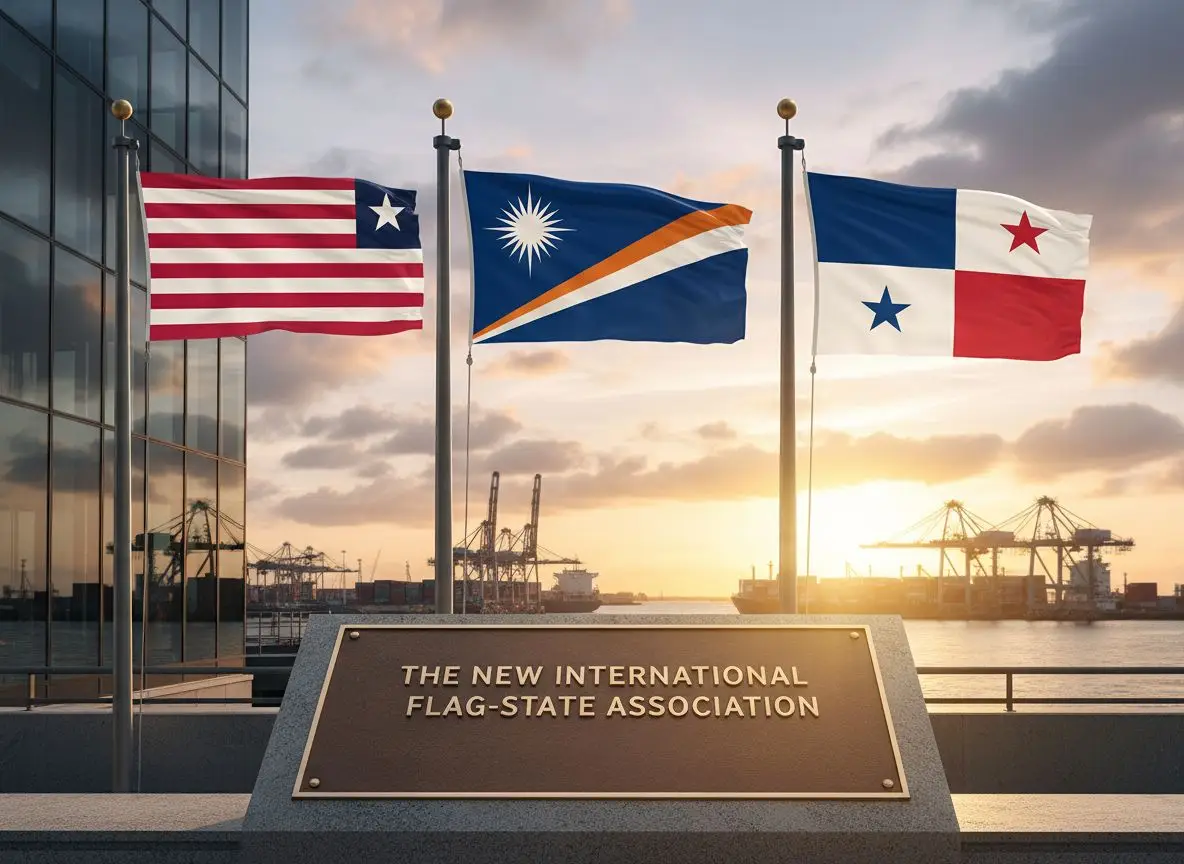
The maritime industry is the backbone of global trade, with over 80% of the world’s goods transported by sea. At the heart of this industry are flag States—countries under whose laws a ship is registered. Among these, Liberia, the Marshall Islands, and Panama stand out as the world’s three largest ship registries. In 2021, these nations took a historic step by forming the International Flag-State Association (IFA), a pioneering alliance designed to address the evolving challenges of global shipping and set new standards for safety, security, and environmental stewardship.
The Genesis of the IFA
Before the IFA’s formation, flag States operated largely independently, lacking a dedicated global platform for structured cooperation. Recognising the need for a unified voice and coordinated action, Liberia, the Marshall Islands, and Panama established the IFA to fill this gap. The association provides a formal forum for these maritime giants to engage on global challenges, share stakeholder insights, and develop international instruments that enhance maritime safety, security, and the protection of the marine environment.
Mission and Objectives
The IFA’s mission is clear: to promote higher standards in maritime safety, security, environmental protection, and seafarer welfare. Collectively, the three registries represent more than 40% of the world’s gross tonnage, giving the IFA significant influence over global shipping practices. The association is committed to:
- Enhancing maritime safety and security
- Protecting the marine environment
- Improving the welfare of seafarers
- Advocating for practical, globally harmonised rules and regulations
Shipping is inherently international, and the IFA’s leaders stress that maritime regulations must remain global to ensure fair competition and effective oversight.
Key Initiatives: The Registry Information Sharing Compact (RISC)
One of the IFA’s flagship initiatives is the Registry Information Sharing Compact (RISC). In 2024, the IFA enhanced RISC by integrating an advanced online database, streamlining information exchange among member States. This tool enables real-time consultation and easier access to details on vessels that may be violating regulations or engaging in suspicious activities. By improving transparency and collaboration, RISC helps flag States identify and address high-risk or non-compliant vessels more efficiently.
Advancing International Policymaking
While information sharing has been a top priority, the IFA is now seeking a more active role in shaping global maritime policy. The association plans to apply for consultative status at the International Maritime Organization (IMO), the United Nations agency responsible for regulating shipping. This move would allow the IFA to contribute directly to the development and implementation of international maritime regulations, ensuring that the perspectives of the world’s largest registries are represented at the highest level.
Leadership and Vision
The IFA’s founding representatives are prominent figures in the maritime sector:
- Alfonso Castillero, Chief Executive Officer, Liberian International Ship and Corporate Registry
- Bill Gallagher, Senior Deputy Commissioner of Maritime Affairs, Republic of the Marshall Islands Maritime Administrator
- Alexander De Gracia, Deputy Administrator, Panama Maritime Authority
These leaders emphasise the importance of global coordination, stating, “IFA brings together the world’s most influential flag States to promote higher maritime safety, security, environmental protection, seafarer welfare, and practical, globally harmonised rules and regulations. Shipping is a worldwide industry, and maritime regulations must remain global.”
Open to Collaboration
The IFA is not an exclusive club. It welcomes participation from other flag States that share its commitment to high standards and global cooperation. By expanding its membership, the IFA aims to strengthen the international maritime framework further and ensure that best practices are adopted worldwide.
Conclusion
The International Flag-State Association marks a new era in maritime governance. By uniting Liberia, the Marshall Islands, and Panama, the IFA provides a powerful platform for collaboration, innovation, and leadership in the shipping industry. As the association continues to grow and influence international policy, it stands as a testament to the importance of unity and shared responsibility in safeguarding the future of global maritime trade.
