

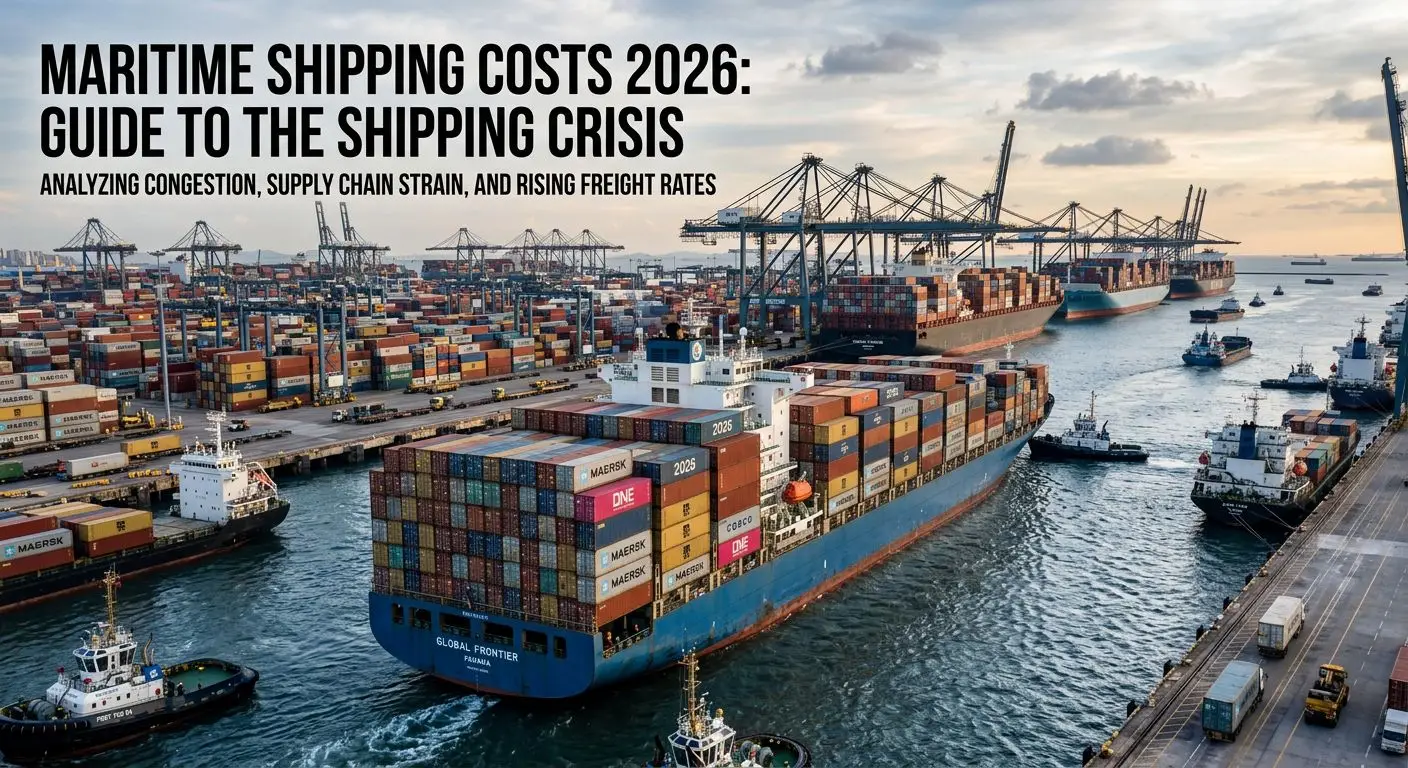
The global shipping industry is currently facing a “perfect storm” of rising costs. If you feel like the ground is shifting under your feet, you aren’t alone. As of March 2026, we are seeing a massive jump in fuel prices, shipping rates, and insurance costs. This isn’t just a small price hike; it is a fundamental change in how the maritime world operates.
In this article, we will break down exactly what is happening, why it’s happening, and what it means for your business budget.
1. The Bunker Fuel Crisis: Why Prices Are Breaking Records
Usually, the price of “bunker fuel” (the heavy oil used by ships) follows the price of crude oil. When oil goes up, fuel goes up. But in March 2026, that rule stopped working.
The Numbers You Need to Know
At the world’s biggest refuelling stops, prices have reached levels we’ve rarely seen:
- Singapore: Fuel oil is around $140 per barrel, a massive 146% increase since the start of the year.
- Fujairah: Prices have hit $160 per barrel.
- High-Grade Fuel: Some reports show prices as high as $175 per barrel.
For comparison, Brent crude oil is trading between $103 and $113. This means ship fuel costs 40% to 75% more than the crude oil it’s made from. This “inversion” is very rare and shows that the problem isn’t just the price of oil—it’s about getting the fuel to the ships.
Why Is This Happening?
The primary driver is the disruption in the Strait of Hormuz. This narrow waterway is a “chokepoint” for the world’s energy. Because of the conflict in the region:
- Refining flows are blocked: The plants that turn oil into ship fuel can’t get what they need.
- Low Availability: With fewer tankers in transit, there is less fuel available to blend and sell at major hubs.
- War-Risk Premiums: It costs more to protect and move the fuel itself, which adds to the final price at the pump.
2. Freight Rates: The Long Way Around
When the usual routes through the Middle East become unsafe, ships have to find another way. Most major carriers have decided to stop using the Suez Canal/Hormuz routes for Asia-Europe trips and are instead sailing around the Cape of Good Hope (the southern tip of Africa).
The Physical Toll of Rerouting
This isn’t a small detour. It’s a massive change in logistics:
- Extra Time: Voyages now take 10 to 14 days longer.
- Extra Distance: Ships are sailing over 6,000 extra kilometres per round trip.
- Extra Fuel: More days at sea mean more fuel burned, compounding the already high fuel prices mentioned above.
The Impact on Rates
Because ships are spending more time on one single delivery, there are fewer ships available for the next job. This “tightness” in the market has led to:
- Emergency Surcharges: Carriers are adding extra fees just to cover the added costs of the long route.
- Fuel Surcharges (FSCs): These are adjusted upward almost daily to keep pace with the prices of diesel and bunker fuel.
- Volatility: Spot markets (where you book a ship for a one-off trip) are seeing wild price swings, especially for containers and oil tankers.
3. Insurance: The Hidden Cost Driver
One of the biggest expenses right now is one you can’t even see on the ship: Insurance.
As the risks in the Gulf increase, insurance companies are reacting. Many have increased their “war-risk” premiums, which are the extra fees a shipowner pays to sail through dangerous areas. In some cases, insurers have stopped offering coverage entirely for certain routes.

When insurance disappears or becomes too expensive, carriers often declare “Force Majeure.” This is a legal term that basically means “circumstances beyond our control.” When this is invoked, the risk and additional costs are often shifted from the carrier to the person who owns the cargo. This creates massive uncertainty for shippers and makes financing a cargo much more difficult for banks.
4. Energy Shipping: A Near Total Collapse
The movement of oil and gas (LNG) has been hit the hardest. Data shows that the number of tankers passing through the Strait of Hormuz has plummeted.
In a normal week, you might see 120 to 150 vessels per day. Recently, that number has dropped to near zero, with some days seeing only 20 tankers. This “tanker traffic collapse” creates a feedback loop:
- Less oil moves, so global oil prices stay high.
- Less fuel reaches refineries, so bunker fuel stays expensive.
- Shipping costs rise, so the price of everything else goes up.
5. Summary: What Changed and Why?
| Cost Area | What Changed | Direct Cause |
| Bunker Fuel | Up to +146% since Jan 2026 | Supply disruption + logistics shocks |
| Fuel vs. Crude | Fuel is 40–75% higher than crude | Refining and supply chain bottleneck |
| Voyage Duration | +10–14 days for Asia–Europe | Cape of Good Hope rerouting |
| Operating Cost | Higher fuel, wages, and insurance | Longer routes + war-risk premiums |
| Freight Rates | Emergency hikes and surcharges | Carriers passing costs to customers |
| Insurance | Premium spikes or withdrawal | High conflict risk in the Gulf |
6. The CFO’s Perspective: Managing the Budget
For the financial teams at shipping companies, March 2026 is a nightmare. Fuel usually accounts for 50% to 60% of a ship’s total operating costs. When that price doubles, the entire budget breaks.
The “Surcharge Lag”
Companies like Maersk, MSC, and CMA CGM have introduced emergency fuel surcharges (ranging from $60 to $190 per container). However, these don’t help immediately. There is a “lag” between when a company pays for expensive fuel and when it actually collects the surcharge from the customer. This creates a cash-flow gap that can put a huge strain on a company’s bank account.
Productivity is Dropping
Even if a company raises its rates, they are still making less money. Why? Because their ships are stuck at sea for 14 extra days. If a ship takes longer to complete a trip, it completes fewer trips per year. This means the ship is generating less revenue over the course of 12 months, even if the “per-trip” price looks high.
Who is Winning and Losing?
- The Losers: Operators with older ships that burn a lot of fuel, and companies that are locked into long-term contracts that don’t allow them to raise prices quickly.
- The Winners: Operators with brand-new, fuel-efficient ships and those who work mostly in the “spot market,” where they can change their prices every day to match the current costs.
7. The Road Ahead: A New Normal?
This is not a typical cycle where prices go up and then come back down a few weeks later. This is a structural shock. We are seeing a combination of geopolitical conflict, the closure of major waterways, and a complete rerouting of global trade.
For shipping companies and cargo owners, the strategy for the rest of 2026 needs to focus on:
- Liquidity: Keeping more cash on hand to pay for upfront fuel costs.
- Flexibility: Moving away from rigid contracts toward more dynamic pricing.
- Efficiency: Investing in any technology that saves even 1% of fuel.
The bottom line: In March 2026, the cost of moving goods across the ocean has changed forever. Being prepared for these “unbudgeted” expenses is no longer an option—it’s a requirement for survival.