

12
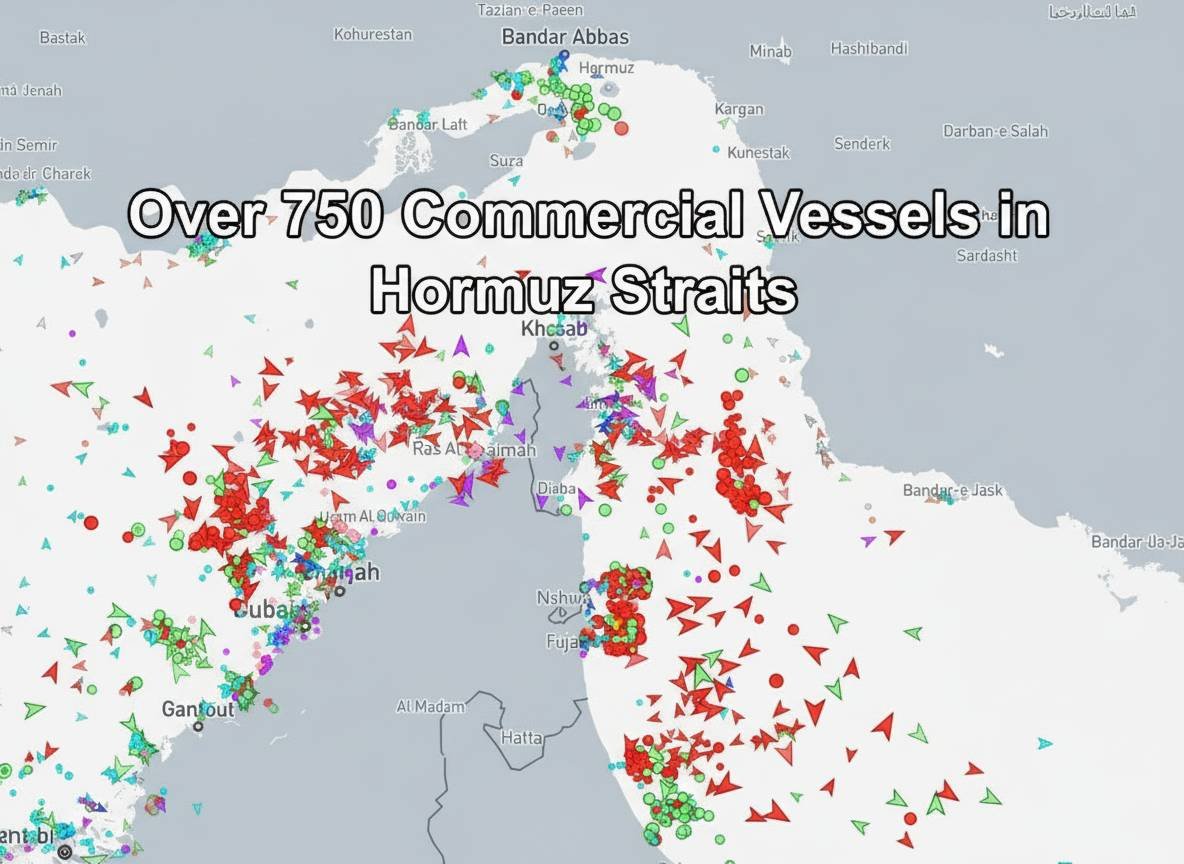
The global maritime industry is facing an unprecedented security emergency as over 750 commercial vessels were reported in or near the Strait of Hormuz at the time U.S. and Israeli military strikes targeted Iran, creating a dangerous escalation with immediate global repercussions. The situation has created significant navigational and security risks, forcing carriers, insurers, and governments to respond rapidly to protect maritime trade.
A Critical Maritime Chokepoint Under Threat
The Strait of Hormuz—responsible for transporting roughly 20% of the world’s petroleum—has once again become the epicentre of geopolitical tension. Following the coordinated strikes, maritime tracking data revealed hundreds of vessels concentrated in or near the chokepoint, heightening fears of potential attacks, detentions, or collateral damage as regional conflict intensifies.
Carrier alerts and military advisories have warned shipmasters to exercise maximum caution, citing a rapidly changing threat environment. Many ships began slowing, anchoring, or diverting amid confusing and conflicting regional directives.
Shipping Security Risks Reach New Highs
The escalating conflict has caused an immediate surge in maritime security threats:
✔ Increased risk of vessel attacks
Reports have already confirmed multiple tankers damaged and at least one seafarer killed in related hostilities, underscoring the seriousness of the threat.
✔ AIS spoofing and GPS jamming intensify
Cyber‑interference incidents—including AIS (Automatic Identification System) spoofing—have risen sharply, further complicating safe navigation. Maritime security firms warn that the region is experiencing an unprecedented level of GPS manipulation, making vessel positioning unreliable.
✔ Insurers escalate war‑risk premiums
Following vessel attacks and missile strikes in the region, marine insurers have begun cancelling war‑risk coverage for vessels, leaving operators exposed and dramatically increasing voyage costs.
Mass Rerouting Causes Global Supply Chain Impact
The maritime crisis is already triggering ripple effects throughout the world’s supply chains:
➤ Carriers suspend Gulf operations
Major global shipping lines have suspended operations, halted bookings, or initiated diversions from the Persian Gulf and surrounding areas. This includes rerouting vessels via the Cape of Good Hope, significantly increasing transit times. [cnbc.com]
➤ Oil prices spike
Oil prices surged 8–9%, reacting to the sudden threat to one of the world’s most vital energy corridors.
➤ Global freight rates rise sharply
VLCC (Very Large Crude Carrier) spot charter rates exceed $200,000 per day, reflecting both the heightened security risk and increased demand for safer alternative routes.
A Humanitarian and Navigational Crisis for Seafarers
While cargo disruptions dominate headlines, seafarers themselves are facing grave dangers.
The International Maritime Organization (IMO) issued an urgent statement condemning attacks on merchant vessels, reaffirming that no attack on civilian shipping is ever justified. The IMO stressed the necessity of protecting maritime crews who are “simply doing their jobs” amid escalating hostility.
Many crew members aboard vessels currently near the Strait are experiencing:
- High psychological stress
- Fear of missile or drone strikes
- Uncertainty regarding safe routing
- Severe delays due to anchoring or rerouting decisions
Global Reactions and Strategic Implications
Geopolitical analysts warn that prolonged closure or disruption of the Strait of Hormuz could:
- Reshape global energy markets.
- Trigger sustained fuel price inflation.
- Complicate LNG and petroleum flows to Asia and Europe.
- Force long‑term shifts in global shipping corridors.
Governments across Europe and Asia are already preparing for supply chain shocks and fuel price volatility, particularly as LNG and oil movements face severe bottlenecks.
Conclusion: A Maritime Flashpoint With Worldwide Consequences
The presence of over 750 commercial vessels in or near the Strait of Hormuz during U.S. and Israeli strikes on Iran represents one of the most severe maritime risk events in recent history. With escalating conflict, vessel attacks, cyber‑interference, mass rerouting, and skyrocketing freight costs, the global shipping industry is navigating a crisis with no immediate resolution in sight.
The world now watches closely as tension in this critical maritime corridor threatens not only regional stability but also energy security, global commerce, and the safety of thousands of seafarers.
Sources
Carrier Suspensions & Rerouting Around Africa
- CNBC – Strait of Hormuz Crisis & Global Shipping Impact
https://www.cnbc.com/2026/03/02/strait-of-hormuz-crisis-us-iran-israel-war-shipping-trade-oil.html