

Executive Summary
- The International Transport Workers’ Federation (ITF) condemns recent attacks on ships in the Black Sea.
- Seafarers are non-combatants and should not be subjected to the dangers of military conflict.
- Flag of Convenience system exposes seafarers to increased risks.
- Calls for adherence to international maritime law and protection of civilian crews continue.
Context Setting
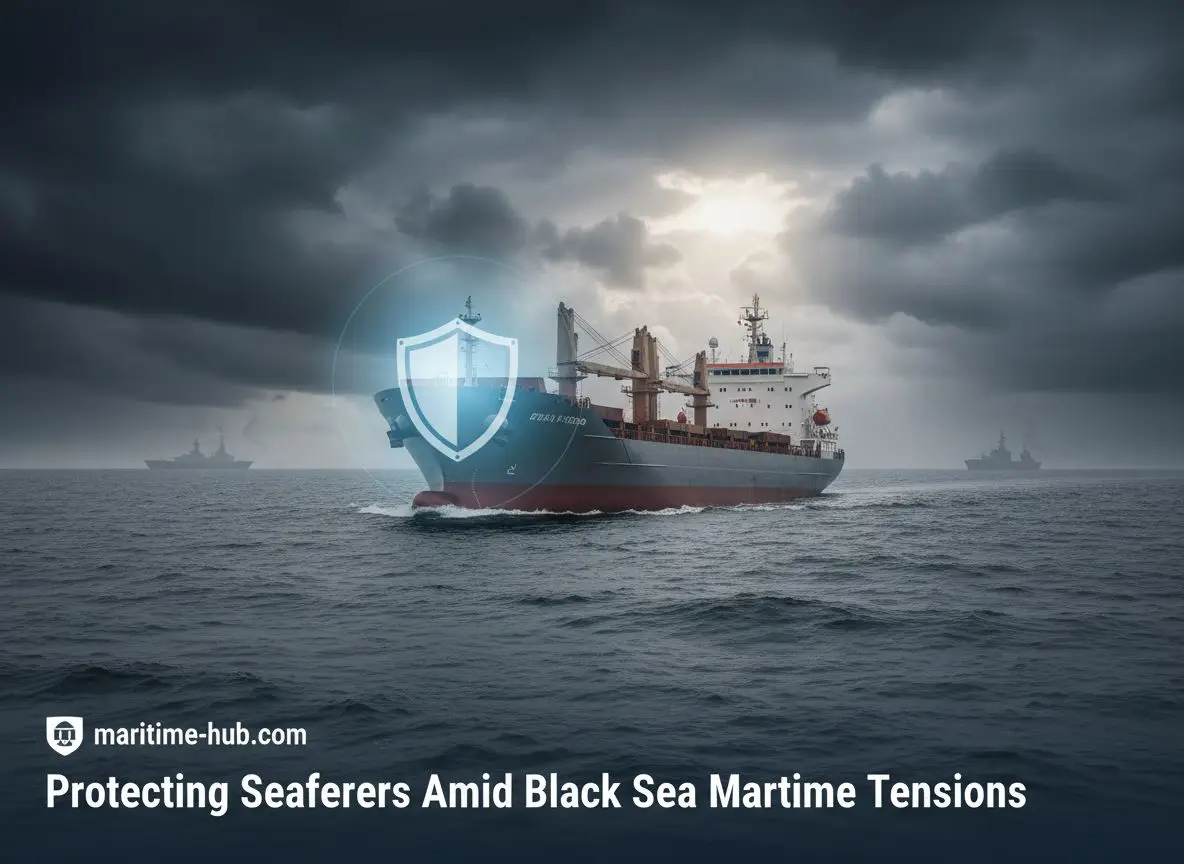
In an era where global trade and maritime logistics are critical to economic stability, the safety of seafarers remains paramount. The Black Sea, a vital artery for international shipping, has become a focal point of maritime tensions due to the ongoing conflict between Russia and Ukraine. This situation has escalated risks for commercial vessels, raising urgent industry-wide concerns about the safety of civilian seafarers.
Recent Incidents Affecting Seafarers
Drone Strikes on Tankers
- Kairos and Virat Tankers (28–29 November)
Ukrainian naval drones targeted two Gambian-flagged oil tankers near Türkiye’s Black Sea coast. Both vessels sustained damage, but crews escaped unharmed. - Midvolga 2 Tanker (2 December)
A tanker carrying sunflower oil was hit during its voyage from Russia, marking the third consecutive attack on commercial tankers in recent weeks.
Attacks on Turkish-Owned Cargo Ships
- CENK-T Cargo Ship (12 December)
A Russian Shahed drone struck the Turkish-owned, Panama-flagged CENK-T at Chornomorsk port, causing a major fire and injuring at least one person. - VIVA Chemical Tanker (13 December)
Russia targeted the VIVA, a UAE-owned, Turkish-operated vessel carrying sunflower oil via Ukraine’s grain corridor. No crew injuries were reported, but the attack raised alarm over civilian shipping safety.
Port Strikes
- Odesa & Chornomorsk Ports (12 December)
Multiple Russian strikes damaged three Turkish-owned vessels and ignited fires aboard civilian cargo ships. One port worker was injured, prompting condemnation for targeting non-military assets.
Why Seafarers Are at Risk
- Conflict Zone Exposure: The Russia–Ukraine war has transformed the Black Sea into a high-risk maritime corridor.
- Flags of Convenience: Many vessels fly flags of convenience, leaving crews with limited legal protections.
- Supply Chain Pressure: Global trade and humanitarian aid depend on these routes, forcing ships into dangerous waters.
International Response
- IMO Resolution A.1183 (33): Calls for enhanced safety measures and support for Ukraine’s maritime corridor.
- Black Sea Grain Initiative: Secures humanitarian shipping routes to maintain food supply chains.
- EU Strategic Approach: Strengthens regional security and resilience against maritime threats.
Key Developments
Recently, the International Transport Workers’ Federation (ITF) issued a strong condemnation of attacks on commercial vessels in the Black Sea. A specific incident involved a tanker in Ukraine’s exclusive economic zone being struck by Ukrainian sea drones while en route to the Russian port of Novorossiysk. This incident is a part of a troubling pattern, marking the third such event in recent weeks involving vessels linked to Russia’s “shadow fleet.” Although these ships may be embroiled in political disputes or sanctions evasion, the ITF emphasizes that their crews remain civilian seafarers, not combatants.
Global Impact Assessment
The implications of these developments are significant for various global maritime sectors. For example, European ports are closely monitoring the situation, as disruptions in the Black Sea could impact supply chains. Similarly, Asian maritime markets, which rely heavily on a steady flow of goods through international waters, are concerned about potential escalations affecting regional shipping routes. In the United States, maritime regulatory bodies are advocating for strong international dialogues to de-escalate tensions and ensure maritime safety..
The current situation highlights significant vulnerabilities in the maritime industry, especially regarding the Flag of Convenience system. This practice enables shipowners to register their vessels in countries with lax regulatory oversight, which often leads to poor working conditions and inadequate safety measures for seafarers. Mark Dickinson, Vice Chair of the ITF Seafarers’ Section, points out that many seafarers on these flagged vessels come from countries with limited employment opportunities. As a result, they often have little choice but to embark on dangerous voyages without comprehensive information about the associated risks.
Forward-Looking Analysis
Looking ahead, it is crucial for international stakeholders to prioritise maritime safety and uphold international laws that protect civilian seafarers. The International Maritime Organization (IMO) is expected to play a pivotal role in facilitating dialogues aimed at reducing tensions in the Black Sea and ensuring adherence to maritime safety regulations. Additionally, advances in maritime technology could deliver innovative solutions to enhance vessel safety and ensure compliance with global standards.
