

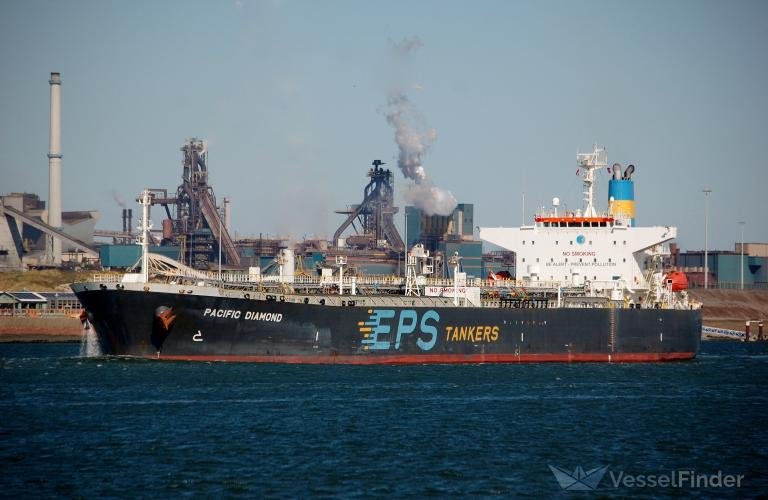
Image: VesselFinder
QatarEnergy missile attack took place on 1st of April 2026. The vessel MT AQUA 1 was sailing in the northern waters of the State of Qatar. The incident occurred early Wednesday, amid heightened regional maritime tensions. There were no reported casualties among the 21 crew members, and officials confirmed no environmental damage or oil leakage.

The strike occurred 17 nautical miles north of Ras Laffan Industrial City, a key global LNG hub. Reports from UKMTO and the Qatar Ministry of Defence stated that the 47,900-deadweight-ton, Panama-flagged tanker was hit by at least one projectile on its port side, damaging the hull above the waterline and starting a fire that the crew extinguished. Authorities found a second unexploded projectile in the engine room, requiring specialised disposal.
On March 3, Iran’s Islamic Revolutionary Guard Corps (IRGC) claimed responsibility for the attack through state-affiliated media, stating that the tanker was targeted due to alleged links with Israel. According to the Qatar Defence Ministry, its air defence systems detected three cruise missiles launched from Iranian territory at approximately 09:15 local time; while two were intercepted, the third struck the MT AQUA 1. This incident is the latest in a series of strikes involving commercial shipping and energy infrastructure in the Persian Gulf and the Strait of Hormuz since the conflict between the US, Israel, and Iran intensified in late February. These attacks reflect the broadening scope of the regional confrontation, in which maritime and energy assets have increasingly become targets amid ongoing hostilities. As each side seeks to pressure adversaries economically and politically, Gulf energy infrastructure is at heightened risk of disruption. This escalation raises serious concerns about the long-term stability of the energy sector, as further attacks could lead to persistent supply interruptions, higher transportation costs, and volatility in global energy markets.
The attack on the Aqua 1 is the latest incident in Qatar’s energy sector. In March, missile strikes on Ras Laffan Industrial City damaged LNG Trains 4 and 6, prompting QatarEnergy to declare long-term force majeure on several contracts, with repairs expected to take 3 to 5 years and an estimated annual revenue loss of $20 billion. Despite the Aqua 1 strike, QatarEnergy stated that operations at Ras Laffan were not further disrupted. The region is increasingly volatile, with three reported attacks on commercial vessels in 24 hours. On March 31, a drone strike set ablaze the Kuwait-flagged tanker Al-Salmi near Dubai. Another container ship narrowly avoided projectiles off the coast of Saudi Arabia. Subsequently, commercial traffic through the Strait of Hormuz has decreased, and some shipping companies now divert vessels around the Cape of Good Hope to avoid the area. These disruptions have already led to a rise in spot LNG and crude oil prices, as fears of further supply interruptions have tightened market sentiment. Shipping insurance premiums have also increased, and re-routing vessels has extended delivery times and raised transportation costs. Analysts warn that continued instability could lead to further price volatility and complicate contract fulfilment for regional exporters.
International observers and energy analysts have noted that ongoing incidents affecting tankers and energy hubs present risks to global supply chains and price stability. With approximately 20% of the world’s oil and LNG transiting through these waterways, the situation has resulted in fluctuations in Brent crude prices. As the investigation into the Aqua 1 continues, regional authorities have advised merchant vessels to transit with caution and maintain heightened situational awareness. In response to the recent attacks, Qatar and neighbouring Gulf Cooperation Council (GCC) states have introduced additional naval patrols and increased coordination between maritime security agencies. The International Maritime Organisation (IMO) has called for enhanced information sharing and the establishment of new reporting protocols for vessels operating in the northern Gulf. Affected countries have also begun reviewing port security procedures and evaluating new policies for traffic management in high-risk areas. The persistence of GPS interference and unexploded ordnance continues to pose hazards for mariners operating in the northern Gulf.
References/Sources:
(April 1, 2026). QatarEnergy statement on missile attack on oil tanker. The Peninsula Qatar. https://thepeninsulaqatar.com/article/01/04/2026/qatarenergy-statement-on-missile-attack-on-oil-tanker
Mosack, K. (April 1, 2026). Qatari officials confirm Iranian strike on fuel tanker north of Ras Laffan. One America News Network. https://www.oann.com/newsroom/qatari-officials-confirm-iranian-strike-on-fuel-tanker-north-of-ras-laffan/
(April 1, 2026). Iranian missile strikes a tanker in Qatar’s waters as attacks continue against Gulf countries. Arab News. https://www.arabnews.com/node/2638392/middle-east
