

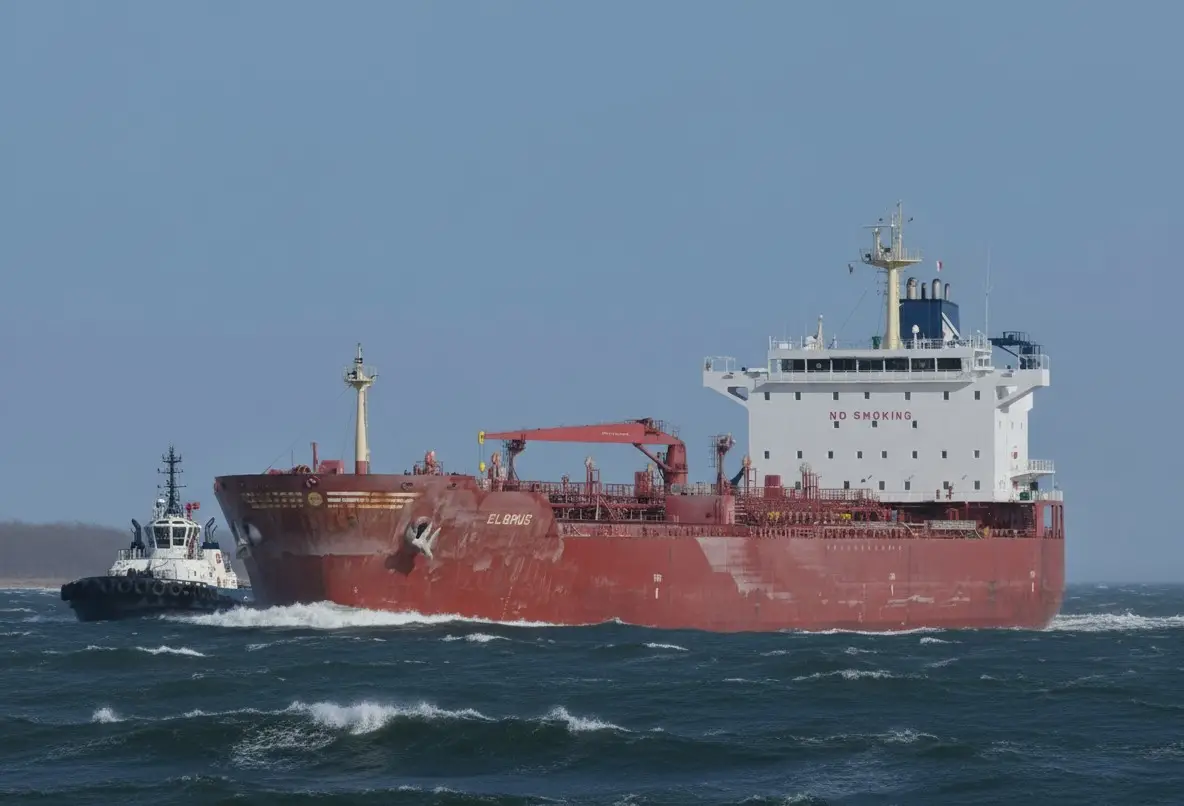
A Palau‑flagged oil tanker bound for the Russian port of Novorossiysk was hit by a drone in the Black Sea on Wednesday, 7 January 2026, according to maritime security sources, further escalating concerns over the growing use of unmanned systems against commercial shipping.
The Palau‑flagged oil tanker Elbus, a mid‑size crude/product carrier, was en route to Novorossiysk when it was struck by a drone in the Black Sea on 7 January 2026.
The vessel sustained engine‑room damage but reported no injuries or pollution. Following the incident, the tanker diverted to a Turkish anchorage for inspection and assessment by relevant authorities.
The attack is the latest in a series of incidents highlighting the increasing militarisation of key maritime trade routes and the rising exposure of merchant vessels to armed drone activity.
Incident Overview
According to maritime intelligence and security sources, the tanker was transiting the Black Sea en route to Novorossiysk when it was struck on 7 January 2026 by an unmanned device believed to be either:
- an unmanned surface vehicle (USV), or
- an aerial drone carrying an explosive payload.
While the precise origin and launch method remain under investigation, early assessments indicate a deliberate and targeted attack, rather than an accident or mechanical failure.
Incident Timeline
🕒 Confirmed and preliminary timeline of events:
- Before 7 January 2026 – The Palau‑flagged tanker departed its previous port of call and proceeded on a routine voyage toward Novorossiysk, operating in international waters of the Black Sea.
- 7 January 2026 – Attack Occurs – While underway, the vessel suffered a sudden impact in the engine‑room area, assessed by security sources as consistent with a drone or unmanned vehicle strike.
- Immediate Response – The crew activated emergency and damage‑control procedures as onboard alarms and propulsion irregularities were detected.
- Initial Damage Assessment – Internal inspections confirmed localized engine‑room damage, with no breach of cargo tanks.
- Safety Confirmation – The vessel’s master reported:
- No crew injuries
- No oil spill or pollution
- Vessel stability maintained
- Post‑Incident Decision – As a precaution, the tanker altered course and diverted to a Turkish anchorage to allow for inspections by class, flag state representatives, and insurers.
- 8 January 2026 – Investigation Phase – Maritime authorities and security analysts began formal assessments using AIS data, onboard telemetry, and regional intelligence inputs.
No Pollution, Crew Safe
In a key development for environmental and operational safety:
- ✅ No marine pollution reported
- ✅ All crew members unharmed
- ✅ Vessel remained afloat and operational
The diversion to Turkish waters allows for:
- Underwater hull inspection
- Machinery diagnostics
- Coordination among coastal state authorities, classification societies, and P&I clubs
Growing Pattern of Drone Attacks on Commercial Shipping
The 7 January 2026 incident follows a worrying escalation of drone‑related maritime attacks during late 2025, particularly in the Black Sea.
Recent patterns include:
- Explosive‑laden maritime drones
- Near‑miss incidents involving merchant vessels
- Increased electronic interference and spoofing
Security analysts warn that commercial tankers are increasingly being exposed to hybrid warfare environments, even when not directly affiliated with military or state actors.
Strategic Importance of the Black Sea
The Black Sea is a critical artery for global energy and commodity flows, supporting:
- Crude oil and petroleum product exports
- Grain shipments
- Chemical and bulk cargo trades
Ports such as Novorossiysk are central to Russian oil exports, and any perceived threat to shipping safety can immediately influence:
- Freight rates
- War‑risk insurance premiums
- Chartering and voyage‑routing decisions
Awaiting Official Attribution
As of 8 January 2026, no party has formally claimed responsibility for the attack.
Investigations remain ongoing, and analysts caution against premature conclusions while technical and intelligence evaluations continue.
A Changing Risk Landscape for Merchant Shipping
The drone strike on 7 January 2026 reinforces a fundamental shift in maritime risk dynamics. Low‑cost unmanned systems are now capable of:
- Reaching commercial vessels far from active front lines
- Causing operational disruption without direct naval confrontation
- Triggering disproportionate insurance and commercial consequences
For shipowners and operators, adapting to this evolving security environment is no longer optional—it is becoming a core operational requirement.
