

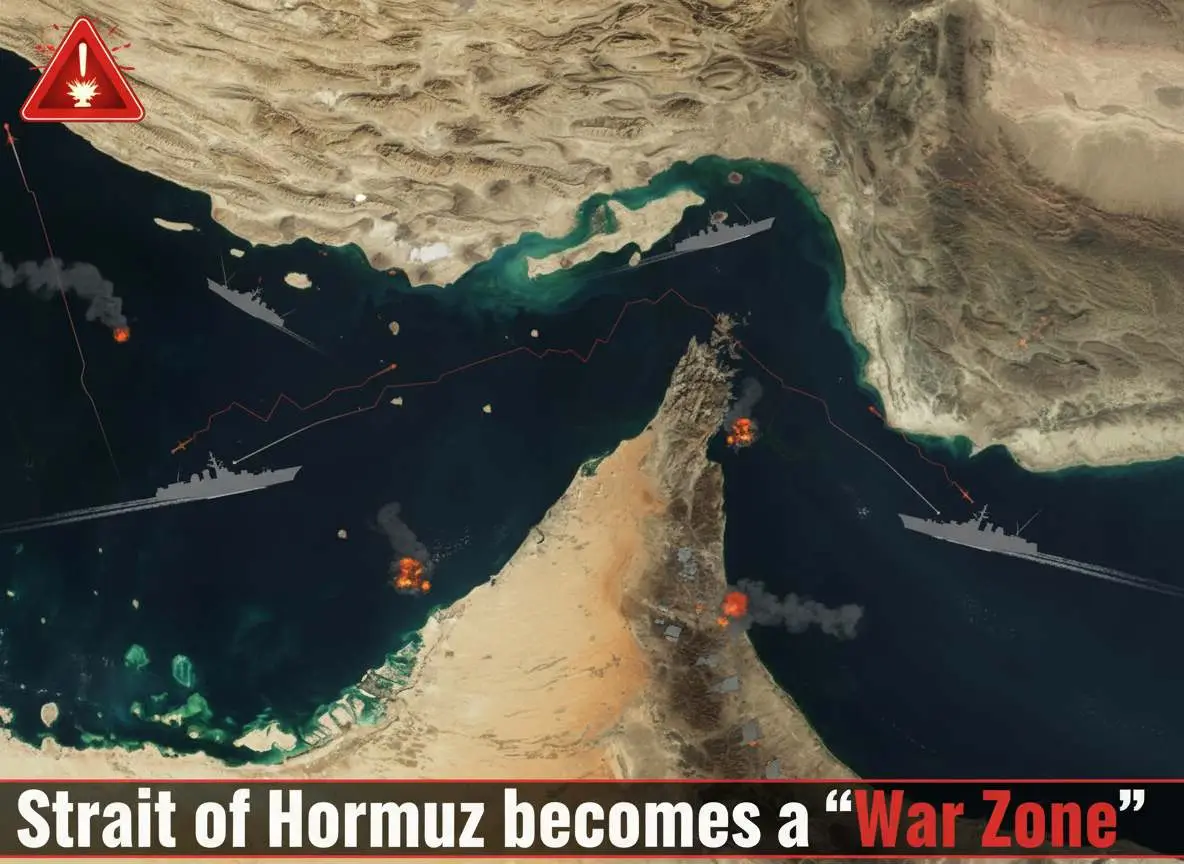
The Strait of Hormuz — the world’s most critical maritime chokepoint for oil — has effectively become a conflict zone. With around 20% of global crude passing through this narrow waterway, any disruption sends shockwaves through international trade, shipping logistics, and energy markets. The latest escalation, triggered by coordinated U.S. and Israeli military strikes on Iran, has now brought commercial traffic to a near standstill, raising fears of a prolonged global supply chain crisis.
Below is a full breakdown of the situation and its implications for shipping, logistics, and global trade.
Strait of Hormuz: From Tension to Active Danger Zone
Military Strikes Trigger Iranian Restrictions
Following coordinated strikes by the United States and Israel against Iranian assets over the weekend, Iran has begun restricting ship movement through the Strait of Hormuz.
The Islamic Revolutionary Guard Corps (IRGC) has issued radio warnings instructing vessels to stay clear of the area, further tightening maritime access.
Tanker Attack Escalates Fears
The situation intensified when the Palau‑flagged oil tanker Skylight was hit by a projectile north of Oman.
Key details include:
- The crew was evacuated following the strike.
- Several injuries were reported.
- The attack marked one of the most direct hits on commercial infrastructure since tensions escalated.
Such incidents create immediate risk not only for shipping lanes but also for insurance markets, naval operations, and global commodity flows.
Hundreds of Vessels Now Sheltering in Place
As the risk of further attacks rises, commercial captains are opting for caution. Currently:
- Hundreds of vessels remain anchored in designated “safe zones” near Fujairah (UAE) and Oman.
- Many shipping operators have imposed temporary stand‑downs until safe passage can be confirmed.
This sudden immobilisation represents one of the largest simultaneous anchor‑downs in the region’s history.
Major Global Shipping Lines Suspend Middle East Operations
As violence increases and risks escalate, the world’s leading shipping corporations have initiated drastic emergency measures.
MSC & Maersk Pull Back Services
Two of the biggest names in container shipping — MSC and Maersk — have:
- Suspended all new cargo bookings to Middle Eastern ports affected by the crisis.
- Begun rerouting major trade lanes around the Cape of Good Hope, adding up to 14 days to some trade routes.
This detour significantly increases operational cost, transit time, and fuel consumption — with downstream implications for supply chains worldwide.
Japanese Shipping Giants Halt Operations
The three major Japanese carriers — NYK, MOL, and K Line — have:
- Ceased all operations through the Strait of Hormuz.
- Ordered their fleets to seek safe harbour until further notice.
Japan, heavily dependent on Middle Eastern energy imports, faces heightened exposure in the coming weeks if disruptions persist.
New Conflict Surcharges Rolled Out
The financial consequences of rerouting, delays, and soaring war‑risk insurance have led to new emergency fees.
Among them:
- CMA CGM is introducing “Emergency Conflict Surcharges” ranging between $2,000 and $4,000 per container.
These surcharges reflect both immediate security concerns and long-term regional uncertainty.
Global Repercussions: Oil, Inflation, and Supply Chain Shockwaves
Oil Prices Already Reacting
Given that one-fifth of global oil passes through the Strait, markets have reacted sharply:
- Crude prices have begun climbing as traders factor in the possibility of sustained disruption.
- Refiners worldwide are preparing for potential shortages and pricing pressure.
Longer Shipping Routes Mean Higher Costs
With major carriers re-routing via Africa:
- Transport times rise dramatically.
- Fuel costs increase.
- Freight capacity tightens.
These factors almost inevitably lead to higher consumer prices, especially for Asian and European markets dependent on Middle Eastern oil or goods transported via the region.
Insurance Premiums Surge
Specialised “war risk” insurance policies are now spiking in cost as underwriters reassess exposure.
This adds another layer of expense for carriers, shippers, and ultimately consumers.
How Long Could the Crisis Last?
The duration of disruption will depend on:
- Diplomatic responses from the U.S., EU, and regional players.
- Iran’s willingness to ease maritime restrictions.
- Naval presence and protective corridors potentially established by coalition forces.
- Whether further attacks on oil tankers occur.
If tensions continue to escalate, the crisis could evolve into one of the most significant shipping disruptions since the Iran‑Iraq “Tanker War” of the 1980s.
What Businesses Should Do Now
Companies dealing in logistics, shipping, or global trade should consider:
- Securing alternative transport routes where feasible.
- Adjusting delivery estimates and informing customers of potential delays.
- Reviewing supply chain risk models in light of recalculated global transit times.
- Budgeting for surcharge increases over the coming months.
Conclusion: A Critical Flashpoint for Global Trade
The transformation of the Strait of Hormuz into an effective “war zone” marks one of the most consequential disruptions to global maritime logistics in recent years. With tankers attacked, fleets immobilised, and shipping giants suspending services, the world is now entering a period of heightened economic vulnerability.
Markets, businesses, and supply chains across the globe will need to brace for weeks — if not months — of instability as geopolitical tensions continue to unfold.
From MarineTraffic The traffic in the Strait of Hormuz on 2nd of March 2026.

