

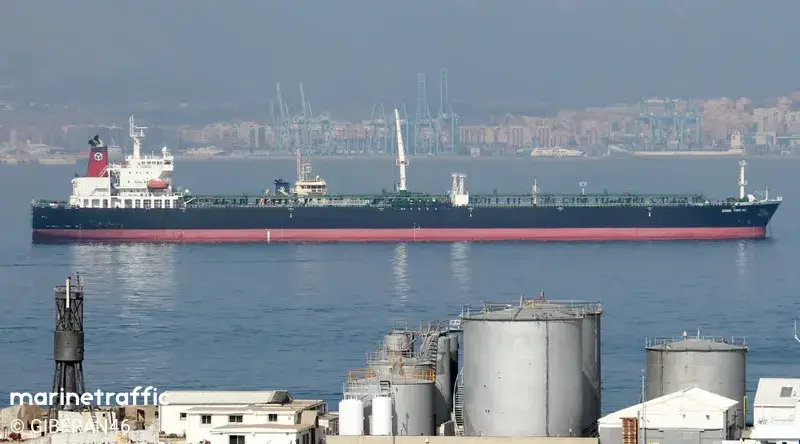
Photo from Marine Traffic
Synopsis
-
- Incident: The tanker MKD VYOM was struck by an unconfirmed projectile 44.4 nautical miles northwest of Muscat, Oman.
-
- Vessel Profile: The ship is a Marshall Islands-flagged crude/product tanker managed by the global firm V.Ships.
-
- Regional Impact: The attack occurred near the Strait of Hormuz, a critical chokepoint for global energy transit.
-
- Security Context: This strike follows a series of drone-related incidents in the region, including at Oman’s Duqm port.
-
- Status: No confirmed casualties or environmental leaks have been reported, but naval agencies are conducting assessments.
Escalation in the Gulf of Oman: The MKD VYOM Incident
Maritime security agencies are on high alert following a kinetic strike against a commercial tanker in the waters off Oman. On March 1, 2026, the MKD VYOM, a tanker flying the Marshall Islands flag, was reportedly hit by a projectile while transiting approximately 44.4 nautical miles northwest of Muscat.
The vessel, which is managed by the industry giant V.Ships, was navigating a high-traffic corridor leading toward the Strait of Hormuz at the time of the attack. While the exact nature of the projectile—whether a missile or a drone—remains under investigation, the incident fits a broader pattern of “shadow war” tactics targeting Western-linked shipping in the Middle East.
Technical Profile of the Affected Vessel
The MKD VYOM is categorized as a crude or oil products tanker. Its registration under the Marshall Islands flag—a common “open registry” with strong ties to U.S. and international commercial interests—makes it a significant target in the current geopolitical climate.
| Feature | Specification |
| Vessel Name | MKD VYOM |
| Flag State | Marshall Islands |
| Ship Manager | V.Ships |
| Location of Strike | 44.4 NM NW of Muscat, Oman |
| Type of Incident | Projectile Strike |
| Reported Injuries | None confirmed |
Strategic Context: Chokepoints and Geopolitical Friction
The strike follows a series of maritime security disruptions across the Persian Gulf, the Arabian Sea, and the Strait of Hormuz. On the same day as the strike on the MKD VYOM, separate reports indicated drone activity targeting Oman’s Duqm port.
The Iranian Factor and Regional Tensions
While no group has claimed responsibility, security analysts point toward the ongoing friction involving Iranian maritime interests and Gulf state security. The use of missiles and drones has become a common sign of rising tensions in the region, often used as a way to gain an advantage in larger diplomatic disagreements.
The proximity of the strike to Muscat is particularly concerning for the merchant marine. This region serves as the primary gateway for global oil exports. Any perceived instability here immediately translates to:
-
- Increased War Risk Insurance: Premiums for vessels transiting the Gulf are expected to spike.
-
- Naval Re-routing: Owners may seek alternative routes or demand naval escorts from the U.S. 5th Fleet or the UKMTO.
-
- Operational Delays: Increased screening and cautious navigation protocols reduce the efficiency of the global supply chain.
Environmental and Safety Assessments
As of the latest reports, there has been no confirmation of structural failure leading to an oil spill. However, maritime safety agencies, including Oman’s Maritime Security Centre, are monitoring the hull integrity of the MKD VYOM. Environmental risk is a primary concern for the Omani coastline, as a significant breach could devastate local fisheries and desalination infrastructure.
V.Ships has yet to issue a formal statement regarding the condition of the crew or the extent of the damage. Historically, such strikes involve “soft” targets like the bridge or accommodation blocks to send a political message without necessarily sinking the vessel.
Comparative Analysis: Recent Maritime Disruptions
The MKD VYOM incident shares characteristics with other recent maritime security events, emphasizing a shift toward tech-heavy, low-cost asymmetric warfare.
Maritime Incident Comparison (2025-2026)
| Incident Type | Primary Weaponry | Typical Target | Geographic Focus |
| Direct Strike | Missiles / Drones | Tankers (Western Flagged) | Gulf of Oman / Red Sea |
| Sanctions Evasion | Shadow Fleets / IT Hacking | Russian/Iranian Oil | UAE Hubs / STS Transfer Zones |
| Interdiction | Patrol Boats | Speedboats / Smugglers | Caribbean / North Cuba |
The international community faces a growing challenge: balancing the “open market” nature of hubs like the UAE—where many shadow fleet operations are coordinated—with the physical protection of legitimate commercial assets in the Gulf. Until a de-escalation in regional tensions is achieved, the “Dark Fleet” and kinetic strikes on tankers will remain the twin pillars of modern maritime risk.
Sources
-
- Devdiscourse: Reporting on the projectile strike and vessel management details.
-
- Reuters Maritime: Analysis of regional security corridors and the Strait of Hormuz.
-
- UKMTO/U.S. 5th Fleet: Security advisories for the Gulf of Oman (March 2026).
