

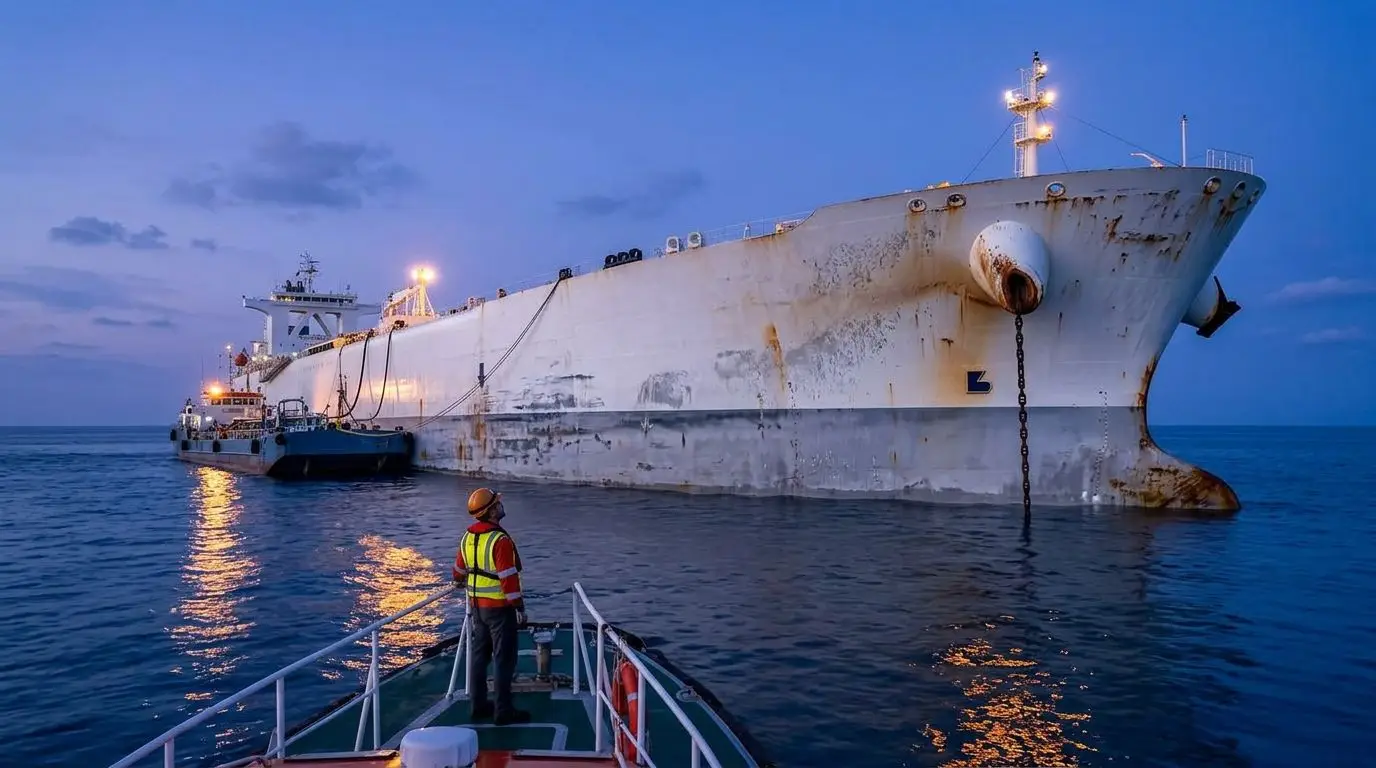
In the competitive world of global energy logistics, the pursuit of the lowest cost per barrel has historically led to one solution: bigger ships. Ultra Large Crude Carriers (ULCCs), the giants of the ocean, were designed to maximise economies of scale in shipping. By carrying up to 4 million barrels of oil on a single voyage, these vessels theoretically offer the most efficient means of transport.
In 2023, however, only about 40 per cent of the global ULCC fleet was fully utilised, according to recent industry reports, reflecting a shift in demand and the growing challenges of matching these vessels to viable routes. As market dynamics shift and infrastructure lags, many shipowners are discovering that managing oil tanker operating costs requires far more complex calculations than simply increasing vessel size.

Ultra Large Crude Carrier
While these behemoths excel at reducing variable transport costs, they introduce unique financial and logistical burdens. From restricted global navigation to specialised maintenance requirements, the “bigger is better” philosophy is facing a reality check. To understand the future of energy transport, we must look beyond the initial promise of capacity and examine the structural challenges that define the modern tanker market.
The Reality of Economies of Scale in Shipping
The primary appeal ohttp://VLCCf the ULCC is its unmatched ability to lower the unit cost of cargo. When a vessel can carry twice the volume of a standard VLCC (Very Large Crude Carrier) without doubling the fuel consumption or crew size, the math seems simple. This ULCC vessel efficiency is the cornerstone of long-haul routes between major production hubs like the Middle East and refining centres in Asia.

However, economies of scale only provide value if the vessel is fully utilised and operational. In a volatile market, the capital risk associated with such massive assets is significant. High interest rates and fluctuating demand can quickly erode the thin margins these ships are designed to protect. Furthermore, while the per-barrel cost might be lower, the absolute OPEX—including insurance, specialised dry-docking, and port fees—remains significantly higher than smaller, more versatile classes. For example, industry estimates put average annual OPEX for a ULCC at around 12 to 15 million USD, compared to 8 to 10 million USD for a VLCC and 5 to 7 million USD for a Suezmax tanker. These differences are driven by higher maintenance costs, crew requirements, and, especially, the limited availability and higher fees of the massive drydock facilities required for ULCCs. As a result, operators must weigh not only the potential savings from scale but also the concrete, recurring costs of operating the world’s largest tankers.
Port Accessibility Constraints and Infrastructure Gaps
One of the most significant operational limitations for tankers is the lack of compatible infrastructure. ULCCs are so large—often exceeding 400 meters in length with drafts up to 35 meters—that only a handful of ports worldwide can accommodate them fully loaded. For example, major terminals such as the Port of Rotterdam, Louisiana Offshore Oil Port (LOOP), and Ras Tanura in Saudi Arabia are among the few that can handle these vessels at full capacity. These port accessibility constraints force many operators to use expensive, time-consuming workarounds.

Very Large Crude Carrier
When a ULCC cannot enter a port, it must engage in Ship-to-Ship (STS) transfers. This involves offloading cargo onto smaller “shuttle” tankers in deeper waters. While this allows the oil to reach its destination, it adds layers of cost, including additional charter fees for daughter vessels.
– Increased insurance premiums for high-risk transfer operations.
– Potential environmental penalties and stricter regulatory oversight.
– Significant delays that disrupt just-in-time supply chains.Strategic Maritime OPEX Management
Effective maritime OPEX management requires a holistic view of a vessel’s lifecycle. For ULCCs, maintenance is not a routine task; it is a major industrial undertaking. Because of their size, very few dry docks can physically accommodate these ships, meaning owners often have to sail thousands of miles off route just to reach a repair facility. This “empty” sailing time represents a massive opportunity cost and a direct hit to the bottom line.
Beyond physical maintenance, the human element is equally critical. Operating these giants requires highly specialised training and experience. For those navigating maritime careers or challenges, the responsibility of commanding a vessel worth hundreds of millions of dollars with a cargo that could cause an ecological disaster is immense. Ensuring crew competence and mental well-being is a non-negotiable part of the operating budget that cannot be optimised away through scale. Leading ship operators now adopt best practices, including mandatory compliance with the STCW Convention for seafarer certification, as well as regular scenario-based drills and bridge team management training. Investment in crew rotation schedules, access to counselling, and the maintenance of onboard recreational facilities is also recognised for reducing fatigue and supporting mental health. Operational managers are encouraged to benchmark their practices against standards set by organisations such as the International Maritime Organisation (IMO) and to incorporate psychological resilience programs into routine safety management.
Conclusion: Is the ULCC Still Viable?
The era of the ULCC as the undisputed king of the ocean is giving way to a more nuanced age of versatility. While they remain unmatched for specific long-haul, high-volume contracts, they are no longer seen as a universal solution to rising oil tanker operating costs. The modern fleet is increasingly favouring “Suezmax” and “VLCC” classes, which offer a better balance between scale and flexibility.

Ultimately, the shipping industry has learned that efficiency is not just about how much you can carry, but how easily you can move. As port infrastructure remains stagnant and environmental regulations such as IMO 2030 and 2050 tighten, the operational constraints on the world’s largest ships may finally outweigh their economies of scale. For ULCCs in particular, compliance with new emissions limits will likely require operators to incur major retrofitting costs, such as installing advanced exhaust-gas cleaning systems or converting to alternative fuels. These measures can represent a significant capital outlay and potential downtime, in addition to the challenge of finding suitable facilities for major upgrades. Success in today’s market belongs to the operators who can manage the total cost of the journey, not just the hull’s capacity.