

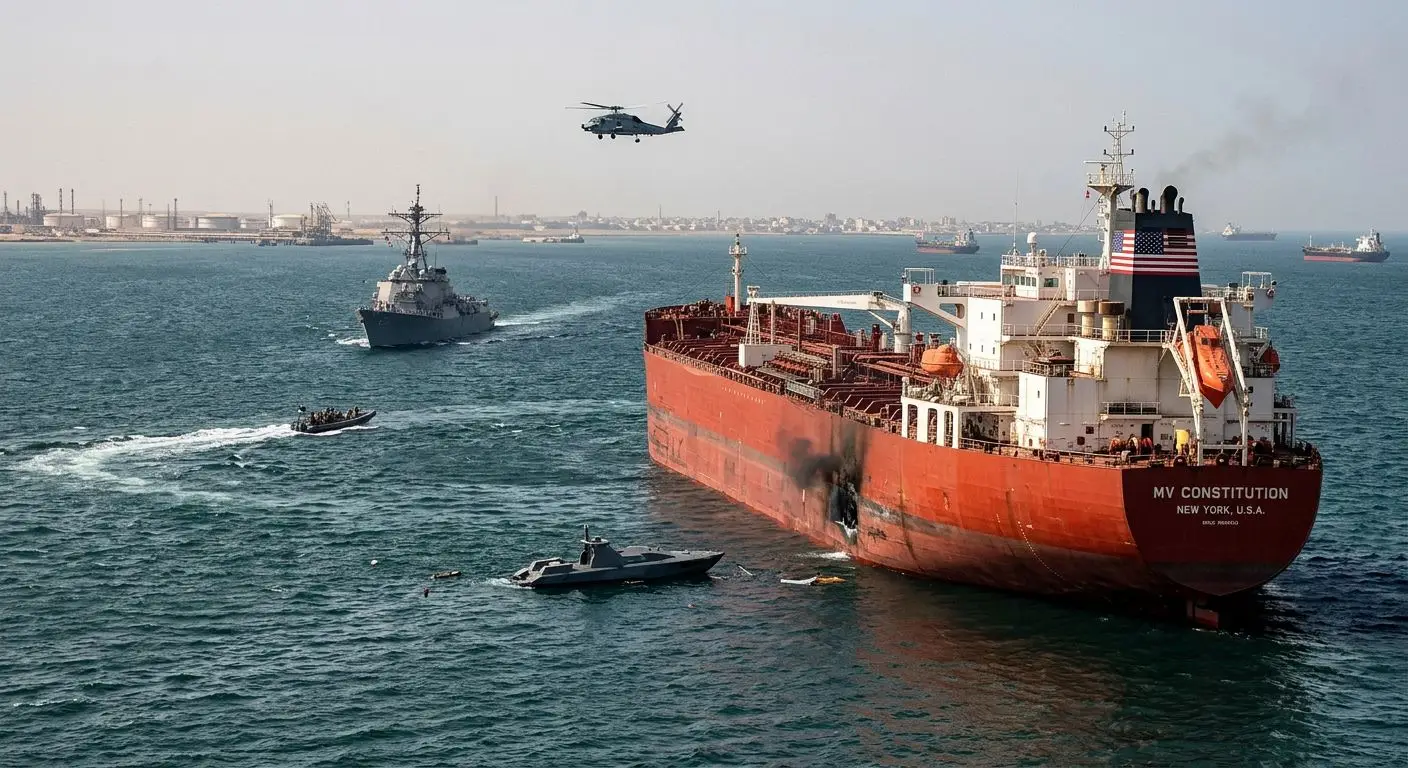
A Wake‑Up Call for Global Maritime Trade
A recent incident involving a U.S.-owned tanker operating near Iraqi waters has intensified global concerns about the accelerating use of unmanned surface vessels (USVs) in Middle Eastern maritime attacks. While the broader details are still emerging, this event reinforces a disturbing strategic trend: weaponised unmanned boats are becoming a routine part of modern asymmetric warfare.
According to Reuters reporting (March 13, 2026), early investigative findings suggest the vessel was struck by unmanned explosive‑laden boats in coastal waters.
Source: Reuters — https://www.reuters.com/world/middle-east/us-owned-tanker-attacked-near-iraq-was-hit-by-unmanned-boats-early-findings-show-2026-03-13/
This publicly available information highlights a sophisticated shift in regional tactics—one that governments, naval forces, and commercial shipping operators can no longer overlook.
Why Unmanned Maritime Threats Are Rising
Autonomous and remotely controlled vessels have evolved from experimental technologies into practical offensive weapons. Several core factors explain their rapid adoption:
✔ Cost-Effective Warfare
Compared to missiles or traditional naval assets, USVs are inexpensive to build yet capable of inflicting catastrophic structural damage.
✔ Low Detection Profile
Their small size and near‑waterline signature make them difficult to spot with conventional maritime radar systems.
✔ High Precision, Low Risk
Operators can guide USVs with remarkable accuracy while keeping personnel far from danger.
✔ Proliferation of Dual‑Use Technology
Off-the-shelf marine drones, modified fishing skiffs, and commercial navigation hardware can be weaponised with minimal expertise.
The combination creates a security challenge for ports, tankers, warships, and maritime choke points—particularly in regions already marked by political volatility.
Impact on the Energy Sector and Global Shipping
Tankers traversing the Persian Gulf, the Strait of Hormuz, and the northern Arabian Gulf remain vulnerable due to their size, predictable routes, and the strategic importance of their cargo. Even a single incident can have wide-reaching effects:
1. Energy Market Volatility
Attacks near sensitive shipping routes create immediate concerns about supply disruptions, often prompting investors to price in geopolitical risk.
2. Higher Insurance and Operational Costs
War‑risk premiums rise when attacks target commercial shipping. Operators may face:
- Increased security surcharges
- Higher insurance costs
- Pressure to re-route vessels around high‑risk zones
3. Heightened Military Presence
Events like this typically trigger reinforced naval patrols by regional and international forces. While such deployments strengthen security, they also signal escalating tensions.
How Navies and Industry Are Adapting
The proliferation of USVs is pushing maritime security innovation in several directions:
✔ Enhanced Surveillance Systems
New low‑altitude radar platforms, AI‑assisted surface monitoring, and sonar nets are being deployed to detect small craft approaching at high speeds.
✔ Electronic Warfare (EW) Solutions
Navies are testing EW tools designed to disrupt remote-control signals or GPS guidance used by hostile unmanned vessels.
✔ Hardened Vessel Defense Measures
Ship operators are adopting:
- reinforced hull zones
- counter‑drone watch protocols
- automated alert systems
- defensive escort strategies in high-risk waters
✔ Coalition Maritime Task Forces
Multinational naval collaborations are becoming essential in controlling choke points and identifying threats before they reach commercial routes.
A New Era of Asymmetric Naval Conflict
Unmanned and semi-autonomous systems introduce a battlefield where traditional naval dominance carries less weight. Small actors can now project force far beyond their conventional capabilities. This shift has two major implications:
1. Persistent Low-Intensity Conflict at Sea
Rather than large-scale naval battles, the threat landscape now features constant probing, harassment, and sabotage.
2. Strategic Ambiguity
Unmanned attacks often obscure attribution, complicating both diplomatic negotiations and military responses.
Given these dynamics, the attack referenced by Reuters fits a wider pattern of disruptive maritime activities in the region.
Conclusion: Maritime Security Must Evolve—Fast
The tanker incident near Iraq is more than an isolated event; it marks another step toward an increasingly automated and unpredictable maritime threat environment. Commercial operators, energy companies, and naval coalitions must adapt rapidly to counteract unmanned surface threats that are now shaping the future of maritime conflict.
As reported by Reuters, early findings underscore how quickly unmanned maritime weapons are becoming central tools in regional confrontation. Continued investment in detection, deterrence, and defence technologies will be essential to protecting global shipping lanes that underpin the world economy.
