
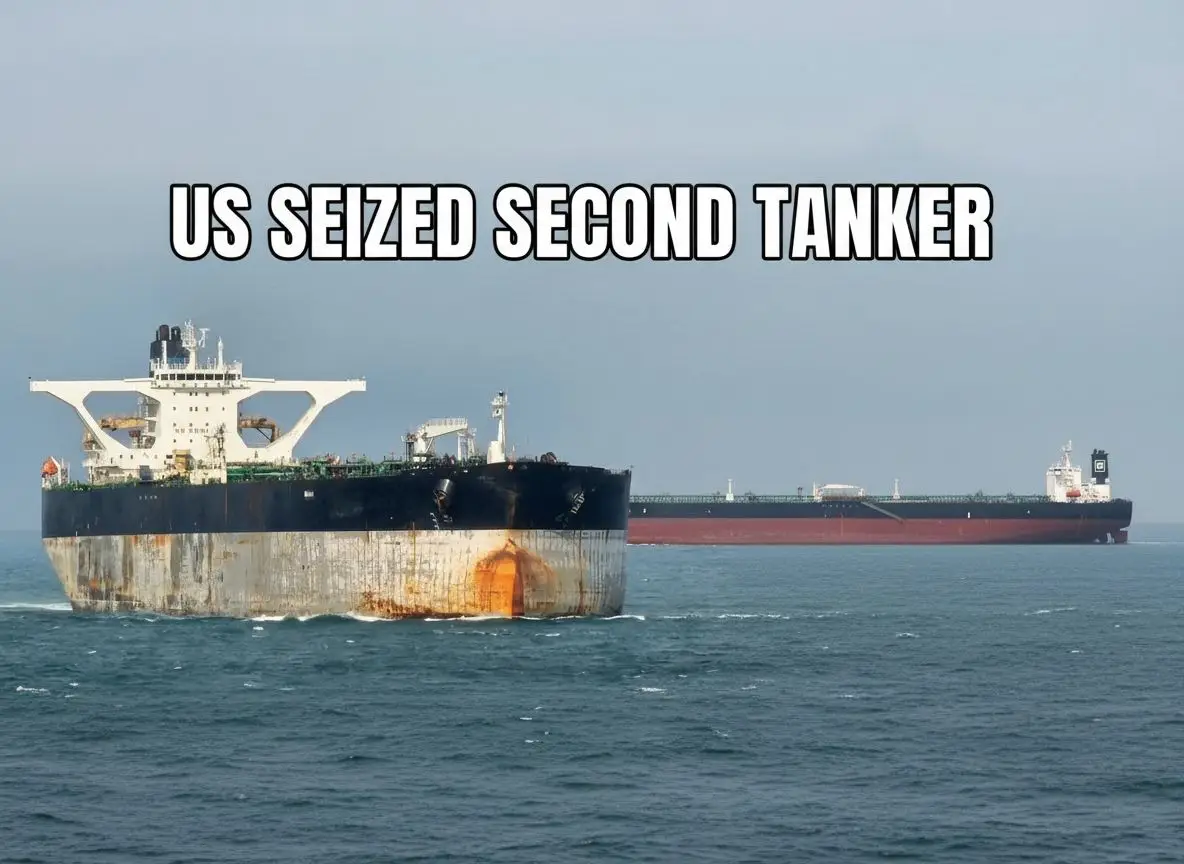
US military forces have seized two very large crude carriers (VLCCs) in helicopter-backed operations carried out thousands of kilometres apart, marking a significant escalation in efforts to disrupt Venezuela’s oil export trade.
The operations, conducted on the same day in the North Atlantic and the Caribbean region, targeted vessels allegedly linked to the transport of Venezuelan crude in violation of existing sanctions frameworks. Footage and official statements released by US authorities indicate a high level of coordination and planning behind the actions.
Interception in the North Atlantic
In the first operation, US forces seized the 318,500-dwt Marinera, a Russian-flagged VLCC, off the coast of Iceland. The tanker, built in 2002 and previously known as Bella 1, had reportedly been under surveillance for nearly two weeks.

According to military sources, the Marinera had successfully evaded a naval blockade at the time before being intercepted. The seizure followed what officials described as prolonged manoeuvring in international waters, highlighting the challenges involved in tracking large crude carriers operating across transatlantic routes.
While details of the vessel’s cargo and intended destination have not been publicly disclosed, maritime analysts note that ships of the Marinera’s class are frequently used for long-haul crude movements between Latin America, Europe and Asia.
Helicopter Raid in the Caribbean
Several hours later and approximately 6,000 kilometres (5,200 nautical miles) to the south, US forces carried out a second seizure involving the 320,100-dwt M Sophia.
In this operation, American troops descended directly onto the deck of the tanker from a helicopter, a moment later confirmed by video footage released by the US Southern Command. The dramatic boarding underscores the tactical emphasis placed on speed and surprise, particularly in regions where ships may attempt to flee or destroy sensitive documentation.
The M Sophia, also a VLCC, was reportedly operating along a well-known export corridor for Venezuelan crude. US officials have not released information on the vessel’s flag state or ownership structure, citing ongoing investigations.

Strategic Message to the Shipping Industry
Taken together, the two seizures signal a broader strategic message aimed at shipping companies, charterers, insurers and financiers involved—directly or indirectly—in the movement of sanctioned oil.
Experts say the geographic spread of the operations demonstrates the global reach of US enforcement capabilities. Conducting raids in both the North Atlantic and the Caribbean on the same day reinforces the notion that no trading route is beyond scrutiny.
“These actions indicate a willingness to pursue vessels well outside traditionally policed choke points,” said one maritime security analyst. “It raises the compliance bar significantly for tanker operators involved in high-risk trades.”
Implications for Oil Markets and Compliance
VLCCs are among the largest assets in the maritime supply chain, and their detention can have ripple effects across the energy and shipping markets. Beyond the immediate disruption to cargo movements, seizures can lead to prolonged legal proceedings, insurance complications and reputational damage for all parties involved.
The operations also come amid heightened monitoring of so‑called “shadow fleet” activities, including flag changes, ship-to-ship transfers, and opaque ownership structures commonly associated with sanctioned oil trades.
Industry participants are expected to reassess voyage planning, counterparty due diligence and exposure to enforcement risks in the wake of the latest actions.
What Comes Next
US authorities have not indicated whether further seizures are imminent, nor have they disclosed the eventual disposition of the detained vessels and their cargoes. However, the synchronized nature of the two raids suggests that similar operations could follow if intelligence indicates continued violations.
For now, the seizures of the Marinera and the M Sophia stand as a stark reminder that geopolitical enforcement efforts increasingly extend onto the open seas—placing global shipping under closer and more assertive scrutiny than ever before.
