

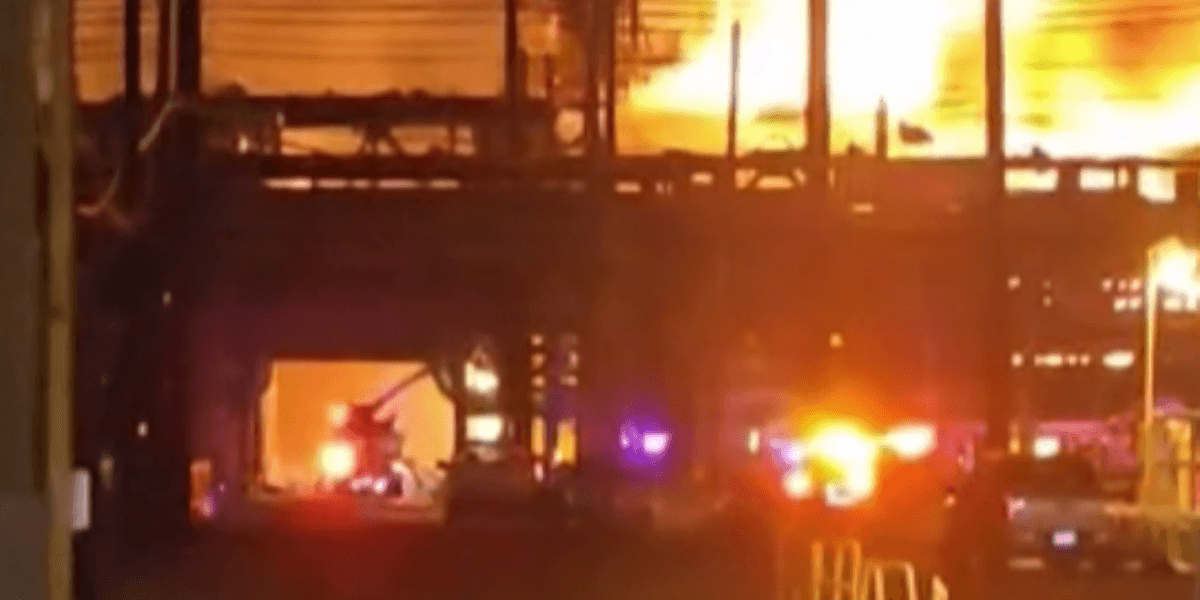
( image credit:12newsnow.com)
At the Valero Refinery, an explosion and subsequent fire struck Valero Energy Corp.’s Port Arthur refinery in Texas on Monday evening, prompting a large-scale emergency response and the temporary shutdown of several critical processing units. The Valero Refinery Explosion incident occurred at one of the largest oil refineries in the United States, a facility with a production capacity of approximately 435,000 barrels per day and a strategic location along the Texas Gulf Coast.
Although the refinery is a land-based industrial facility, the magnitude of the explosion drew significant attention from the energy and maritime sectors. Port Arthur serves as a major hub for petroleum shipping and export operations, linking refinery output directly to domestic and international supply chains.
Visit our page for maritime-related accidents.
Timeline of Events (Valero Refinery Explosion)
Monday, 6:30 p.m. (local time)
The incident began with a loud explosion at the refinery, followed almost immediately by a fire. Residents several miles away reported hearing the blast, with some stating that the shockwave rattled windows and shook nearby homes. Thick black smoke was visible rising above the facility.
Shortly after the explosion
Emergency response protocols were activated. Fire crews from the Port Arthur Fire Department, supported by Valero’s internal industrial fire brigade, were dispatched to the scene. Initial efforts focused on containing the fire and preventing further escalation within the refinery complex.
Monday evening – overnight
Firefighting operations continued for several hours as crews worked to isolate affected units and suppress the blaze. Valero officials initiated a controlled shutdown of several major processing units to cut off the flow of flammable hydrocarbons and support firefighting efforts.
Monday night
Local authorities issued a shelter-in-place order for the west side of Port Arthur as a precautionary measure. The Texas Department of Transportation temporarily closed portions of State Highways 82 and 87 due to safety concerns related to smoke and potential emissions.
Tuesday morning
Air-quality monitoring conducted by Valero, the Environmental Protection Agency, and the Texas Commission on Environmental Quality indicated that emissions did not exceed safe thresholds. As a result, the shelter-in-place order was lifted, and highway closures were removed.
Latest status
The fire has been fully extinguished. All refinery personnel were accounted for, and no serious injuries were reported. A restart timeline for the affected units has not yet been announced.
Technical Impact and Operational Response
The technical impact of the incident was concentrated on Unit 243, a diesel hydrotreater with a capacity of approximately 47,000 barrels per day. According to a filing submitted to state pollution regulators, an “unforeseeable release of process fluid” led to ignition and subsequent operational disruptions.
To stabilize the facility and support emergency operations, Valero temporarily shut down several major processing units, including the crude distillation unit and the fluid catalytic cracker. These measures were taken to prevent additional ignition sources and allow emergency crews to safely manage the incident.
Preliminary information from the Jefferson County Sheriff’s Office suggested that the explosion may have involved an industrial heater unit. The precise cause remains under investigation.
Broader Implications
Industry analysts noted that the shutdown of key units at the Port Arthur refinery could affect regional supplies of gasoline, diesel, and jet fuel. The disruption comes at a time of heightened sensitivity in global energy markets, which are already experiencing volatility linked to geopolitical tensions and disruptions in international shipping lanes.
Valero Energy Corp., headquartered in San Antonio, operates 15 refineries across North America and the United Kingdom. The Port Arthur facility is one of the company’s largest and most strategically important assets within the Gulf Coast energy infrastructure.
Safety Oversight and Investigation
While refinery incidents differ from maritime accidents, both underscore the inherent risks associated with large-scale industrial operations. In response to the incident, local officials, including Port Arthur Mayor Charlotte M. Moses, expressed relief that no lives were lost given the scale of the explosion.
Federal investigators, including the U.S. Chemical Safety Board, are expected to monitor the investigation alongside state and local authorities. The focus will be on identifying the root cause of the incident and determining whether additional safety measures or operational improvements are necessary to prevent similar events in the future.
References
Press, Associated. “Fire out and shelter-in-place order is lifted after oil refinery explosion near Texas coast.” AP News, March 24, 2026. https://apnews.com/article/60ecf6d9a70a2f1d5494fb8e38a84c4a
“Fire out and shelter-in-place order is lifted after oil refinery explosion near Texas coast.” Associated Press, March 24, 2026. https://apnews.com/article/60ecf6d9a70a2f1d5494fb8e38a84c4a
“Port of Entry: Port Arthur Impact to the Texas Economy, 2018.” Texas Comptroller of Public Accounts, 2018. https://comptroller.texas.gov/economy/economic-data/ports/port-arthur.php Accessed March 25, 2026
