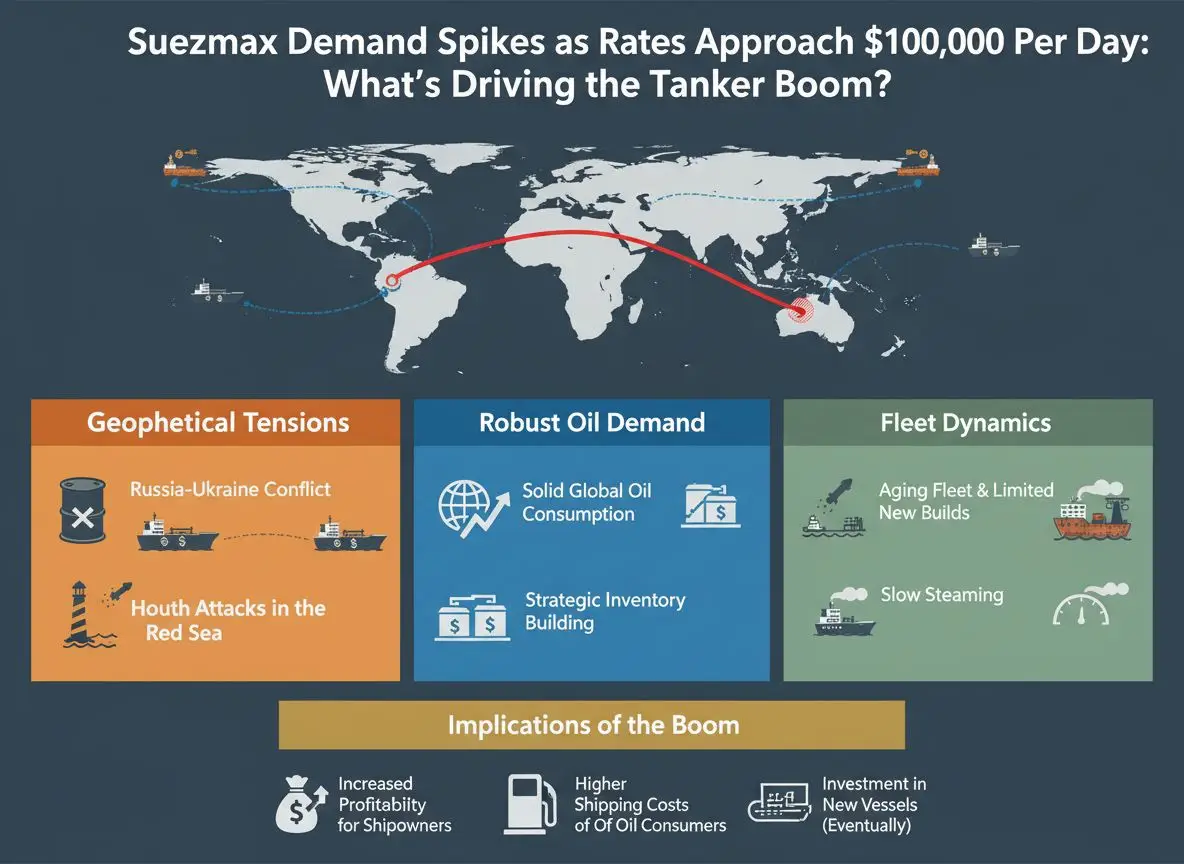
Suezmax spot rates are nearing $100,000 per day, marking one of the strongest upcycles in recent years.
Surge driven by geopolitical disruptions, longer voyage routes, and tight fleet supply.
Nordic American Tankers (NAT) reports robust demand and signs LOI for two new Suezmax vessels.
Analysts predict sustained strength in crude tanker markets through 2026.
Why Rates Are Soaring
The crude tanker market is on fire. Suezmax rates have surged close to $100,000/day, a level not seen in years. Several factors fuel this spike:
Geopolitical Tensions: Sanctions on Russian oil and diversions around the Cape of Good Hope have extended voyage distances, boosting tonne-mile demand.
OPEC+ Supply Growth: Increased production is translating into higher seaborne crude exports.
Fleet Constraints: Limited newbuild deliveries—only 120 Suezmax tankers scheduled over four years—tighten supply.
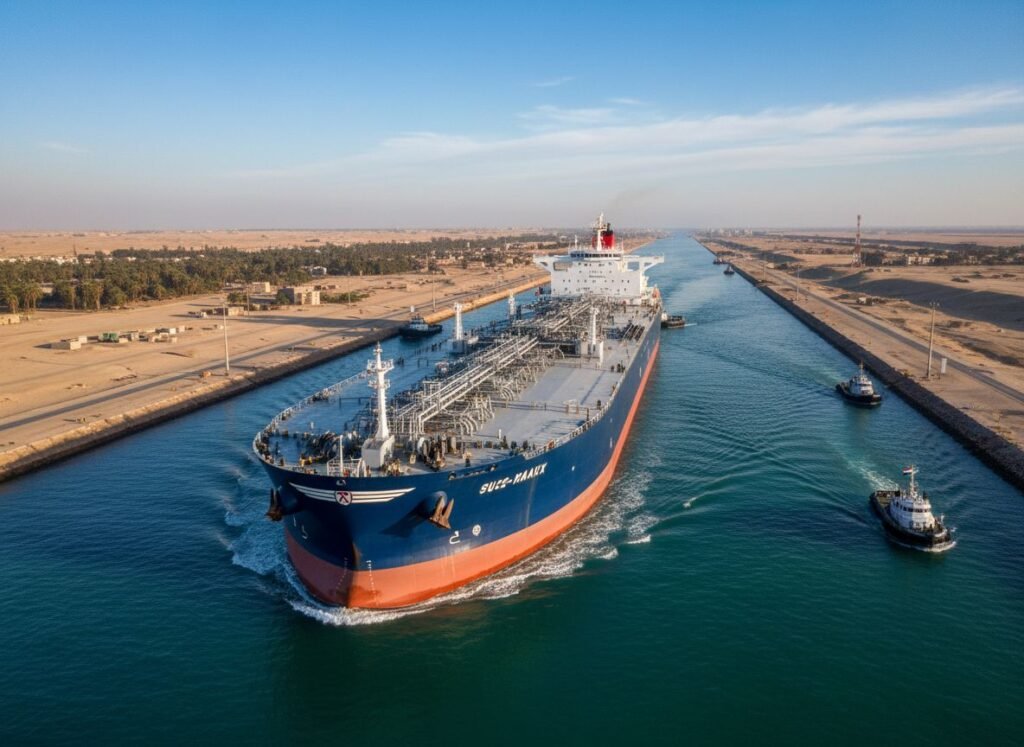
Suezmax Tanker
Nordic American Tankers Capitalizes
NAT, a leading Suezmax operator, is riding the wave. The company operates 20 Suezmax tankers, with most deployed in the spot market to capture high earnings. NAT recently signed a Letter of Intent with a South Korean yard for two new Suezmax vessels, priced at $86 million each, reinforcing its growth strategy.
Market Outlook
Industry analysts forecast continued bullish momentum for crude tankers into 2026, supported by:
Longer Routes: Diversions around conflict zones increase voyage times.
Shadow Fleet Crackdowns: Enforcement against older, non-compliant tankers could push demand back to mainstream operators.
Green Compliance: IMO efficiency standards will favor modern, eco-friendly vessels.
Recent Suezmax Fixtures & Rates
West Africa → UK Continent (TD20)
Rate: WS 152.5
Earnings: Around $84,000–$90,000 per day
Black Sea → Mediterranean
Rate: WS 170
Earnings: Approximately $85,000/day
US Gulf → Europe
Rate: WS 120
Earnings: About $78,000/day
Market Peak: Some long-haul voyages have approached $95,000–$100,000/day, especially amid tonnage tightness and geopolitical tensions.
Professional maritime news and technical analysis curated by a board of industry veterans with over 100 years of combined experience in Marine Engineering and Naval Architecture.