
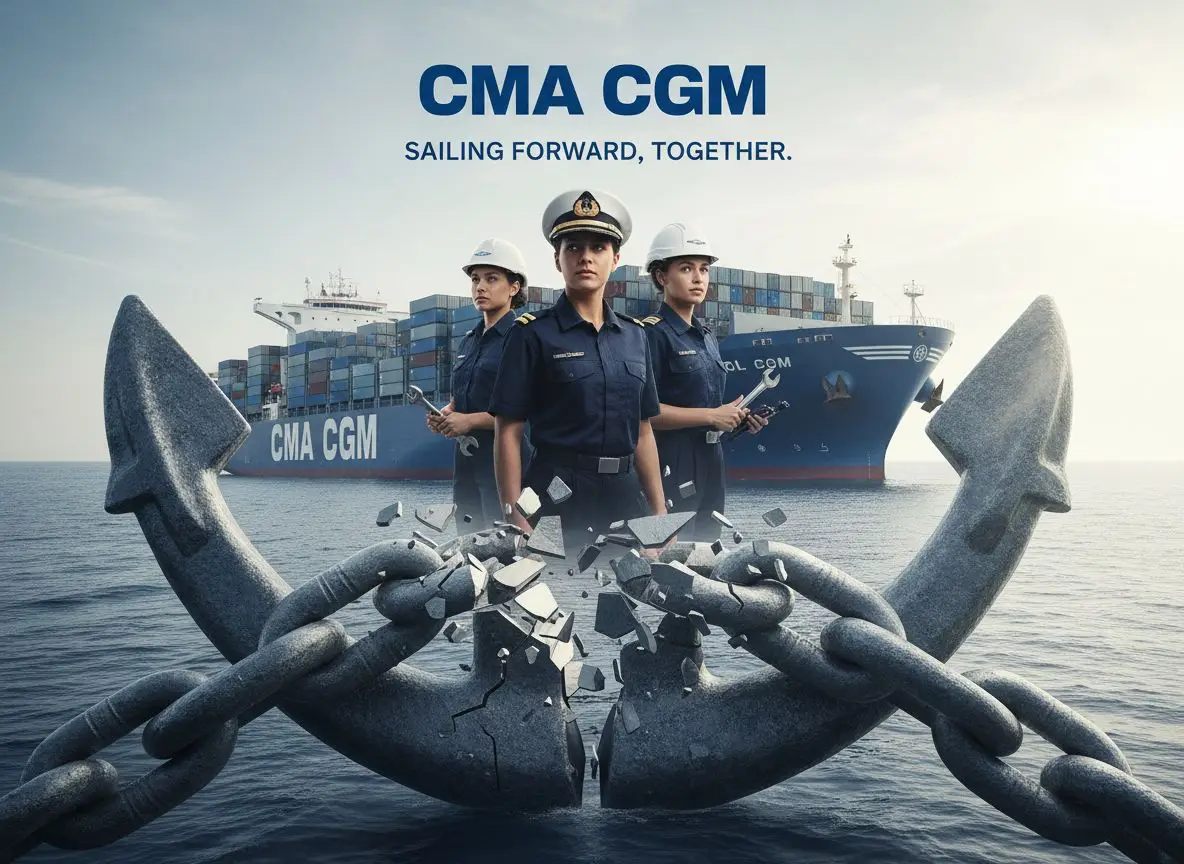
- French shipping giant CMA CGM aims for 1,000 female seafarers by 2030.
- The "She Sails" initiative has already doubled female representation on its ships.
- Efforts align with broader maritime industry trends towards inclusivity and diversity.
- Global impact anticipated as other companies may follow suit.
Context Setting: A Global Initiative for Gender Equality
In an industry traditionally dominated by men, the maritime sector is witnessing a pivotal shift towards gender inclusivity. CMA CGM, a leading French liner and shipping giant, has announced a bold commitment to have 1,000 women at sea by 2030. This initiative underscores a growing trend within the maritime industry to embrace diversity and promote gender equality. The company's existing program, "She Sails," has already achieved remarkable success, doubling the number of female seafarers employed by CMA CGM within a year.
The "She Sails" Program
The "She Sails" program, spearheaded by CMA CGM, sets a precedent for other maritime companies aiming to diversify their workforce. By actively recruiting and supporting female seafarers, CMA CGM not only enhances its workforce but also contributes to the broader goal of gender parity in the maritime sector. Industry analysis suggests that such initiatives are critical for addressing the gender gap and ensuring equitable opportunities for women worldwide.
Far-Reaching Implications
This commitment by CMA CGM is likely to reverberate across global maritime markets. European ports, known for their progressive policies, may see an acceleration in gender equality initiatives, while Asian maritime markets, where traditional roles often prevail, might experience a gradual but significant cultural shift. The company’s pledge aligns with international regulations and goals set by organizations such as the International Maritime Organization (IMO), which advocates for diversity and inclusion as part of sustainable shipping practices.
A Step Towards a Diverse Workforce
The maritime industry, characterized by its dynamic and challenging operational environment, stands to benefit significantly from a more diverse workforce. Increasing female participation not only addresses labour shortages but also brings diverse perspectives and innovative solutions to complex maritime challenges. According to Lloyd's List Intelligence, companies prioritizing diversity are better positioned to tackle operational inefficiencies and regulatory compliance requirements.
The Future of Women at Sea
Looking ahead, the trend towards inclusivity in the maritime industry appears set to continue. As companies recognize the value of a diverse workforce, the number of women pursuing careers at sea is expected to rise. Market observers note that achieving gender parity will require sustained efforts from stakeholders across the industry. Support from international bodies, coupled with national policies promoting gender equality, will be crucial in realizing these goals.
Steps Towards Inclusive Shipping
For industry players seeking to emulate CMA CGM's success, several actionable strategies emerge:
- Implement comprehensive recruitment and retention programs tailored for female seafarers.
- Foster an inclusive workplace culture that supports diversity and addresses unique challenges faced by women at sea.
- Engage with regulatory bodies and industry organizations to align with best practices and compliance guidelines.
- Leverage technology and training to enhance the skills and safety of female maritime professionals.
These steps not only pave the way for a more equitable maritime industry but also enhance operational efficiency and safety across the board.
