

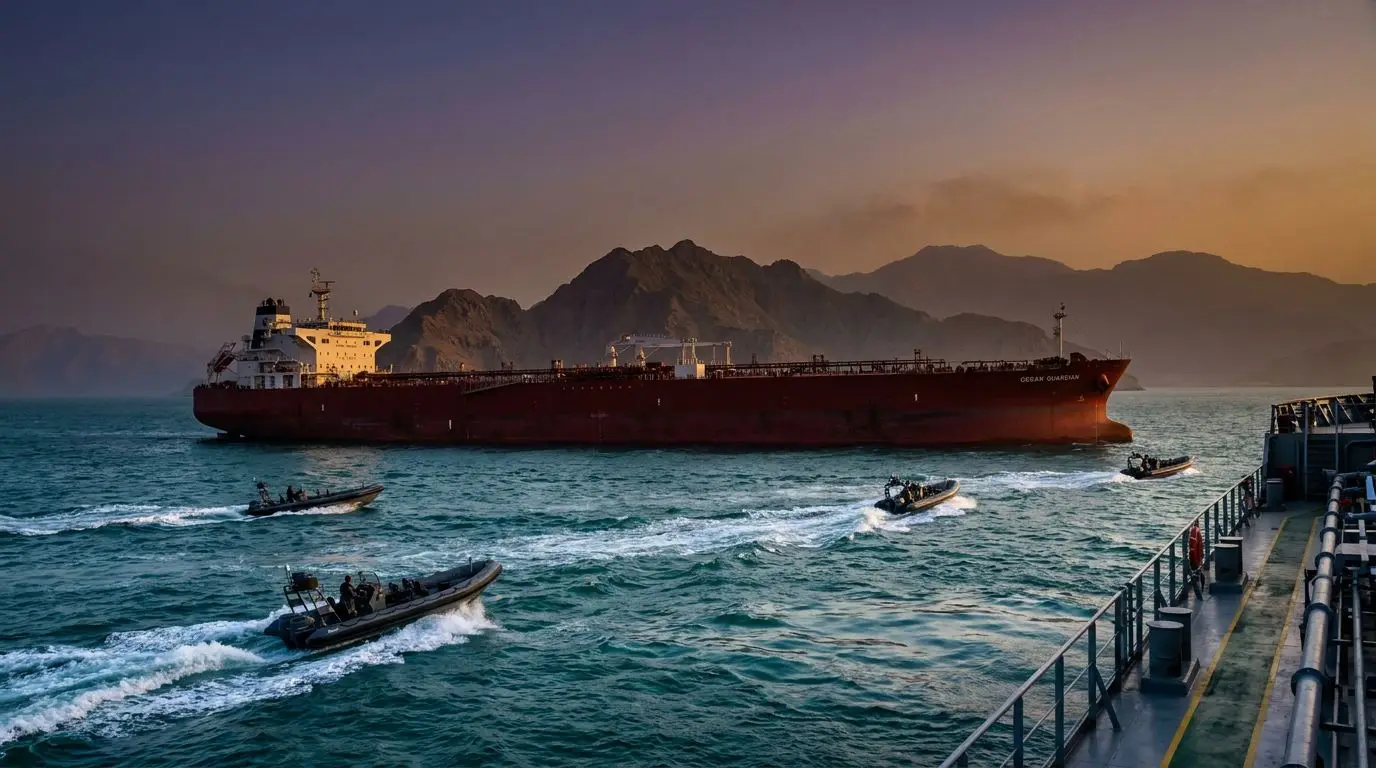
Strait of Hormuz Blockade: Naval Standoff Deepens Global Energy Crisis
The global shipping industry is facing an unprecedented era of uncertainty as the Strait of Hormuz Blockade enters a critical and increasingly volatile phase.
Despite diplomatic efforts and talk of a ceasefire, maritime traffic through this vital corridor remains at a near-standstill. The strategic waterway, which typically facilitates the movement of one-fifth of the world’s oil and liquefied natural gas, is now a high-stakes arena of military activity. With reports of intercepted vessels and boarded tankers becoming a daily reality, the international community is bracing for the long-term consequences of this maritime paralysis.
The Impact of US-Iran Naval Tensions on Global Trade
The current crisis is rooted in escalating US-Iran naval tensions that have effectively transformed the Persian Gulf into a restricted zone. Since the initiation of major hostilities in early 2026, the region has been subjected to a “dual blockade.” While Iranian forces have utilised sea mines and drone attacks to deter transit, the United States has countered with a rigorous naval embargo aimed at halting Iranian exports.
This military environment has made traditional navigation nearly impossible. According to industry trackers, daily transits have plummeted by over 90% compared to peacetime averages.
For the global economy, this translates into a massive disruption of the global energy supply. The physical shortage of crude oil and refined products is not just a regional issue; it is a systemic shock that affects everything from aviation fuel availability in Europe to industrial production in Asia.
The Reality of Tanker Interception and Boarding
One of the most concerning aspects of the current conflict is the frequency of tanker interception and boarding. In recent days, multiple Iran-linked and sanctioned vessels have been seized by naval forces, often far beyond the immediate confines of the strait. These actions are justified by participating nations as “sanctions enforcement,” yet they have raised significant legal and safety concerns under the UN Convention on the Law of the Sea.
For the thousands of personnel currently serving on commercial vessels, these incidents represent the ultimate high-risk scenario. Navigating through contested waters requires immense technical skill and mental fortitude. Those interested in understanding the professional realities of this environment can explore maritime careers and the challenges they entail, which often involve managing complex security protocols in active conflict zones.
Current operational risks for merchant shipping include:
– Increased frequency of unauthorised boardings by paramilitary groups.
– The presence of unanchored sea mines in international shipping lanes.
– GPS jamming and “spoofing” that complicates vessel position tracking.
– Drastic spikes in war-risk insurance premiums that make transit financially non-viable.Navigating Crude Oil Price Volatility and Market Instability
The immediate result of the physical blockade is intense volatility in crude oil prices. In March 2026, the market witnessed the largest monthly increase in oil prices in history, with Brent crude surging well past $100 per barrel. This price shock is driven by the fact that many major energy producers are effectively locked behind one of the world’s narrowest maritime chokepoints.
While some land-based pipelines provide a limited bypass, they lack the capacity to replace the massive volumes typically carried by Very Large Crude Carriers (VLCCs). Markets are currently reacting to every report of a failed negotiation or a new naval skirmish. This instability creates a “risk premium” that is being passed down to consumers worldwide in the form of higher fuel costs and increased prices for petroleum-based products like fertiliser and plastics.
The Role of Strategic Maritime Chokepoints in Modern Conflict
The ongoing crisis highlights the extreme vulnerability of global trade to the closure of maritime chokepoints. The Strait of Hormuz is only 21 miles wide at its narrowest point, yet its closure could derail the global recovery and trigger widespread inflation. Unlike other logistical hurdles, a total naval blockade of such a corridor cannot be easily bypassed by rerouting ships around a continent.
Industry experts and organisations like the International Maritime Organisation (IMO) are closely monitoring the situation, but the path to normalisation remains unclear. As long as naval forces continue to interdict commercial traffic, the “Sealed up Tight” status of the strait will remain the primary driver of global economic anxiety.
The Blockade
The Strait of Hormuz Blockade is more than a regional military standoff; it is a fundamental threat to the stability of the global energy landscape. The combination of intense US-Iran naval tensions and frequent tanker interceptions has created a maritime environment where safety and commerce can no longer be guaranteed. While a final diplomatic deal remains the only sustainable solution, the current near-standstill conditions suggest that the world must prepare for a prolonged period of energy shortages and market turbulence. For the shipping industry, the priority remains the safety of the 20,000 seafarers currently caught in the crossfire of this historic crisis.