

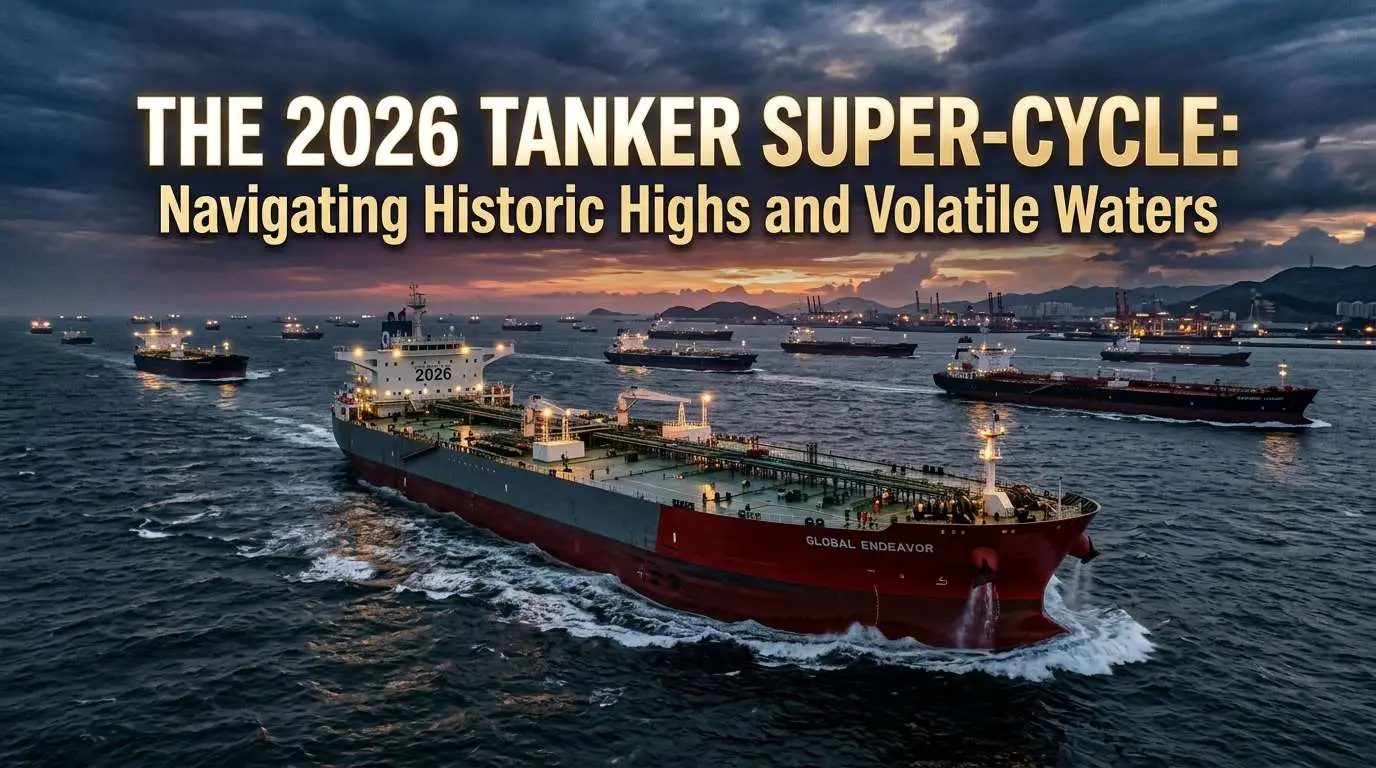
The global tanker market has entered the second quarter of 2026 amid an extraordinary transition. For many industry veterans, the current climate evokes memories of the 2008 peak, defined by a rare convergence of geopolitical shocks, shifting trade routes, and a structural shortage of available tonnage. From VLCCs to smaller product carriers, the cost of moving energy—and the value of the assets doing the moving—has reached levels that seemed unimaginable just 24 months ago.
1. Freight Market: The Geopolitical Engine
The defining characteristic of April 2026 is the extreme volatility in freight rates. Following the energy shocks caused by disruptions in the Middle East and the temporary closure of the Strait of Hormuz earlier this year, spot rates reached historic heights.
VLCC Dominance
The benchmark MEG–China VLCC route witnessed an incredible surge to $423,000 per day in March. While a mid-April moderation has seen these rates settle closer to $356,000 per day, they remain far above historical averages. A standout moment for the sector occurred with the fixture of the Kalamos (a 2010-built VLCC), which was reportedly fixed at a record-breaking $770,000 per day for a voyage to India—one of the highest freight rates ever recorded in maritime history.
Mid-Size Resilience
Suezmax and Aframax vessels have also thrived, largely due to the “tonne-mile” effect. As sanctions and safety concerns redirected trade flows, vessels are sailing longer distances to deliver the same amount of crude.
- Suezmax rates for Black Sea–to–Mediterranean routes have surged past $140,000 per day.
- Aframax vessels are seeing sustained demand as they pivot to Russian and Atlantic trades, with daily earnings frequently hitting $95,000.
2. Asset Values: A Decade of Growth in Months
The secondhand market is currently a “seller’s paradise.” Because shipyards are backed up with orders for several years, buyers are paying massive premiums for “waterborne” assets that can start earning immediately.
The most striking trend is the narrowing “age discount.” In a typical market, older ships lose value rapidly. However, in 2026, even 10-year-old and 15-year-old vessels are commanding prices not seen in nearly 20 years.
- 10-Year-Old VLCCs: Currently valued at approximately $104 million, a 40% increase in just three years.
- 15-Year-Old VLCCs: These overaged units reached $81 million in mid-March, their highest level since August 2008.
- Newbuilding Prices: Ordering a new VLCC today costs roughly $124.75 million, with delivery dates stretching into late 2028 or 2029.
3. Supply Constraints and the “Shadow Fleet”
Why are rates so high? The answer lies in the orderbook-to-fleet ratio. For years, investment in new tankers was low as owners focused on uncertainty around decarbonization. Now, the industry is playing catch-up.
While 2026 will see an increase in deliveries (approximately 48 vessels), the overall fleet remains aged. Over 40% of the VLCC and Suezmax fleet is now older than 15 years.
Furthermore, demolition (scrapping) has ground to a halt. When a ship can earn $100,000 a day, no owner is willing to send it to the scrapyard, regardless of its age.
The market is also dealing with the “shadow fleet“—vessels operating outside traditional insurance and compliance frameworks. Recent US enforcement actions and crackdowns on Venezuelan trade have forced some of these vessels out of the market, further tightening the supply of “compliant” tonnage and pushing more business toward reputable, mainstream owners.
4. The Short-Term Outlook: Ceasefires and Stability
The announcement of a two-week ceasefire in early April between major regional powers has provided a brief “cooling off” period for the markets. Oil prices (WTI) fell nearly 17% following the news, and freight rates have begun to “normalise” from their $400k+ peaks.
However, analysts at DNV and Veson Nautical suggest that the underlying fundamentals remain bullish. Even if geopolitical tensions ease, the structural shortage of ships and the high demand from expanding refineries in China and India will likely keep the floor for tanker rates well above the 10-year average.
Conclusion
For seafarers and ship managers, the 2026 tanker market represents a period of intense operational pressure but record-breaking profitability. While the “super-cycle” may eventually moderate as more newbuilds enter the water in 2027 and 2028, the current outlook for the remainder of 2026 remains one of high earnings and firm asset values.
Sources:
- Horizon Offshore Services: Tanker Markets – Key Highlights | April 2026
- Riviera Maritime Media: VLCC Secondhand Values Hit Decade Highs Amid Freight Market Rally