

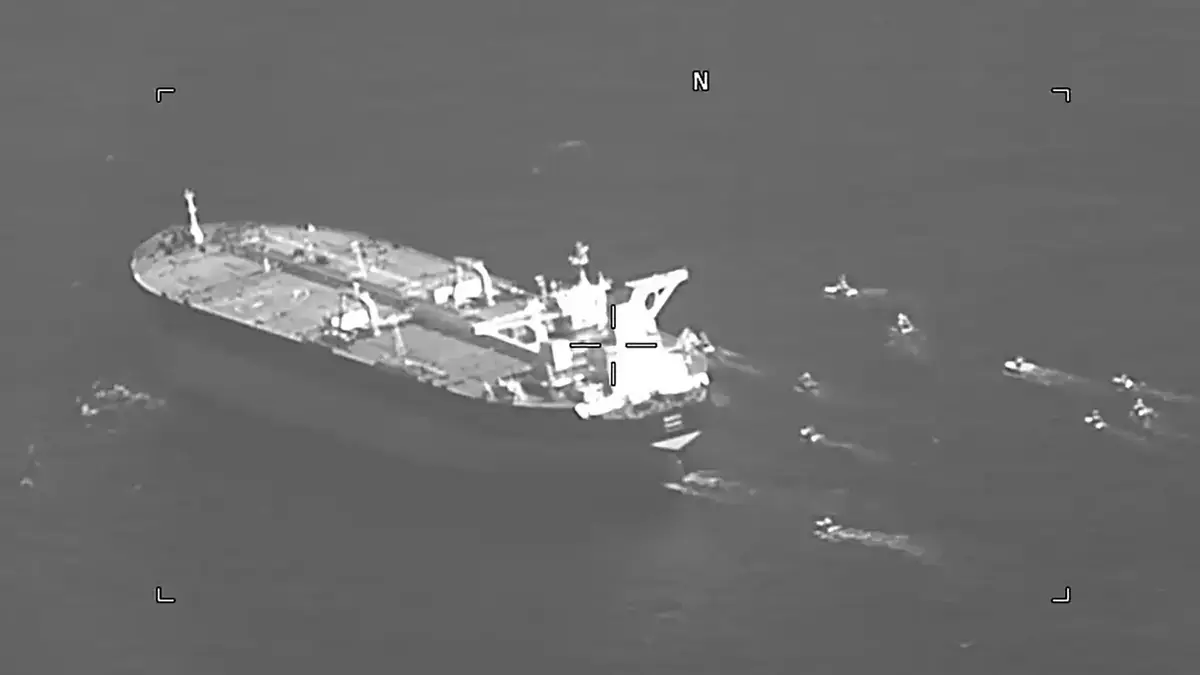
US Disables Iranian Tanker Hasna in Gulf of Oman Blockade Enforcement
The global maritime landscape faced a significant escalation on May 6, 2026, following a direct military intervention by American forces.
In a move that underscores the high stakes of current geopolitical tensions, the US blockade of the Iranian tanker Hasna has sent ripples through the international shipping community.
According to official reports, US Central Command (CENTCOM) forces intercepted and disabled the Iranian-flagged unladen oil tanker after it repeatedly ignored warnings while attempting to transit the Gulf of Oman toward an Iranian port. This action marks a definitive moment in the ongoing enforcement of maritime restrictions in the region.
CENTCOM Gulf of Oman Operations and the Disabling of the Hasna
The confrontation began at approximately 9:00 a.m. ET when CENTCOM monitors identified the M/T Hasna transiting international waters. Despite the ongoing, yet fragile, ceasefire between Washington and Tehran, the naval blockade remains in full effect. The tanker was reportedly issued multiple verbal warnings informing the crew that they were violating the blockade protocols.
When the vessel failed to comply and continued its course toward the Iranian coastline, a US Navy F/A-18 Super Hornet was launched from the aircraft carrier USS Abraham Lincoln. The fighter jet executed a precision strike, firing several rounds from its 20mm cannon specifically targeting the tanker’s rudder.
This tactical manoeuvre successfully disabled the vessel’s steering, preventing it from proceeding further without causing a major environmental disaster or sinking the ship, as it was confirmed to be unladen at the time.
Strategic Impact of US Blockade Iran Tanker Hasna Enforcement
The decision to use kinetic force against a commercial vessel highlights the rigorous nature of maritime blockade enforcement currently practised by the United States. While “Project Freedom” had previously seen a temporary pause in some escort activities, the Pentagon has maintained that the blockade against ships entering or departing Iranian ports is absolute.
This enforcement strategy relies on a massive contingent of naval assets. In addition to the USS Abraham Lincoln, the USS George HW Bush is also active in the region. To date, CENTCOM reports that over 50 commercial vessels have been directed to reverse course or return to port to ensure compliance. The disablement of the Hasna serves as a stern signal to shipowners and operators that the “impartial” enforcement of these zones is backed by significant military capability.
Strait of Hormuz Maritime Security and Legal Frameworks
The broader context of this incident is the critical importance of the Strait of Hormuz maritime security. As one of the world’s most vital energy chokepoints, any disruption here impacts global oil and gas prices almost instantaneously. The current blockade is a response to earlier efforts to close the Strait, a move that violated international laws regarding transit passage.
From a legal perspective, the US asserts that its actions are consistent with the laws of naval warfare. For a blockade to be recognised internationally, it must meet several criteria:
– Public Declaration: The blockade was officially announced, and terms were set.
– Impartiality: It is applied to vessels of all nations, not just those of the adversary.
– Effectiveness: The presence of two carrier strike groups ensures a high likelihood of detection and interception. However, the intersection of military activity and commercial shipping creates a complex environment for those working on the water. For professionals navigating these waters, understanding maritime careers or challenges is now as much about geopolitical awareness as it is about seamanship.
The Role of the US Navy F/A-18 Super Hornet in Precision Interdiction
The use of the US Navy F/A-18 Super Hornet in this specific incident illustrates a shift toward high-precision interdiction. Rather than a full seizure of an Iranian oil tanker, which involves boarding the vessel and diverting it to a neutral or domestic port for prize court adjudication, disabling the rudder is a “stop-and-stay” tactic.
This method reduces the immediate need for a non-compliant boarding—which can be extremely dangerous for boarding teams—while still achieving the objective of halting the breach. It also places the burden of salvage and repair back on the operating state or owner, effectively neutralising the threat to the blockade’s integrity without the legal and logistical complications of a full seizure.
Blockade and ceasefire
The disabling of the M/T Hasna represents a significant hardening of the regional security posture. By successfully executing the US blockade Iran tanker Hasna interdiction, the US military has demonstrated both the technical capability and the political will to enforce its maritime mandates. As diplomatic talks continue in the background, the reality on the water remains one of high tension and zero tolerance for blockade violations. Stakeholders in the maritime industry must now account for these risks, as the safety and security of global trade routes remain tied to the volatile developments in the Gulf of Oman.
