

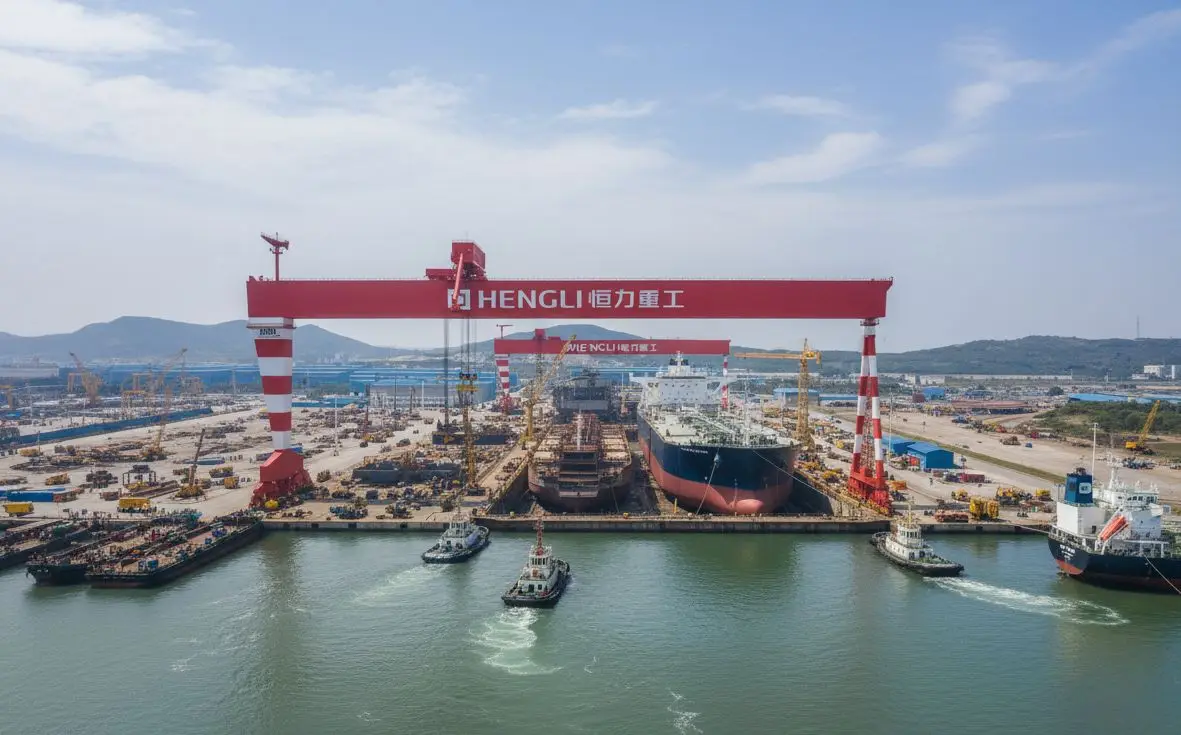
Hengli Heavy Industries Dominates Q1 2026: Record Revenue and Massive 108 Vessel Order Surge
The global maritime sector is witnessing a historic shift in production capacity, as evidenced by Hengli Heavy Industries’ recently released Q1 2026 Results.
The company reported a staggering operating revenue of approximately $1.301 billion (8.888 billion yuan), marking a triumphant period following its successful removal from the delisting risk list. This financial milestone is not merely a recovery story; it signifies a massive expansion in output that is reshaping the competitive landscape of the international shipbuilding industry.
Driving this growth is an unprecedented surge in new building projects. In the first three months of 2026 alone, Hengli Heavy Industries secured contracts for 108 new vessels. This figure is particularly remarkable as it nearly matches the company’s total requirement for the entire previous year in just a single quarter. As global trade patterns evolve, this performance highlights the company’s emerging role as a cornerstone of modern maritime logistics.
Analysing Shipyard Revenue Growth and Market Performance
The impressive shipyard revenue growth in Hengli Heavy Industries’ Q1 2026 Results reflects a diversified, high-end order structure. Unlike traditional builders that may focus on a single niche, Hengli has successfully captured demand across multiple categories, including container ships, bulk carriers, oil tankers, and gas carriers.
This financial health is further bolstered by the company’s strategic “Ocean Factory” and “Future Factory” initiatives.
By investing heavily in Phase III capacity expansion—a project valued at approximately 13.5 billion yuan—the shipbuilder is ensuring it can meet the rising global demand for sophisticated tonnage. The speed at which these facilities are coming online enables optimised production cycles, which is critical for maintaining profitability in a capital-intensive industry.
The VLCC Orderbook Expansion and Tanker Dominance
A significant portion of the recent success is attributable to the expansion of the VLCC orderbook.
Of the 108 vessels secured in the first quarter, 76 were tankers, with 54 being Very Large Crude Carriers (VLCCs). This surge in tanker demand is a key indicator of current global maritime manufacturing trends, where energy security and the ageing of the global fleet are driving shipowners to modernise their assets.
Key highlights of the Q1 tanker and vessel intake include:
– 54 VLCCs, setting new industry records for single-builder order volumes.
– 18 Suezmax tankers and 4 LRII product tankers.
– 12 container ships designed for high-efficiency routes.
– 16 bulk carriers and 4 specialized cryogenic vessels for gas transport.
This surge in orders has pushed the company’s production timeline to extend into 2030. For worldwide shipowners, obtaining slots at such a highly efficient yard has become a vital competitive advantage, particularly as the industry shifts toward more environmentally friendly and technically advanced vessel designs.
China’s Rising Chinese Shipbuilding Market Share
The performance of individual giants like Hengli is a primary driver of the expansion of China’s shipbuilding market share. Recent data indicate that China attracted over 70% of global new shipbuilding orders in the first quarter of 2026, outperforming traditional rivals such as South Korea. While South Korean yards remain leaders in the high-value LNG segment, Chinese builders are rapidly narrowing the gap through aggressive price offensives and rapid technological adoption.
Hengli’s success is a case study in this national trend. By focusing on “high-end, intelligent, and green” development, they are meeting the strict International Maritime Organization (IMO) standards that now govern the industry. As vessels become more complex, the demand for skilled maritime professionals continues to rise. Understanding the evolving seafarers and the challenges and opportunities of life at sea is essential for the personnel who will eventually operate these advanced, automated vessels.
Optimizing Vessel Delivery Timelines and Efficiency
One of the most critical metrics for any shipyard is its ability to adhere to vessel delivery timelines.
Hengli Heavy Industries has demonstrated world-leading capabilities in this area, successfully delivering 14 vessels in the first quarter, averaging one delivery every 10 days. This rapid output is achieved through batch construction techniques and the simultaneous launching of multiple large-scale vessels from its massive dry docks.
The ability to maintain quality while accelerating production is a significant competitive advantage. As the Phase III expansion project nears completion, including the construction of the massive No. 4 dock, the industry expects even greater throughput. This efficiency not only helps in meeting contractual obligations but also reduces the wait time for shipowners looking to capitalise on firming freight rates.
Hengli, the new Shipbuilding Giant.
The Hengli Heavy Industries Q1 2026 Results serve as a definitive signal that the maritime manufacturing sector is entering a new era of consolidation and rapid growth.
With $1.301 billion in revenue and a backlog that stretches to the end of the decade, the company has solidified its position as a global leader.
By balancing massive scale with a focus on green technology and intelligent manufacturing, Hengli is not just building ships; it is setting the standard for the future of global trade. As the Chinese shipbuilding market continues to expand its global footprint, the industry will remain focused on how these “Future Factories” can continue to deliver the specialised, high-efficiency vessels required for the 21st-century economy. For investors and maritime professionals alike, the trajectory of Hengli Heavy Industries represents the cutting edge of industrial excellence.