
Maersk Expands Low-Carbon Fleet with Second 9,000 TEU Methanol Delivery from Yangzijiang
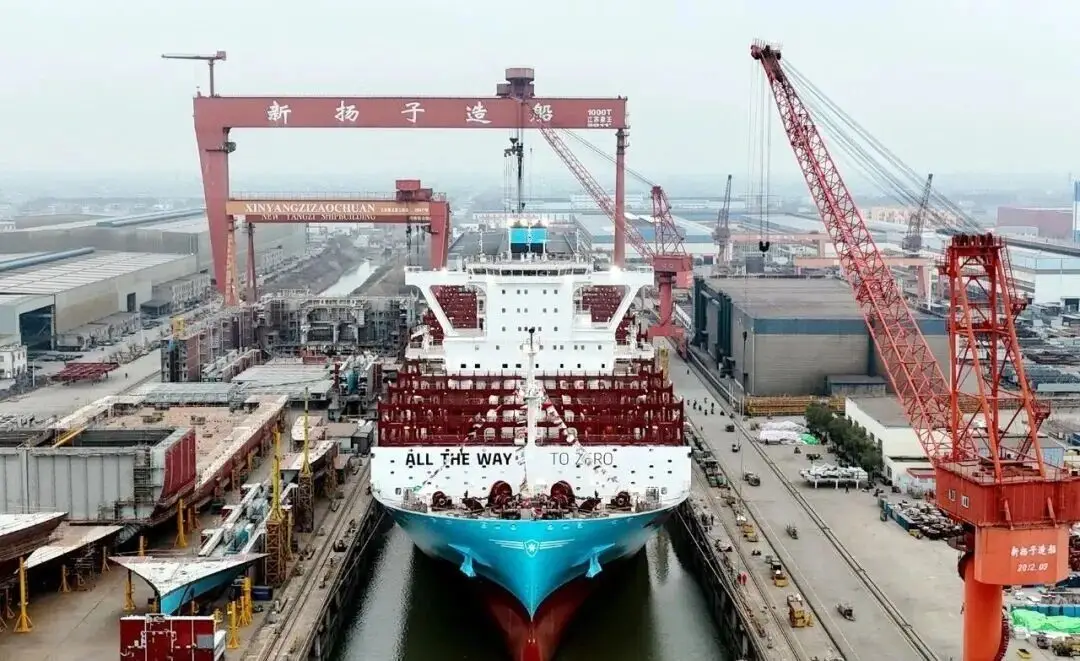
A.P. Moller – Maersk has officially taken delivery of its second 9,000 TEU vessel in a landmark series of Methanol Dual-Fuel Container Ships, marking another tangible step in the carrier’s aggressive transition toward a net-zero future. Built by Yangzijiang Shipbuilding in China, the new vessel follows the recent handover of the Tangier Maersk, reinforcing a medium-sized segment of the fleet specifically designed to bridge the gap between regional feeder networks and major ocean trade lanes. This delivery highlights the accelerating momentum of green methanol propulsion as the industry’s primary hedge against upcoming carbon taxes and tightening environmental mandates.
The Commercial and Regulatory Drivers of the Methanol Pivot
The surge in orders for methanol-enabled tonnage is not merely a result of corporate altruism, but a calculated response to the International Maritime Organisation’s (IMO) revised greenhouse gas strategy. With the IMO now targeting net-zero emissions by or around 2050, and the European Union already integrating shipping into its Emissions Trading System (EU ETS), shipowners are facing a direct financial cost for every ton of carbon emitted. Maersk’s investment in a diverse fleet renewal program is designed to mitigate these costs by providing shippers with a verified low-emission transport option that uses existing, albeit modified, engine technology.

Commercial mechanics are also shifting as major retailers and global brands commit to science-based targets for their own supply chains. Shippers are increasingly willing to pay a “green premium” to ensure their goods move on vessels that utilise sustainable fuels. This demand has created a reliable business case for carriers to invest in dual-fuel systems. While liquefied natural gas (LNG) was the dominant alternative fuel of the last decade, methanol has gained favour due to its ease of handling at ambient temperatures and its potential for deep decarbonization when sourced as bio-methanol or e-methanol.
Operational Shifts and Technical Compliance on the Water
Integrating Methanol Dual-Fuel Container Ships into a global network requires more than just new hardware; it demands a total overhaul of bunkering logistics and crew training. Unlike traditional heavy fuel oil (HFO), green methanol propulsion requires specialised fuel-handling systems and safety protocols due to the fuel’s lower flash point and toxicity. For technical managers and seafarers, this means mastering new sensor arrays and leak detection systems that were virtually non-existent on older tonnage.
The operational impact extends to the bunker desk. Securing a reliable supply of green methanol remains a significant hurdle. Over the past year, Maersk has signed multiple Memoranda of Understanding (MoUs) with fuel producers worldwide to ensure that when a vessel such as the one delivered by Yangzijiang Shipbuilding arrives at a terminal, the carbon-neutral fuel is ready. Without this synchronised “fuel pathway,” these advanced vessels risk running on conventional fuels, which defeats the purpose of the capital expenditure.
Key technical and operational advantages of this 9,000 TEU series include:
– Optimised hull designs that improve hydrodynamic efficiency, reducing the total energy required for propulsion regardless of fuel type.
– Advanced dual-fuel engine sets that allow for seamless switching between methanol and pilot fuels, ensuring vessel safety during manoeuvring or in regions where green fuel is unavailable.
– Strategic sizing at 9,000 TEU, which provides the flexibility to call at a wider variety of ports compared to the massive 24,000 TEU ultra-large container vessels (ULCVs).
– Enhanced digital monitoring systems that provide real-time data on fuel consumption and emissions, essential for EU ETS reporting and compliance.Future Outlook: Scaling the Green Methanol Supply Chain
As Maersk continues to receive newbuilds from Yangzijiang Shipbuilding and other South Korean yards, the industry’s focus will shift from vessel availability to fuel scalability. The current bottleneck is not the ability to build these ships, but the global capacity to produce the millions of tons of green methanol required for a full fleet transition. Commercial risks over the next 24 months include the potential for a “green fuel squeeze,” in which demand far outstrips supply, leading to volatile pricing that could affect freight rates.

Yangzijiang Shipbuilding
Furthermore, the industry must monitor the development of other alternative fuels, such as ammonia and hydrogen. While Maersk has placed its primary bet on methanol, the maritime decarbonization journey is likely to be a multi-fuel reality. Owners who have committed to a specific technology must remain agile, ensuring that their fleet renewal program doesn’t leave them with “stranded assets” if regulatory or technological winds shift unexpectedly.
MAERSK Boxships
The delivery of this second 9,000 TEU methanol-powered container ship signals that the era of shipping reliant solely on fossil fuels is coming to an end. By collaborating with capable shipyards like Yangzijiang Shipbuilding, Maersk demonstrates that the technical challenges of the energy transition can be overcome. The next challenge lies with the global energy sector and international regulators, who must ensure that land-based infrastructure keeps pace with the innovations taking place at sea. For modern shipowners, the path forward is clear: diversify the fleet, secure alternative fuels, and prepare for a market where carbon becomes the most expensive commodity on the manifest.